Headphones: Explained
Introduction
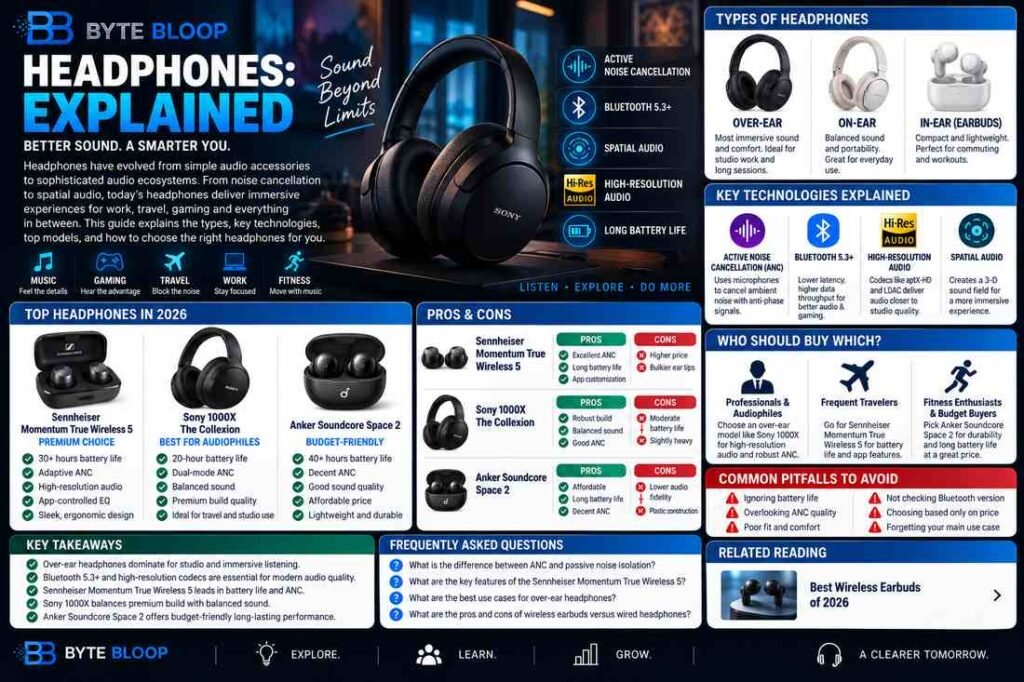
Headphones have evolved from simple audio accessories to sophisticated audio ecosystems that blend cutting‑edge technology with ergonomic design. Today’s models offer a range of features—active noise cancellation, spatial audio, high‑resolution codecs, and customizable EQ—that cater to musicians, gamers, commuters, and casual listeners alike. The market’s rapid innovation cycle means that every year brings new flagship releases, such as Sennheiser’s Momentum True Wireless 5 and Sony’s 1000X The Collexion, which set new standards for sound quality and battery life. Choosing the right headphones involves balancing factors like form factor, connectivity, battery endurance, and price, while also considering personal use cases such as travel, studio work, or fitness. This guide breaks down the core types of headphones, explains the technology behind them, and highlights the best options for 2026, so you can make an informed purchase that fits your lifestyle.
Types of Headphones
Headphones generally fall into three categories: over‑ear, on‑ear, and in‑ear (earbuds). Over‑ear models offer the most immersive soundstage and comfort for long sessions, making them ideal for studio monitoring and high‑end listening. On‑ear headphones sit on the ears and strike a balance between portability and sound quality, suitable for everyday use. Earbuds are the most compact, perfect for commuting or workouts, and many now include advanced features like ANC and wireless connectivity.
Key Technologies Explained
Active Noise Cancellation (ANC) uses microphones to detect ambient noise and generates anti‑phase signals to cancel it out, allowing users to focus on music or calls. Bluetooth 5.3+ offers lower latency and higher data throughput, essential for gaming and high‑resolution audio streaming. High‑Resolution Audio (Hi‑Res) codecs such as aptX‑HD and LDAC deliver audio closer to studio quality, while Spatial Audio creates a 3‑D sound field that enhances immersion in movies and games.
Performance and Experience
In 2026, the Sennheiser Momentum True Wireless 5 leads with 30+ hours of battery life, adaptive ANC, and a customizable sound profile via a companion app. Sony’s 1000X The Collexion offers a 20‑hour battery, dual‑mode ANC, and a premium build that appeals to audiophiles. Anker’s Soundcore Space 2 provides a budget‑friendly option with 40+ hours of playtime and decent ANC for its price point. All three models demonstrate that battery longevity and ANC quality are now central to the premium headphone experience.
Pros and Cons of Popular Models
- Sennheiser Momentum True Wireless 5 – Pros: excellent ANC, long battery, app customization. Cons: higher price, bulkier ear tips.
- Sony 1000X The Collexion – Pros: robust build, balanced sound, good ANC. Cons: moderate battery life, slightly heavy.
- Anker Soundcore Space 2 – Pros: affordable, long battery, decent ANC. Cons: lower audio fidelity, plastic construction.
Who Should Buy Which?
If you’re a professional audio engineer or a serious music lover, an over‑ear pair with high‑resolution support and robust ANC, like the Sony 1000X, is worth the investment. Casual listeners who travel often may prefer the lightweight Momentum True Wireless 5 for its battery and app features. Fitness enthusiasts on a budget will find the Anker Soundcore Space 2’s durability and long battery life a solid match.
Common Pitfalls to Avoid
Many buyers overlook battery life, especially in wireless models. Prioritize ANC quality if you travel frequently, but remember that high‑end ANC can drain batteries faster. Also, ensure that the headphone’s fit is comfortable for extended wear; poorly fitting ear cups can cause fatigue. Finally, verify that the headphone supports the latest Bluetooth version to avoid latency issues during gaming or video playback.
Key Takeaways
- Over‑ear headphones dominate for studio and immersive listening.
- Bluetooth 5.3+ and high‑resolution codecs are essential for modern audio quality.
- Sennheiser Momentum True Wireless 5 leads in battery life and ANC.
- Sony 1000X balances premium build with balanced sound.
- Anker Soundcore Space 2 offers budget‑friendly long‑lasting performance.
Frequently Asked Questions
What is the difference between ANC and passive noise isolation?
ANC uses microphones to actively cancel ambient noise with anti‑phase signals, while passive isolation relies on earcup design and materials to block sound physically.
What are the key features of the Sennheiser Momentum True Wireless 5?
30+ hour battery, adaptive ANC, high‑resolution audio support, app‑controlled EQ, and a sleek, ergonomic design.
What are the best use cases for over‑ear headphones?
Studio monitoring, long listening sessions, and high‑fidelity music appreciation where comfort and soundstage are paramount.
What are the pros and cons of wireless earbuds versus wired headphones?
Wireless earbuds offer portability and convenience but may have limited battery life and ANC quality; wired headphones provide consistent power, often superior audio fidelity, and no latency.
Conclusion
Based on the available information and industry analysis, headphones have become versatile audio tools that blend advanced noise cancellation, high‑resolution sound, and smart connectivity, enabling users to enjoy immersive listening experiences across a wide range of scenarios. The 2026 market showcases models that balance performance with practicality, ensuring that whether you’re a studio professional, a frequent traveler, or a casual listener, there’s a pair that fits your needs and budget. By understanding the core technologies and key product differences, consumers can make confident choices that enhance their audio enjoyment for years to come.
Related Reading
- Best Wireless Earbuds of 2026