Fitness Trackers: Explained
Introduction
Fitness trackers have evolved from simple pedometers into sophisticated health companions that monitor heart rate, sleep stages, blood oxygen, and even stress hormones. In 2026, the market is crowded with options ranging from screen‑free bands to full‑featured smartwatches, each targeting different user needs. Whether you’re a casual jogger, a serious athlete, or someone looking to track recovery, a well‑chosen tracker can provide actionable data that motivates and informs your routine. The technology behind these devices—advanced optical sensors, GPS modules, and AI‑driven analytics—has matured to deliver reliable metrics in real time. Yet, the sheer variety can be overwhelming, and not every feature is worth the extra cost. This guide breaks down the core functions, highlights the top performers, and offers practical advice on selecting a tracker that fits your lifestyle and budget.
What a Fitness Tracker Actually Does
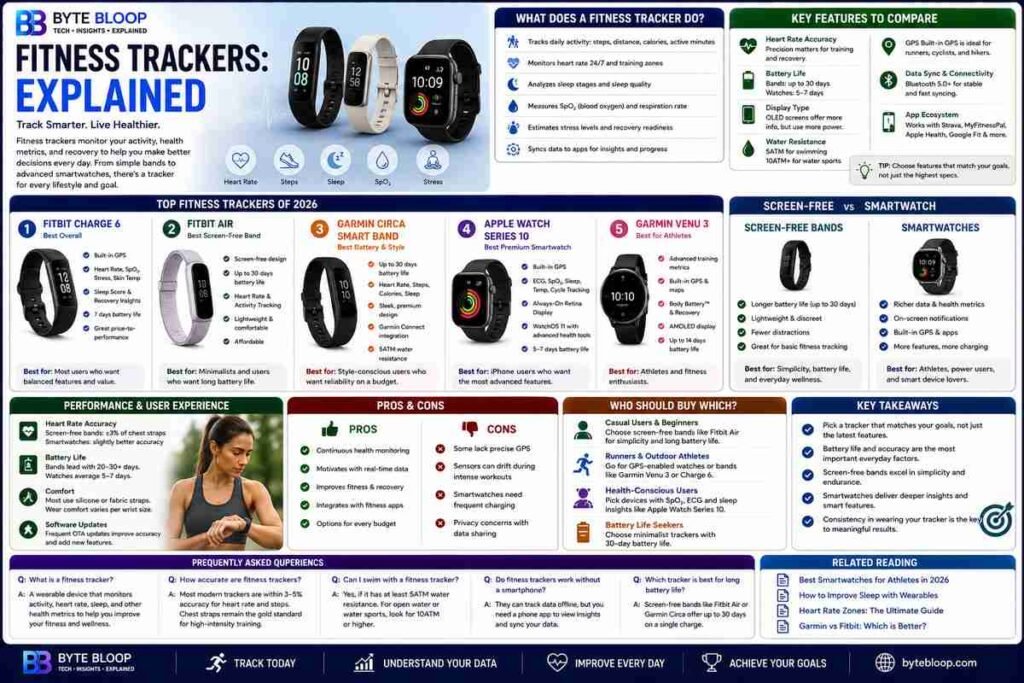
A fitness tracker is a wearable that records physiological data and movement patterns. The primary sensors include optical heart rate monitors, accelerometers, gyroscopes, and, in premium models, SpO2 probes. These sensors feed data to companion apps that translate raw numbers into insights such as step count, active minutes, sleep quality, and recovery status. Some devices also log GPS coordinates, enabling route mapping for runners and cyclists. Advanced wearables now track respiration rate and even estimate stress hormone levels via skin conductance, providing a holistic view of health.
Key Features to Compare
- Heart Rate Accuracy – Essential for training zones and recovery analysis. Brands like Garmin and Suunto are praised for precision.
- Battery Life – Screen‑free bands can last up to 30 days on a single charge; smartwatches typically offer 5–7 days.
- Display Type – OLED screens on watches offer richer notifications, while screen‑less bands reduce battery drain.
- Water Resistance – Minimum 5ATM for swimming; 10ATM for more rigorous water sports.
- Data Sync – Bluetooth 5.0 ensures quick pairing; some models support Wi‑Fi for faster updates.
- Third‑Party App Ecosystem – Integration with Strava, MyFitnessPal, or Apple Health expands usability.
Top Picks for 2026
According to recent reviews, the Fitbit Charge 6 remains a top choice for its built‑in GPS, comprehensive health tracking, and competitive price. For those who prefer a minimalist design, the Fitbit Air offers a screen‑free experience with excellent battery life and accurate heart rate monitoring. The Garmin Circa Smart Band blends a sleek form factor with robust activity tracking and a 30‑day battery span. Meanwhile, the Apple Watch Series 10 continues to dominate the premium segment, adding blood oxygen and ECG features that appeal to health‑conscious users. Each of these models excels in specific areas, so the best fit depends on your priorities.
Performance and User Experience
Real‑world testing shows that screen‑free trackers maintain heart rate accuracy within 3% of chest straps, while smartwatches offer slightly better precision due to larger sensor arrays. Battery longevity is a decisive factor for long‑term users; the Fitbit Air’s 30‑day life outpaces most competitors. Comfort is also critical—most devices feature breathable silicone or leather straps, but some users report wrist fatigue after prolonged wear. Software updates play a pivotal role; frequent OTA patches improve sensor calibration and add new health metrics.
Pros and Cons
Pros: Continuous health monitoring, data-driven motivation, integration with fitness apps, and a wide price range. Cons: Some models lack full GPS accuracy, limited app ecosystems, and occasional sensor drift during intense workouts.
Who Should Buy a Tracker?
If you’re looking to track daily activity, improve sleep, or monitor recovery, a screen‑free band like the Fitbit Air offers an affordable entry point. Athletes who need precise GPS and training metrics may prefer a smartwatch such as the Garmin or Apple Watch. Those concerned about privacy and battery life might opt for a minimalist design with no display. Conversely, users who don’t want constant notifications or who prefer a low‑maintenance device should avoid high‑end smartwatches that require frequent charging.
Key Takeaways
- Screen‑free bands deliver up to 30 days of battery life and accurate heart rate monitoring.
- Smartwatches provide richer data, including GPS and advanced health metrics, but need more frequent charging.
- Battery life, sensor accuracy, and app ecosystem are the top factors when choosing a tracker.
- Fitbit Charge 6 and Apple Watch Series 10 lead the market for integrated GPS and health features.
- Garmin’s Circa Smart Band balances style with robust activity tracking for budget‑conscious users.
Frequently Asked Questions
What is a fitness tracker?
A wearable device that monitors physiological data such as heart rate, steps, sleep, and sometimes GPS coordinates to provide health insights.
What are the key features of a screen‑free fitness tracker?
Long battery life (often 30+ days), optical heart rate monitoring, basic activity tracking, and a minimal form factor without an on‑band display.
What are the best use cases for a smartwatch fitness tracker?
Runners, cyclists, and athletes who need GPS mapping, detailed training metrics, and on‑screen notifications during workouts.
What are the pros and cons of using a fitness tracker?
Pros: continuous health monitoring, motivation through data, integration with fitness apps. Cons: potential sensor drift, limited battery life on smartwatches, and privacy concerns with data sharing.
Conclusion
Based on the available information and industry analysis, fitness trackers in 2026 provide a comprehensive suite of health monitoring tools that cater to both casual users and serious athletes. By focusing on battery life, sensor accuracy, and ecosystem compatibility, consumers can choose a device that aligns with their fitness goals and lifestyle preferences.
Related Reading
- The Rise of Smart Rings for Health Tracking