Sports Apps: Explained
Introduction
Sports apps have become a staple in the mobile ecosystem, transforming how fans, athletes, and teams interact with the world of sports. From live score trackers and fantasy leagues to training analytics and virtual reality overlays, these applications offer a blend of real‑time data, immersive experiences, and community engagement. The rise of high‑speed mobile networks and advanced sensors has pushed developers to create more sophisticated, personalized, and data‑rich experiences than ever before. For businesses, sports apps present lucrative revenue streams—through subscriptions, in‑app purchases, and advertising—while also providing valuable user insights. For consumers, they deliver convenience, instant updates, and a deeper connection to favorite teams or personal fitness goals. Understanding the core components, trends, and development pathways of sports apps is essential for anyone looking to enter this dynamic market or simply make the most of the tools available today. This guide breaks down what sports apps are, the primary categories, key features, and the future direction of the industry, all backed by recent research and real‑world examples.
What Exactly Are Sports Apps?
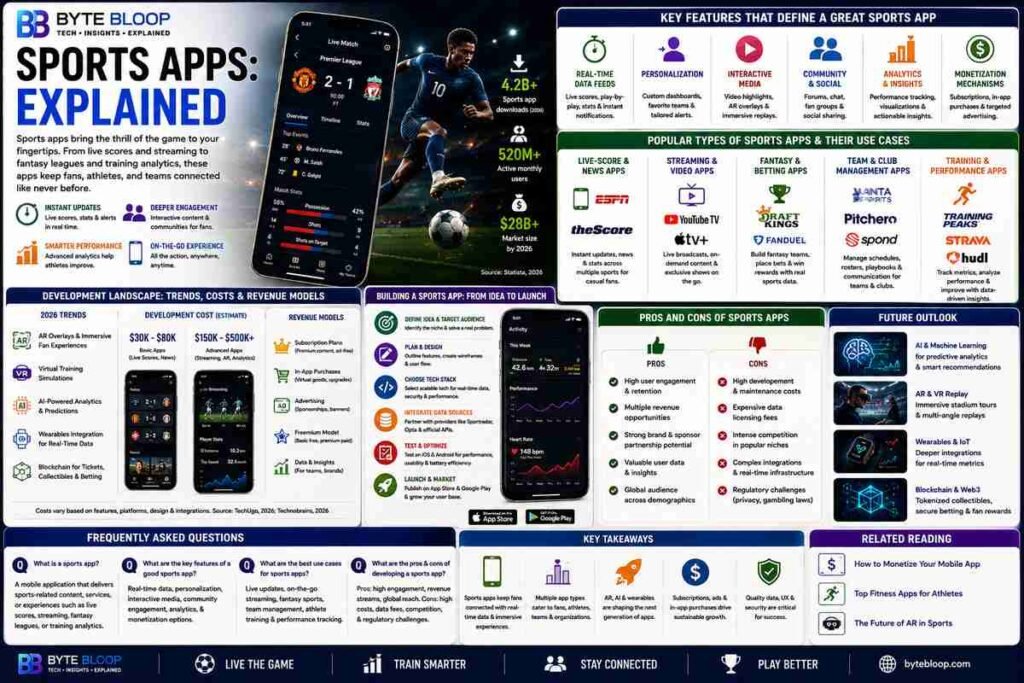
At their core, sports apps are mobile applications designed to deliver sports‑related content, services, or experiences. They can be classified into several broad types: live‑score & news, streaming & video, fantasy & betting, team & club management, training & performance, and social networking. Each type serves distinct user needs, from staying updated on a game to analyzing personal performance metrics.
Key Features That Define a Great Sports App
While each category has its nuances, successful sports apps share common feature sets:
- Real‑time data feeds – Live scores, play‑by‑play commentary, and instant alerts keep users engaged.
- Personalization – Customizable dashboards, favorite teams, and tailored notifications enhance user experience.
- Interactive media – Video highlights, AR overlays, and immersive replays bring fans closer to the action.
- Community & social – Forums, chat rooms, and fan groups foster engagement and loyalty.
- Analytics & insights – Performance tracking, injury prevention tools, and data visualizations help athletes and coaches improve.
- Monetization mechanisms – In‑app purchases, subscriptions, and targeted ads generate revenue.
Popular Types of Sports Apps and Their Use Cases
Live‑Score & News Apps
Apps like ESPN and theScore provide instant updates across multiple sports. They are essential for casual fans who want quick information without watching a game.
Streaming & Video Apps
Platforms such as Fubo, YouTube TV, and Apple TV+ offer live broadcasts, on‑demand content, and exclusive commentary. They cater to viewers who prefer mobile consumption over traditional TV.
Fantasy & Betting Apps
Apps like DraftKings and FanDuel allow users to draft virtual teams, place bets, and earn rewards. They combine gaming mechanics with real sports data, creating a highly engaging experience.
Team & Club Management Apps
Tools such as Vanta Sports, Pitchero, and Spond help coaches schedule practices, share playbooks, and communicate with players. These apps streamline operations for amateur and semi‑professional teams.
Training & Performance Apps
Apps that track metrics—heart rate, GPS, acceleration—provide athletes with actionable insights. Emerging trends in 2026 include AR overlays that guide athletes through drills and virtual training simulations that replicate real‑world scenarios.
Development Landscape: Trends, Costs, and Revenue Models
According to a 2026 guide by TechUgo, the sports app market is shifting toward immersive experiences. Augmented reality overlays and virtual training simulations are becoming standard features, especially for high‑end fitness and coaching apps. Development costs vary widely: a basic live‑score app may start at $30,000, while a full‑featured streaming platform can exceed $500,000. Revenue streams include subscription tiers, in‑app purchases, and advertising partnerships. A 2026 report by Technobrains highlights that the most profitable apps combine multiple revenue models, such as offering a free tier with premium analytics for athletes.
Building a Sports App: From Idea to Launch
The first step is to define the app’s purpose and target audience. Are you building a fan‑centric news app, a training platform for athletes, or a team management tool? Once the niche is clear, outline core features, design wireframes, and choose a technology stack that supports real‑time data and multimedia. Next, secure reliable data feeds—many developers partner with sports data providers like Sportradar or Opta. Finally, test extensively on both iOS and Android, focusing on performance, battery consumption, and user experience before launching on the App Store and Google Play.
Future Outlook: What’s Next for Sports Apps?
In 2026, the convergence of AI, AR, and wearable tech is driving the next wave of sports apps. Predictive analytics can forecast player performance, while AR overlays can guide fans through stadium tours. Virtual reality replays will let users experience games from multiple angles. Additionally, the rise of blockchain is opening new avenues for fan engagement through tokenized collectibles and secure betting platforms.
Key Takeaways
- Live‑score apps dominate casual fan engagement
- Streaming platforms are shifting consumption to mobile
- Fantasy and betting apps generate significant revenue
- Team management tools streamline operations for clubs
- AR and VR are shaping the next generation of sports experiences
Frequently Asked Questions
What is a sports app?
A mobile application that delivers sports-related content, services, or experiences, such as live scores, streaming, fantasy leagues, or training analytics.
What are the key features of a successful sports app?
Real‑time data feeds, personalization, interactive media, community tools, analytics, and monetization mechanisms.
What are the best use cases for sports apps?
Live updates for fans, on‑the‑go streaming, fantasy team building, team management, and athlete performance tracking.
What are the pros and cons of developing a sports app?
Pros include high user engagement and diverse revenue streams; cons involve high development costs, data licensing fees, and intense competition.
Conclusion
Based on the available information and industry analysis, sports apps provide a versatile platform that connects fans, athletes, and teams with real‑time data, immersive media, and community interaction. Their continued evolution—driven by AR, VR, AI, and blockchain—promises even richer experiences and new monetization opportunities for developers and stakeholders alike.
Related Reading
- How to Monetize Your Mobile App