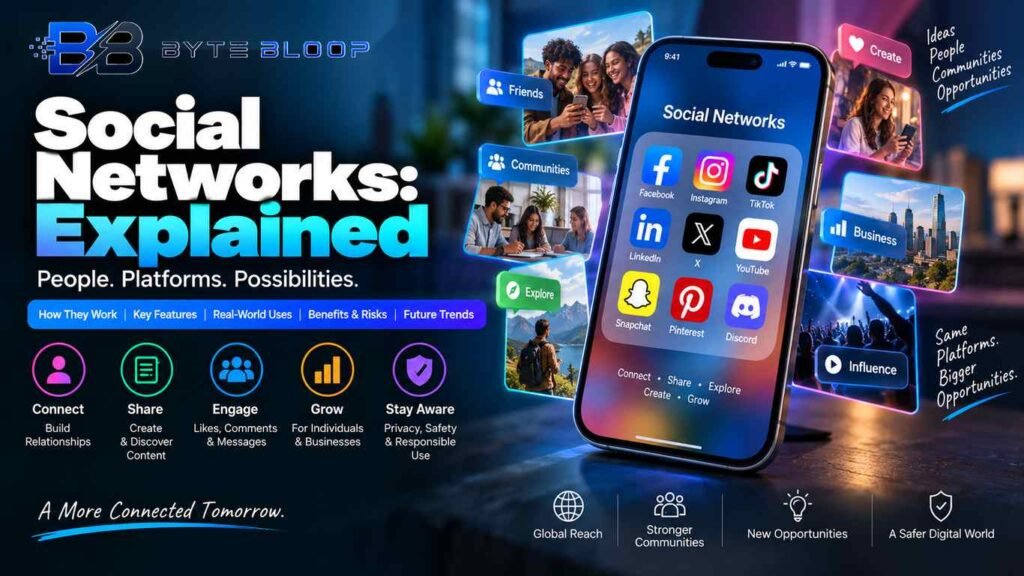
Social Networks: Explained
Introduction
Social networks are more than just platforms for sharing selfies; they are complex ecosystems where individuals and organizations connect, collaborate, and influence one another. Originating from early online communities like bulletin board systems, they have evolved into sophisticated digital hubs that integrate messaging, content sharing, and data analytics. Today, platforms such as Facebook, LinkedIn, and TikTok enable billions of users to form relationships that span geography, industry, and interest. Understanding the mechanics of these networks—how users create profiles, curate content, and engage with algorithms—is essential for anyone navigating the modern information landscape. Moreover, businesses harness social networks to build brand awareness, gather consumer insights, and drive sales, making them indispensable tools in digital marketing strategies. This guide will unpack the core concepts behind social networks, illustrate real‑world examples, and highlight both opportunities and challenges they present.
What Are Social Networks?
At their core, social networks are web‑based platforms that allow users to establish and maintain relationships with others. According to Britannica, users create profiles, share information, and exchange messages, forming a web of connections that can be visualized as a graph where nodes represent individuals and edges represent relationships. These platforms are built on principles of reciprocity, trust, and shared identity, enabling users to discover content that aligns with their interests.
Key Features of Modern Social Networks
- Profile Creation: Users set up personal or business profiles that serve as digital identities.
- Content Sharing: Posts, photos, videos, and articles are shared publicly or within curated circles.
- Interaction Mechanisms: Likes, comments, shares, and direct messages foster engagement.
- Algorithmic Curation: Machine learning models rank content to maximize relevance and time spent.
- Community Building: Groups, pages, and hashtags create micro‑communities around shared interests.
Evolution From Community to Commerce
Early social networks such as SixDegrees and Friendster focused on simple friend lists and basic messaging. Over the past two decades, the focus has shifted toward data monetization and targeted advertising. Marketing scholars note that platforms now serve as vital business tools, enabling companies to reach niche audiences, gather sentiment data, and test product concepts in real time. The shift from virtual community to commercial powerhouse illustrates how social networks have become integral to both personal and professional spheres.
Practical Examples Across Industries
In marketing, brands use Instagram’s visual storytelling to showcase products, while LinkedIn provides a professional network for B2B lead generation. Healthcare organizations leverage secure messaging on platforms like Slack to coordinate patient care, and educators use Twitter threads to disseminate research findings. These examples demonstrate that the utility of social networks extends far beyond casual interaction.
Benefits and Risks
Social networks offer unprecedented connectivity, democratized content creation, and real‑time data insights. However, they also raise concerns about data privacy, misinformation, and algorithmic bias. Users and organizations must balance the desire for reach with ethical considerations and compliance with regulations such as GDPR.
Future Directions
Emerging technologies like decentralized social graphs, privacy‑preserving data sharing, and augmented reality integration suggest that social networks will continue to evolve. As platforms experiment with token economies and blockchain‑based identity verification, the line between social interaction and digital ownership may blur, offering new monetization pathways for creators.
Key Takeaways
- Social networks link users through profiles, content, and interaction mechanisms
- They evolved from simple communities to powerful business tools
- Algorithms curate content to maximize engagement and revenue
- Privacy and misinformation remain significant challenges
- Future trends include decentralization and AR integration
Frequently Asked Questions
What is a social network?
A social network is a digital platform that allows users to create profiles, share content, and connect with others through various forms of interaction such as likes, comments, and direct messages.
What are the key features of social networks?
Key features include profile creation, content sharing, interaction mechanisms, algorithmic curation, and community building through groups or hashtags.
What are the best use cases for social networks?
Use cases span personal connection, brand marketing, B2B lead generation, educational outreach, and collaborative work environments.
What are the pros and cons of using social networks?
Pros: widespread connectivity, real‑time data insights, and marketing reach. Cons: privacy risks, misinformation spread, and algorithmic bias.
Conclusion
Based on the available information and industry analysis, social networks provide a dynamic framework for human connection, commerce, and information exchange. Their evolution from simple friend lists to sophisticated data ecosystems illustrates how technology reshapes social interaction and business strategy. While they offer unparalleled reach and engagement, responsible use requires careful attention to privacy, authenticity, and ethical data practices. As emerging trends like decentralization and augmented reality gain traction, social networks will likely continue to redefine how we communicate, collaborate, and consume content.
Related Reading
- The Rise of Decentralized Social Platforms