Creator Businesses: Explained
Introduction
In the last decade, the creator economy has evolved from a hobbyist pastime into a multi‑billion‑dollar industry. Today, creators no longer rely solely on platform payouts; they build vertically integrated enterprises that own technology, content, and customer relationships. This shift means that a single YouTuber or TikToker can now operate a full‑fledged media company, offering branded products, subscription services, and even proprietary software. Understanding how these businesses are structured and monetized is essential for anyone looking to enter the space or partner with creators. The core of a creator business lies in leveraging a personal brand to create scalable revenue streams, diversify income, and maintain creative control. This article breaks down the anatomy of creator businesses, highlights proven models, and offers actionable steps for aspiring entrepreneur‑creators.
What Makes a Creator Business Different?
Unlike traditional startups, creator businesses often begin with a single individual’s voice or visual style. The brand is built on authenticity and community trust, which translates into higher conversion rates for products and services. According to The Creator Economy: From Side Hustle to Business, creators now build proprietary tech—such as custom apps, e‑commerce platforms, and data analytics tools—to reduce dependency on third‑party platforms and capture more profit.
Core Revenue Streams
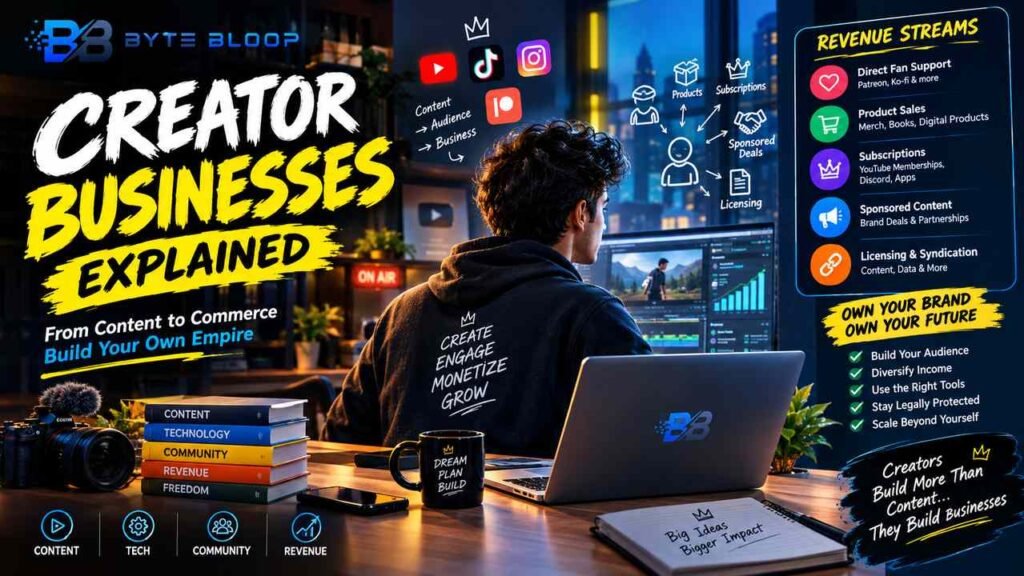
Creator businesses typically mix several income sources:
- Direct fan support – Patreon, Ko-fi, and similar platforms let fans pay monthly for exclusive content.
- Product sales – Physical goods (merch, books) and digital products (e‑books, courses).
- Subscriptions – YouTube Memberships, Discord servers, or app subscriptions offer recurring revenue.
- Sponsored content – Brand deals that align with the creator’s niche.
- Licensing and syndication – Selling rights to content or data to third parties.
According to 45 Creator Economy Business Ideas & Tools (2026), the most successful creators combine at least three of these streams, creating resilience against platform algorithm changes.
Building a One‑Person Media Company
Many experts recommend starting as a one‑person media company. How I’d Build a Creator Business in 2026 argues that owning your own distribution channel—whether a website, newsletter, or app—gives you control over audience data and monetization. This model scales by outsourcing production, leveraging freelancers, and automating repetitive tasks.
Technology as a Differentiator
Vertical integration extends beyond content. Creators now develop proprietary tools: AI‑driven editing suites, community management bots, and analytics dashboards. The Creator Economy article notes that these tools not only increase efficiency but also generate additional revenue when licensed to other creators.
Case Study: A Gaming Streamer Turned Full‑Scale Brand
Take the example of a popular gaming streamer who launched a subscription‑based streaming app, a line of branded gaming peripherals, and a podcast network. By funneling his audience from Twitch to his own platform, he captured higher ad revenue and built a loyal community that paid for premium content. This illustrates the power of owning the customer journey.
Common Pitfalls and How to Avoid Them
Creators often underestimate the importance of legal and financial infrastructure. Without proper contracts, tax planning, and intellectual property protection, a business can quickly become vulnerable. The Influencer Marketing: The Complete Business Guide for 2026 stresses the need for clear revenue‑sharing agreements and consistent brand messaging across all channels.
Scaling Beyond the Individual
Once a creator business is stable, scaling involves hiring talent, forming strategic partnerships, and expanding into new markets. The 25 Profitable Digital Business Ideas You Can Start in 2026 highlights that creators who launch niche sub‑brands or collaborate with complementary creators often see exponential growth.
Future Trends to Watch
AI content generation, decentralized platforms, and blockchain‑based ownership models are reshaping the creator economy. Creators who experiment with NFT drops or tokenized fan memberships can tap into new revenue streams while deepening community engagement. Keeping an eye on these trends will help businesses stay ahead of the curve.
Key Takeaways
- Creator businesses blend content, tech, and community for diversified income
- Owning distribution channels increases control and profit margins
- Legal and financial foundations are critical for long‑term sustainability
- Scaling often starts with strategic outsourcing and partnership building
- Emerging AI and blockchain tools offer new monetization avenues
Frequently Asked Questions
What is a creator business?
A creator business is a venture built around an individual’s personal brand, combining content creation with diversified revenue streams such as subscriptions, product sales, sponsorships, and proprietary technology.
What are the key features of a successful creator business?
Key features include a strong personal brand, multiple income channels, ownership of distribution platforms, robust data analytics, and legal and financial infrastructure.
What are the best use cases for creator businesses?
Creator businesses excel in niches where authenticity and community trust drive sales—such as gaming, beauty, education, and lifestyle—allowing creators to monetize through merch, courses, and exclusive memberships.
What are the pros and cons of building a creator business?
Pros: high creative control, scalable revenue, direct audience engagement. Cons: platform dependency risks, high upfront investment in tech, and the need for constant content production.
Conclusion
Based on the available information and industry analysis, creator businesses provide a scalable, diversified revenue model that leverages personal branding, technology ownership, and community engagement. By integrating multiple income streams and investing in proprietary tools, creators can transform side hustles into sustainable enterprises, positioning themselves for long‑term success in the evolving digital economy.
Related Reading
- How to Monetize Your YouTube Channel in 2026
- The Rise of NFT Memberships for Creators
Sources & References