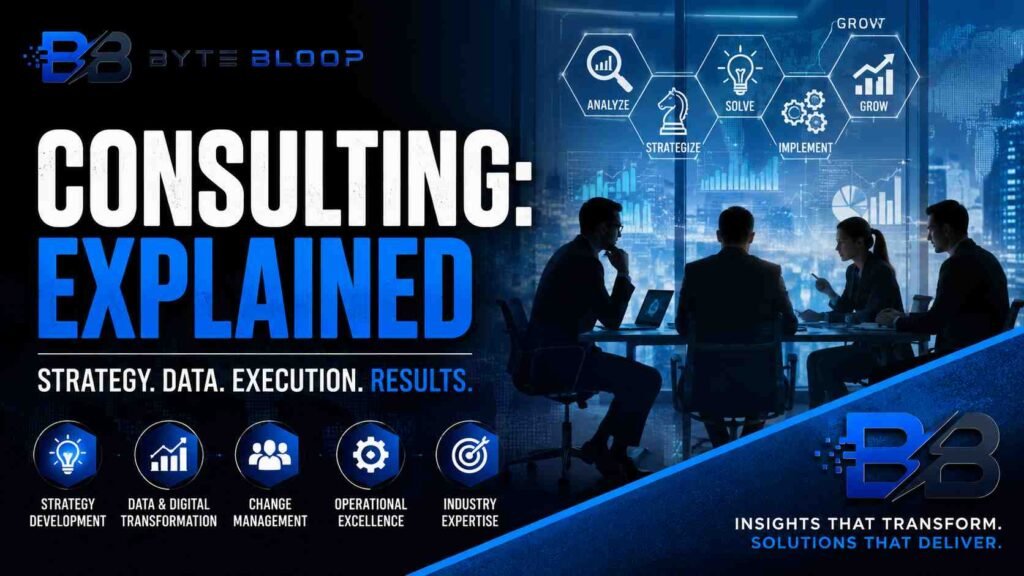
Consulting: Explained
Introduction
Consulting, at its core, is the practice of hiring an external expert to diagnose a business problem and recommend a solution. In 2026, the role has expanded beyond slide decks to include data analytics, technology integration, and change management. Companies now expect consultants to deliver measurable value, often quantified in cost savings, revenue growth, or operational efficiency. The consulting landscape is also fragmenting into 25 distinct specializations, from cybersecurity to sustainability, each commanding different rates and skill sets. This shift has made the consulting market more competitive and client‑centric, with firms leveraging proprietary frameworks and AI tools to stay ahead. Understanding the nuances of modern consulting helps businesses choose the right partner and sets realistic expectations for deliverables. Below we break down the evolution, key services, and practical tips for both clients and consultants.
What Consulting Really Means Today
Traditionally, consultants were seen as strategic advisors who produced high‑level recommendations. Today, the definition has broadened to include implementation support, technology deployment, and continuous improvement. According to Road to Offer, consulting now means being paid to analyze and solve a problem that isn’t your own, with a focus on delivering tangible outcomes. Firms blend strategy, data, technology, and change management to create real value, not just reports.
Core Services That Drive Value
1. Strategy Development – Crafting long‑term roadmaps that align with market dynamics.
2. Data Analytics & Digital Transformation – Turning raw data into actionable insights and automating processes.
3. Change Management – Ensuring people, processes, and technology shift smoothly.
4. Operational Excellence – Streamlining operations to cut costs and improve quality.
5. Industry‑Specific Advisory – From healthcare compliance to fintech innovation, specialized knowledge is now a premium offering.
Emerging Consulting Specializations
The gap between consulting services is widening. ConsultingSuccess lists 25 types, ranging from Cybersecurity Consulting to Sustainability Advisory. Each niche commands a unique fee structure and skill set. For example, sustainability consultants now charge premium rates for helping companies meet ESG targets, while data‑science specialists are in high demand for predictive modeling.
Choosing the Right Consulting Firm
Top strategy consulting firms in 2026, as highlighted by JobaaJLearnings, are distinguished by their blend of global reach and deep industry expertise. When evaluating a firm, consider:
- Track Record – Proven case studies in your sector.
- Methodology – Proprietary frameworks that translate into quick wins.
- Technology Stack – Ability to integrate AI, cloud, and analytics platforms.
- Client‑Centricity – Firms that co‑create solutions rather than hand over a report.
How Consultants Add Value
Value creation hinges on four pillars:
- Insight Generation – Using data to uncover hidden opportunities.
- Implementation Support – Guiding execution to avoid costly missteps.
- Change Enablement – Training teams and embedding new practices.
- Performance Measurement – Setting KPIs and tracking progress.
Consultants often use a seven‑step problem‑solving approach from SixPaths Consulting, blending theory with actionable templates that accelerate delivery.
Practical Tips for Clients
1. Define Success Early – Agree on measurable outcomes before signing.
2. Engage Stakeholders – Include end‑users to ensure buy‑in.
3. Set Realistic Timelines – Avoid the myth that consulting delivers overnight results.
4. Plan for Sustainability – Ensure the solution can scale and adapt.
Practical Tips for Consultants
1. Focus on Value, Not Hours – As Netsuite notes, billable hours should be a byproduct of client success.
2. Communicate Clearly – Use plain language; avoid jargon that alienates non‑experts.
3. Leverage Technology – Adopt AI tools for data analysis and process automation.
4. Build a Knowledge Base – Document lessons learned for future engagements.
Future Outlook
By 2028, consulting is projected to integrate more AI‑driven insights and real‑time dashboards, reducing the time from diagnosis to action. Firms that can combine deep domain expertise with rapid technology deployment will dominate the market. For businesses, partnering with consultants who prioritize measurable outcomes will become a strategic necessity rather than a luxury.
Key Takeaways
- Consulting now blends strategy, data, tech, and change management to deliver measurable value.
- The market features 25 distinct specializations, each with unique pricing and expertise.
- Choosing a firm requires evaluating track record, methodology, tech stack, and client‑centricity.
- Value is created through insight, implementation, change enablement, and performance measurement.
- Clients should define success metrics early and engage stakeholders throughout the project.
- Consultants must focus on outcomes, communicate clearly, and leverage AI tools to stay competitive.
Frequently Asked Questions
What is consulting explained?
Consulting is the practice of hiring external experts to diagnose business problems and recommend actionable solutions, now encompassing strategy, data, technology, and change management.
What are the key features of modern consulting?
Modern consulting focuses on measurable outcomes, integrates AI and analytics, offers specialized services, and includes implementation support and change management.
What are the best use cases for consulting?
Use cases include digital transformation, operational efficiency, market entry strategy, ESG compliance, and cybersecurity risk mitigation.
What are the pros and cons of hiring a consultant?
Pros: fresh perspective, specialized expertise, rapid problem solving. Cons: cost, potential misalignment with company culture, and dependency on external knowledge.
Conclusion
Based on the available information and industry analysis, consulting in 2026 has evolved from strategic advisory to a comprehensive value‑creation engine that blends data, technology, and change management. Firms that deliver measurable outcomes and embed solutions within client organizations will lead the market, while businesses that clearly define success metrics and engage stakeholders early will reap the greatest benefits.
Related Reading
- Digital Transformation: A Consultant’s Playbook