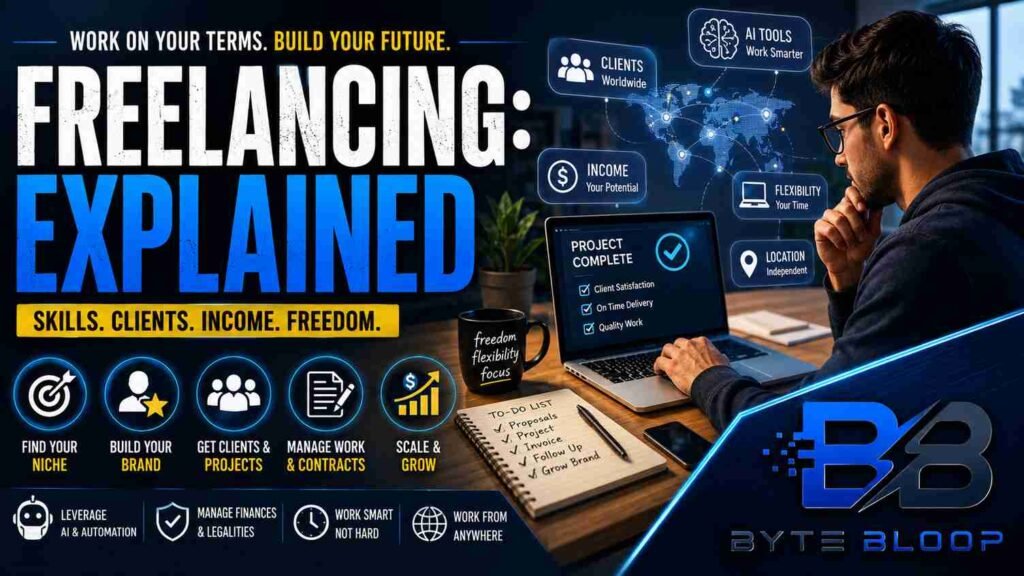
Freelancing: Explained
Introduction
Freelancing has evolved from a side hustle to a full‑time career path for millions worldwide. In 2026, the gig economy continues to expand, driven by digital platforms, AI tools, and a workforce that values flexibility. A freelancer is not just a worker on a project; they operate as a micro‑business, handling everything from marketing to invoicing. The rise of AI has automated routine tasks, allowing creatives to focus on high‑value work, yet the core principles of client acquisition and financial management remain unchanged. Understanding the mechanics of freelancing—defining a niche, building a brand, and managing cash flow—is essential for anyone looking to thrive in this dynamic landscape. This guide breaks down the steps, highlights common pitfalls, and offers actionable strategies to launch and scale a successful freelance career. Whether you’re a designer, developer, writer, or consultant, the fundamentals outlined here will help you navigate the competitive market and build sustainable income streams.
1. Defining Your Freelance Niche
Success starts with clarity. Identify the specific services you’ll offer and the audience you’ll serve. According to Upwork’s 2026 guide, a well‑defined niche—such as “AI‑driven copywriting for fintech” or “UX research for mobile health apps”—makes positioning easier and attracts higher‑paying clients. Conduct a market audit: look at demand trends, hourly rates, and the time required to build a client roster. Resources like Ideaproof’s 2026 list of freelance business ideas provide data on rates and growth trajectories, helping you choose a niche that balances passion and profitability.
2. Building Your Personal Brand
Your brand is your résumé, portfolio, and reputation combined. Create a professional website or a portfolio on platforms like Behance, Dribbble, or GitHub, depending on your field. Use consistent visuals, clear messaging, and case studies that showcase outcomes. Social proof—testimonials, client logos, and published work—boosts credibility. In 2026, AI‑generated content can help craft concise, SEO‑friendly bios and service descriptions, but authenticity remains key. Remember, your brand should reflect the value you bring, not just the services you list.
3. Finding and Managing Clients
Client acquisition is a blend of inbound and outbound tactics. Platforms such as Upwork, Fiverr, and specialized niche sites provide a ready pool of projects, but competition is fierce. Stand out by offering a unique value proposition, clear pricing, and a streamlined proposal process. Outreach via LinkedIn, industry forums, or email newsletters can generate high‑quality leads. Once you secure a client, use tools like HubSpot or Zoho to track communication, set milestones, and manage contracts. Clear scope documents and milestone payments reduce disputes and ensure steady cash flow.
4. Pricing Your Services
Pricing strategies vary by experience, niche, and market demand. Hourly rates are common for consultants, while project or retainer fees work well for designers and writers. Use data from freelance marketplaces to benchmark your rates. Consider value‑based pricing when you can demonstrate measurable impact—for example, “increase website traffic by 30%” or “reduce churn by 15%.” Always factor in taxes, health insurance, and retirement contributions, as freelancers bear these costs.
5. Managing Finances and Legalities
Freelancers must treat their business like any other. Set up a separate bank account, track expenses, and file quarterly taxes. Tools like QuickBooks Self‑Employed or Wave simplify invoicing and expense tracking. Contracts protect both parties; include payment terms, deliverables, and intellectual property clauses. In 2026, many platforms offer built‑in contract templates, but customizing them to your specific needs is advisable.
6. Leveraging AI and Automation
Artificial intelligence is reshaping freelancing workflows. ChatGPT can draft proposals, while AI design tools accelerate visual creation. Automation platforms like Zapier link your email, calendar, and invoicing apps, freeing up time for creative work. However, rely on AI for efficiency, not to replace the human touch that builds trust with clients.
7. Scaling Your Freelance Business
Once you have a steady client base, consider scaling by hiring subcontractors or forming a small agency. Outsourcing repetitive tasks—such as graphic design or data entry—allows you to focus on high‑value activities. Platforms like Upwork’s Talent Marketplace can connect you with vetted freelancers for collaboration. Scaling also involves diversifying income streams: offer workshops, create digital products, or launch a subscription service.
8. Common Pitfalls to Avoid
- Underpricing: Many new freelancers set rates too low, eroding value and sustainability.
- Scope creep: Without clear contracts, projects can expand beyond initial agreements.
- Inconsistent cash flow: Relying on a single client can jeopardize finances if the contract ends.
- Neglecting self‑care: Freelancers often work long hours without boundaries, leading to burnout.
Key Takeaways
- Define a clear niche to attract high‑paying clients
- Build a strong personal brand with a professional portfolio
- Use contracts and milestone payments to protect income
- Leverage AI for efficiency but maintain human client relationships
- Plan for taxes and insurance as part of business expenses
- Scale by outsourcing and diversifying revenue streams
Frequently Asked Questions
What is freelancing explained?
Freelancing is the practice of offering specialized services to clients on a project or retainer basis without a long‑term employment contract. It involves managing your own business functions such as marketing, invoicing, and client relations.
What are the key features of a successful freelance career?
Key features include a well‑defined niche, a strong personal brand, clear pricing strategies, robust contracts, effective client acquisition, and disciplined financial management.
What are the best use cases for AI in freelancing?
AI can draft proposals, generate content, automate repetitive tasks, design visuals, and streamline workflow through integration tools, allowing freelancers to focus on high‑value creative work.
What are the pros and cons of freelancing?
Pros: flexibility, autonomy, potential for higher earnings, and diverse projects. Cons: income instability, lack of employee benefits, self‑management overhead, and risk of burnout.
Conclusion
Based on the available information and industry analysis, freelancing in 2026 offers a flexible and potentially lucrative career path for professionals who treat their work as a business. By defining a niche, building a strong brand, and leveraging AI tools for efficiency, freelancers can attract high‑paying clients and maintain sustainable cash flow. Success hinges on clear contracts, disciplined financial practices, and continuous learning to adapt to evolving market demands.
Related Reading
- Top 10 Freelance Niches for 2026
- How to Price Your Freelance Services for Maximum Profit