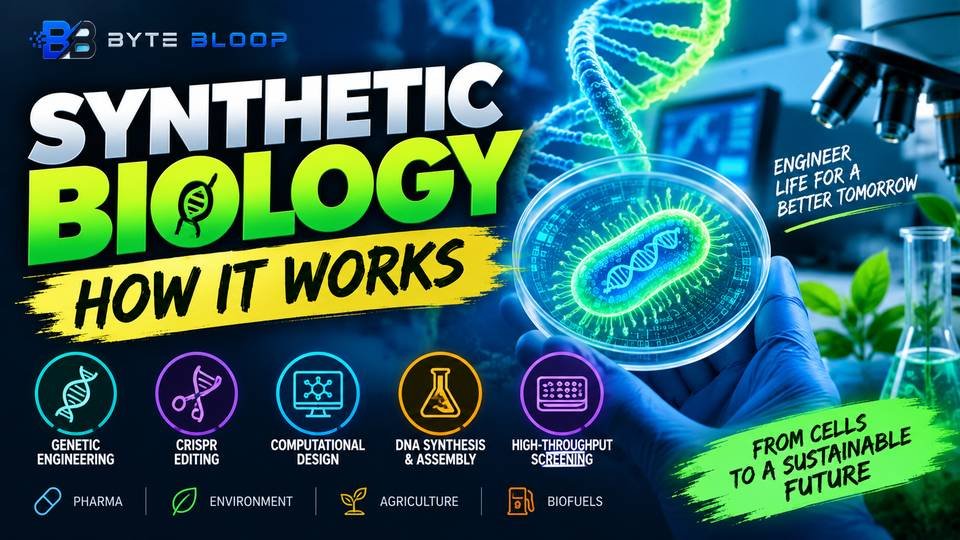
Synthetic Biology: How It Works
Introduction (Synthetic Biology How It Works)
Synthetic Biology How It Works is a topic worth understanding well. Synthetic biology is the discipline that treats living organisms as programmable systems, much like software. By borrowing principles from engineering, computer science, and chemistry, scientists design and construct new biological parts, devices, and systems that perform desired functions. The field emerged from the convergence of genetic engineering, high‑throughput sequencing, and computational modeling, allowing researchers to move beyond modifying existing genes toward creating entirely novel biological circuits.
This paradigm shift promises breakthroughs in medicine, energy, and environmental stewardship, yet it also raises ethical and safety questions that must be addressed as the technology matures. In this article, we unpack the core concepts, tools, and real‑world examples that illustrate how synthetic biology operates today and where it is headed in the coming years.
Engineering Biology: The Core Workflow
At its heart, synthetic biology follows a design–build–test–learn cycle. First, scientists conceptualize a biological function—such as producing a drug or sensing a pollutant—and translate that into a genetic blueprint. Next, they synthesize the DNA sequence using automated chemistry, then insert it into a host cell, often a bacterium or yeast, via transformation. Once the engineered organism is alive, researchers test its performance, collect data, and refine the design to improve efficiency or safety. This iterative loop mirrors software development, enabling rapid prototyping and scaling.
Key Tools and Technologies
Several foundational tools enable the synthetic biology workflow:
This matters directly for anyone exploring synthetic biology how it works.
- DNA synthesis and assembly: Companies now offer fully automated synthesis of long DNA strands, while modular cloning methods like Gibson Assembly allow researchers to stitch pieces together with high precision.
- CRISPR‑Cas systems: Gene editing technologies provide a versatile platform for inserting, deleting, or modifying genes with single‑nucleotide accuracy.
- Computational design platforms: Software such as Geneious or Benchling models genetic circuits before wet‑lab implementation, reducing trial‑and‑error.
- High‑throughput screening: Microfluidic devices and automated robotics accelerate the testing phase, allowing thousands of variants to be evaluated in parallel.
Real‑World Applications
1. Pharmaceuticals: Engineered microbes can produce complex molecules like insulin, vaccines, or novel antibiotics, reducing manufacturing costs and improving scalability.
Getting synthetic biology how it works right can make a real difference.
2. Environmental remediation: Synthetic organisms can be designed to break down plastic, capture carbon dioxide, or detoxify heavy metals, offering sustainable solutions to pollution.
That is a core part of understanding synthetic biology how it works.
3. Agriculture: Plants engineered for enhanced nutrient uptake or resistance to pests can increase yields while lowering chemical inputs.
Many readers look into synthetic biology how it works for exactly this reason.
4. Biofuels: Microbes engineered to convert plant biomass into ethanol or advanced hydrocarbons present a renewable alternative to fossil fuels.
It is worth revisiting synthetic biology how it works as things develop.
Ethical and Safety Considerations
As with any powerful technology, synthetic biology carries risks. Unintended release of engineered organisms could disrupt ecosystems, while dual‑use concerns raise questions about misuse. Regulatory frameworks are evolving to address containment, risk assessment, and public engagement. Transparent communication and robust oversight are essential to ensure that the benefits outweigh potential harms.
Synthetic Biology How It Works remains highly relevant here.
Future Outlook
Experts predict that by 2026, synthetic biology will be integral to personalized medicine, sustainable manufacturing, and climate mitigation strategies. Advances in machine learning will further streamline design, while improvements in chassis organisms—such as engineered yeast strains—will expand the range of producible compounds. Continued collaboration between academia, industry, and policymakers will shape the trajectory of this transformative field.
This is a key consideration when it comes to synthetic biology how it works.
Key Takeaways
- Synthetic biology treats life as programmable code, enabling engineered functions in cells.
- The design–build–test–learn cycle mirrors software development, accelerating innovation.
- Core tools include DNA synthesis, CRISPR editing, computational design, and high‑throughput screening.
- Applications span pharmaceuticals, environmental cleanup, agriculture, and biofuels.
- Ethical and safety frameworks are critical to responsible deployment.
Frequently Asked Questions
What is synthetic biology?
Synthetic biology is an interdisciplinary field that applies engineering principles to design and construct new biological parts, devices, and systems, or to redesign existing biological systems for useful purposes.
What are the key features of synthetic biology?
Key features include the use of modular genetic parts, automated DNA synthesis, CRISPR-based editing, computational modeling, and iterative design–build–test cycles that treat biological systems like programmable software.
What are the best use cases for synthetic biology?
Promising use cases include producing complex drugs, creating biofuels, engineering microbes for environmental remediation, developing disease‑sensing diagnostics, and enhancing crop resilience.
What are the pros and cons of synthetic biology?
Pros: rapid innovation, scalable production of valuable molecules, potential environmental benefits. Cons: ethical concerns, ecological risks from unintended release, regulatory uncertainty, and the need for robust safety protocols.
Conclusion
Based on the available information and industry analysis, synthetic biology provides a powerful toolkit for reprogramming life, enabling the creation of novel organisms that can address pressing global challenges from health to sustainability. By integrating engineering, computation, and biology, the field is poised to deliver transformative solutions while demanding careful oversight to manage its risks.
Related Reading
- Biotechnology Trends Shaping 2026
Sources & References
- The future of life: Creating natural, artificial, synthetic …
- Synthetic Biology: The Next Frontier of Programmable Life
Related Articles