
CRISPR: How It Works
Introduction (Crispr How It Works)
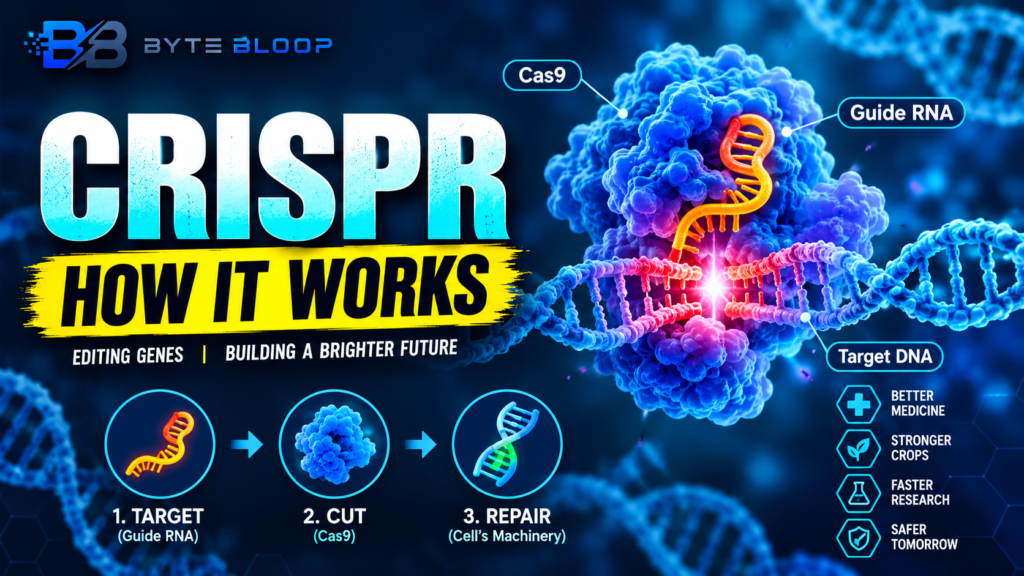
Crispr How It Works is a topic worth understanding well. CRISPR, short for *clustered regularly interspaced short palindromic repeats*, is a genome‑editing technology that has reshaped modern biology. At its core, CRISPR harnesses a bacterial immune system to locate and cut specific DNA sequences, enabling precise modifications in living organisms. The system’s power lies in its simplicity: a guide RNA directs the Cas protein to the target, the Cas protein makes a double‑strand break, and the cell’s own repair machinery rewrites the sequence.
This trio of steps—targeting, cutting, and repairing—has opened doors to disease treatment, agricultural improvement, and fundamental research. While the technology promises cures for genetic disorders, it also raises ethical and safety questions that scientists and regulators are actively addressing. Understanding the mechanics of CRISPR is essential for anyone interested in the future of medicine, biotechnology, and the broader scientific landscape.
How the CRISPR‑Cas System Works
CRISPR functions in three main stages. First, a short guide RNA (gRNA) is engineered to match the DNA sequence of interest. According to the *CRISPR* entry on the National Human Genome Research Institute, the gRNA folds into a structure that the Cas protein recognizes. Second, the Cas protein—most commonly Cas9—binds the gRNA and scans the genome. When the target sequence is found, Cas9 cleaves both strands of DNA, creating a double‑strand break. Third, the cell’s natural repair pathways, either non‑homologous end joining (NHEJ) or homology‑directed repair (HDR), resolve the break. By supplying a DNA template, researchers can insert, delete, or replace genetic material with remarkable precision.
Designing a Successful CRISPR Experiment
Creating an effective CRISPR system requires careful planning. The *Beginner’s guide to CRISPR‑Cas9‑based gene editing* outlines key steps: selecting a suitable Cas protein, designing a gRNA with minimal off‑target activity, and choosing a repair template if insertion or correction is desired. Researchers also evaluate the cell type, delivery method (viral vectors, lipid nanoparticles, or electroporation), and screening strategy to confirm edits. According to the *Gene Editing* page on crisprtx.com, the choice of repair pathway can influence the efficiency and fidelity of the final product.
This matters directly for anyone exploring crispr how it works.
Applications Across Sectors
CRISPR’s versatility has led to breakthroughs in medicine, agriculture, and basic science. In clinical trials, as highlighted in the 2026 update on *CRISPR Clinical Trials*, patients with inherited blood disorders have received CRISPR‑edited cells that restore healthy protein production. Agricultural scientists use CRISPR to develop crops with improved yield, drought resistance, and nutritional profiles. In the laboratory, CRISPR enables rapid knockout of genes to study their function, accelerating discoveries in developmental biology and neurobiology.
Getting crispr how it works right can make a real difference.
Ethical and Safety Considerations
While the technology is powerful, it is not without risk. Off‑target edits—unintended cuts elsewhere in the genome—can lead to mutations that may cause disease. The *Recent applications, future perspectives, and limitations* article in ScienceDirect discusses how advances in high‑fidelity Cas variants and improved gRNA design reduce these risks. Regulatory bodies worldwide are developing guidelines to ensure that CRISPR therapies undergo rigorous safety and efficacy testing before reaching patients.
That is a core part of understanding crispr how it works.
Future Directions
Researchers are exploring next‑generation Cas enzymes that recognize different PAM sequences, expanding the range of editable sites. Base editors and prime editors, which can change single nucleotides without double‑strand breaks, promise even greater precision. According to the *Application of CRISPR‑Cas9 genome editing technology* study, these tools are already being tested in preclinical models for diseases like sickle cell anemia and muscular dystrophy.
Many readers look into crispr how it works for exactly this reason.
Key Takeaways
- CRISPR uses a guide RNA and Cas protein to cut DNA at precise locations
- The cell’s repair mechanisms rewrite the cut, enabling targeted edits
- CRISPR is applied in medicine, agriculture, and research with growing precision tools
- Safety concerns focus on off‑target effects and ethical regulation
- Future editors like base and prime editors reduce double‑strand breaks
Frequently Asked Questions
What is CRISPR?
CRISPR is a genome‑editing technology that uses a guide RNA and Cas protein to locate and cut specific DNA sequences, allowing precise genetic modifications.
It is worth revisiting crispr how it works as things develop.
What are the key components of a CRISPR system?
The core components are the guide RNA (gRNA), the Cas nuclease (commonly Cas9), and a DNA repair template if a specific edit is desired.
Crispr How It Works remains highly relevant here.
What are the main applications of CRISPR?
CRISPR is used in medical therapies for genetic diseases, crop improvement in agriculture, and basic research to study gene function.
This is a key consideration when it comes to crispr how it works.
What are the pros and cons of CRISPR?
Pros include high precision, versatility, and cost‑effectiveness. Cons involve potential off‑target edits, ethical concerns, and regulatory hurdles.
This matters directly for anyone exploring crispr how it works.
Conclusion
Based on the available information and industry analysis, CRISPR provides a transformative platform for precise genome editing, enabling therapeutic advances, agricultural innovation, and accelerated scientific discovery while necessitating careful oversight to address safety and ethical challenges.
Related Reading
- CRISPR in Agriculture: Enhancing Crop Resilience
- The Ethics of Gene Editing: What You Need to Know
Sources & References
- CRISPR Explained — This video is an explanation of CRISPR-Cas 9. FOR THE PUBLIC: More health and medical news on the Mayo Clinic News Network.
- Gene Editing — CRISPR/Cas9 edits genes by precisely cutting DNA and then harnessing natural DNA repair processes to modify the gene in the desired manner. The system has two …
- CRISPR — CRISPR (short for “clustered regularly interspaced short palindromic repeats”) is a technology that research scientists use to selectively modify the DNA of …
- Recent applications, future perspectives, and limitations of …
- CRISPR Clinical Trials: A 2026 Update — An update on the progress of CRISPR clinical trials with the latest data and a survey of the CRISPR landscape in 2026.
- Application of CRISPR-Cas9 genome editing technology in …
- Beginner’s guide to CRISPR-Cas9-based gene editing — How the CRISPR-Cas systems work · Requirements of a typical genome editing experiment · Selecting the appropriate Cas protein · Guide RNA design.
- it’s already transforming modern biology The biotech future … — It explains the three-step process: Guide RNA finds the target, Cas9 cuts the DNA, and the cell repairs it.
Related Articles
- Powerful Artificial General Intelligence How It Works (2026)
- Best Project Management Tool Reviews Features Tested (2026)
- Powerful WordPress Plugin Reviews Features Tested (2026)
- Effective Object-Oriented Programming Explained (2026)
Getting crispr how it works right can make a real difference.


