AI Software: Explained
Introduction
Artificial intelligence software has moved beyond hype to become a core driver of modern product development. In 2026, AI is embedded in every stage of the software lifecycle—from ideation and design to coding, testing, and operations. Companies that integrate AI tools report faster feature delivery, reduced defects, and more efficient resource use. Yet, the term “AI software” covers a broad spectrum of technologies, from large language models that write code to robotic process automation that streamlines repetitive tasks. Understanding the categories, capabilities, and best practices is essential for developers, product managers, and IT leaders who want to stay competitive.
At its heart, AI software is a set of algorithms that learn from data and make autonomous decisions or recommendations. In practice, this manifests as coding assistants that auto‑complete functions, security scanners that detect vulnerabilities, or DevOps bots that deploy applications with minimal human intervention. The convergence of cloud-native infrastructure, low‑code platforms, and advanced machine‑learning models has accelerated adoption, turning AI from a niche experiment into a mainstream productivity engine.
Core Categories of AI Software
Industry analysts identify four primary categories that dominate the 2026 landscape:
- Machine Learning Platforms – frameworks that train predictive models on large datasets, powering recommendation engines and anomaly detection.
- Natural Language Processing (NLP) – tools that interpret and generate human language, enabling chatbots, code generation, and automated documentation.
- Robotic Process Automation (RPA) – software bots that replicate user actions to automate repetitive workflows such as data entry and report generation.
- Computer Vision – image and video analysis engines used in quality assurance, security, and user experience personalization.
Popular AI Development Tools in 2026
Several vendors have carved out strong positions by combining these categories into integrated suites:
- GitHub Copilot X – an evolution of the original Copilot that incorporates real‑time debugging suggestions and context‑aware code completions powered by GPT‑4o.
- ChatGPT Enterprise – a secure, on‑premises deployment that supports team‑specific knowledge bases and integrates with IDEs for instant code review.
- Checkmarx AI Security – an AI‑enhanced static‑analysis tool that predicts zero‑day vulnerabilities and recommends remediation steps.
- Microsoft Power Platform + Copilot – blends low‑code app creation with AI‑driven workflow automation, allowing non‑technical users to prototype complex business logic.
How AI Accelerates the Software Lifecycle
1. Requirements & Design – AI can parse user stories and generate UML diagrams, reducing the back‑and‑forth between stakeholders and designers.
2. Code Generation – LLMs produce boilerplate code, unit tests, and even full modules, cutting development time by 30‑50% for routine tasks.
3. Testing & QA – AI agents generate edge‑case test scenarios, analyze test coverage gaps, and even auto‑fix failing tests in some environments.
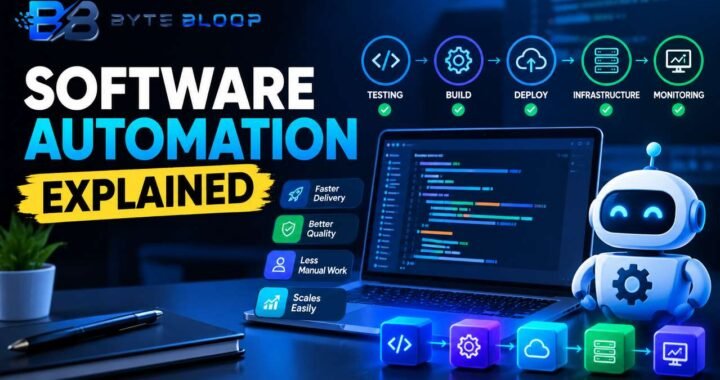
4. Deployment & Ops – DevSecOps bots monitor application health, predict roll‑back points, and orchestrate zero‑downtime deployments.
Practical Example: Building a Chatbot with Copilot
Imagine a startup that wants to launch a customer support chatbot. Using Copilot X, the lead developer writes a high‑level function signature. Copilot suggests a full implementation, including error handling and API calls. The developer reviews the generated code, runs automated tests, and deploys via a Copilot‑enabled CI/CD pipeline. The entire process—from concept to production—takes less than a week, compared to the typical 6‑8 weeks for a similar project without AI assistance.
Pros and Cons of AI Software
Pros: Rapid prototyping, reduced human error, scalability, and continuous learning from new data.
Cons: Overreliance on generated code can mask architectural flaws, data privacy concerns, and the need for skilled reviewers to validate AI outputs.
Pricing and Licensing Considerations
Most AI tools follow a subscription model. For example, GitHub Copilot X starts at $20 per user per month, while enterprise solutions like ChatGPT Enterprise can run into the thousands of dollars depending on usage tiers and compliance requirements. Open‑source alternatives such as Hugging Face’s Transformers library offer free models but require in‑house hosting and maintenance.
Choosing the Right Tool for Your Team
Assess your team’s skill set, data security needs, and existing tech stack. If your organization already uses Microsoft Azure, the Power Platform + Copilot integration may offer the smoothest experience. For purely code‑centric teams, Copilot X or ChatGPT Enterprise provide the most immediate productivity gains. Security‑heavy environments should consider AI security platforms that integrate with existing CI/CD pipelines.
Key Takeaways
- AI software spans machine learning, NLP, RPA, and computer vision, each driving different parts of the dev cycle.
- Top 2026 tools blend code generation, testing, and deployment into single AI‑powered workflows.
- Rapid prototyping and reduced defects are common benefits, but teams must guard against blind trust in AI output.
- Choosing tools depends on existing stack, security posture, and the specific phases of the software lifecycle you aim to accelerate.
- Enterprise pricing can be high, but open‑source options exist for teams with in‑house hosting capabilities.
Frequently Asked Questions
What is AI software explained?
AI software refers to applications that use machine learning, natural language processing, robotic process automation, or computer vision to learn from data and perform tasks autonomously or with minimal human intervention.
What are the key features of AI development tools?
Key features include code generation, real‑time debugging suggestions, automated testing, security vulnerability detection, low‑code app creation, and AI‑driven deployment orchestration.
What are the best use cases for AI software in development?
Use cases span rapid prototyping, automated unit test creation, continuous security scanning, workflow automation, and intelligent code review.
What are the pros and cons of using AI software?
Pros include faster feature delivery, reduced human error, and scalable automation. Cons involve potential overreliance on AI output, data privacy concerns, and the need for skilled reviewers to validate results.
Conclusion
Based on the available information and industry analysis, AI software in 2026 provides a transformative boost to the software development lifecycle, enabling teams to accelerate delivery, improve quality, and reduce manual toil. However, success hinges on thoughtful tool selection, robust governance, and continuous human oversight to balance automation with architectural integrity.
Related Reading
- Top AI Coding Assistants for 2026
- Securing AI‑Driven DevOps Pipelines