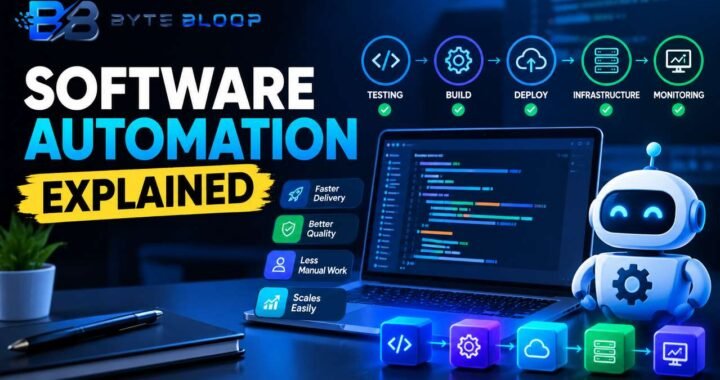
Code Editors: Explained
Introduction
Code editors are the backbone of modern software development, offering a streamlined environment where developers write, test, and debug code. Unlike full‑blown integrated development environments (IDEs), editors focus on lightweight, fast performance while still providing powerful features such as syntax highlighting, auto‑completion, and version control integration. In 2026, the market has expanded beyond the classic VS Code and Sublime Text to include AI‑augmented editors that predict code, suggest refactors, and even generate entire functions on the fly. These advancements have reshaped how teams collaborate, allowing developers to spend less time on boilerplate and more time on creative problem solving. Whether you’re a solo coder, a startup team, or a large enterprise, understanding the nuances of code editors can dramatically improve productivity and code quality. This guide breaks down the core concepts, evaluates the leading editors of 2026, and offers practical advice on selecting the right tool for your workflow.
What Is a Code Editor?
A code editor is a specialized text editor designed for writing source code. It offers features tailored to programming languages, such as syntax coloring, code folding, and bracket matching. While many editors support basic text editing, code editors often integrate with build tools, debuggers, and source control systems, bridging the gap between writing code and deploying it.
Core Features to Look For
- Syntax Highlighting & Language Support – Accurate color coding for multiple languages.
- Intelligent Autocompletion – Predictive suggestions that speed up coding.
- Extensibility – Plugin ecosystems to add language servers, linters, or AI assistants.
- Performance & Responsiveness – Fast startup and low memory footprint, especially important for large projects.
- Cross‑Platform Consistency – Uniform experience on Windows, apple.com/macos” target=”_blank” rel=”noopener noreferrer”>macOS, and Linux.
- Integrated Terminal & Debugger – One‑stop shop for running commands and inspecting code.
Top Code Editors of 2026
Industry reviews and developer surveys highlight a mix of traditional favorites and emerging AI‑powered tools. Below are the most cited options.
Visual Studio Code
VS Code remains the de‑facto standard, with a vast extension marketplace and strong community support. Its built‑in Git integration and robust debugging tools make it a versatile choice for almost any project.
Cursor AI
Cursor combines a lightweight editor with a conversational AI layer that can generate code snippets, explain errors, and refactor blocks on demand. Its “AI‑first” approach reduces context switching for developers who rely on generative assistance.
Zed
Zed is a next‑generation editor built for speed and scalability. It uses a distributed architecture that keeps the UI responsive even when handling large monorepos, and its AI integration is optional, giving developers control over when to leverage automation.
Neovim
Neovim offers a highly customizable, keyboard‑centric experience. With Lua scripting and plugin ecosystems like nvim-lspconfig and telescope.nvim, it remains a favorite for power users who want total control over their environment.
JetBrains IntelliJ Platform (WebStorm, PyCharm, etc.)
These IDEs provide deep language support, smart refactoring, and a unified UI across languages. Though heavier than editors, they excel in large enterprise settings where feature completeness outweighs startup time.
Sublime Text
Sublime’s “Goto Anything” and fast indexing make it ideal for quick edits and scripting. Its package ecosystem, though smaller than VS Code’s, still offers powerful extensions for most languages.
Atom
Atom remains a viable option for developers who prefer a hackable, open‑source editor with a vibrant community. Its package manager and Teletype collaboration feature are notable for distributed teams.
When to Choose an Editor vs. an IDE
Editors shine when you need speed, low overhead, and a flexible plugin stack. IDEs are preferable for large codebases, complex build systems, or when you require integrated debugging and profiling out of the box. Many teams adopt a hybrid approach: using VS Code for day‑to‑day coding and switching to JetBrains IDEs for heavy refactoring or performance profiling.
Pricing and Licensing
Most editors are free or open source. VS Code, Neovim, and Sublime Text offer free tiers; Sublime Text requires a license after a trial period. JetBrains IDEs use a subscription model, while Zed offers a free tier with optional paid AI features. Cursor AI’s pricing is tiered based on usage, with a generous free plan for individual developers.
Practical Examples
Consider a full‑stack JavaScript project. A developer might use VS Code with the ESLint and Prettier extensions for linting and formatting, while the GitLens extension provides inline commit history. For rapid prototyping, the same developer could switch to Cursor AI to generate boilerplate React components, then hand them back to VS Code for manual tweaking.
In a data‑science workflow, a data engineer might prefer Neovim with nvim-lspconfig for Python and jedi for auto‑completion, while using the integrated terminal to run Jupyter notebooks directly from the editor.
Key Takeaways
- VS Code dominates the market with a huge extension ecosystem.
- AI‑powered editors like Cursor and Zed are reshaping coding workflows.
- Neovim remains the choice for keyboard‑centric, highly customizable setups.
- Editors excel when speed and low overhead are priorities; IDEs suit large, complex projects.
- Pricing varies: free open‑source options, subscription models, and tiered AI features.
- Choosing the right tool depends on project size, language, and team workflow.
Frequently Asked Questions
What is a code editor?
A code editor is a specialized text editor designed for writing and editing source code, offering features like syntax highlighting, auto‑completion, and integration with version control and build tools.
What are the key features of modern code editors?
Key features include multi‑language syntax highlighting, intelligent autocompletion, extensibility via plugins, fast performance, cross‑platform consistency, and integrated terminal or debugging support.
What are the best use cases for AI‑augmented editors like Cursor?
AI‑augmented editors excel in rapid prototyping, boilerplate generation, code explanations, and reducing context switching for developers who want predictive assistance during coding.
What are the pros and cons of using Neovim?
Pros: lightweight, keyboard‑centric, highly customizable, and excellent for large codebases. Cons: steeper learning curve, requires manual plugin setup, and lacks built‑in GUI features found in IDEs.
Conclusion
Based on the available information and industry analysis, code editors in 2026 have evolved from simple text tools to sophisticated, AI‑integrated platforms that dramatically accelerate development cycles. By selecting the right editor—whether a classic powerhouse like VS Code, an AI‑first solution such as Cursor, or a lightweight, highly customizable stack like Neovim—developers can tailor their workflow to match project complexity, team collaboration needs, and personal productivity preferences. The future of coding will continue to blend speed, intelligence, and extensibility, ensuring that the right editor remains a critical asset in every developer’s toolkit.
Related Reading
- Top AI Code Assistants for 2026
- Comparing VS Code vs. JetBrains IDEs