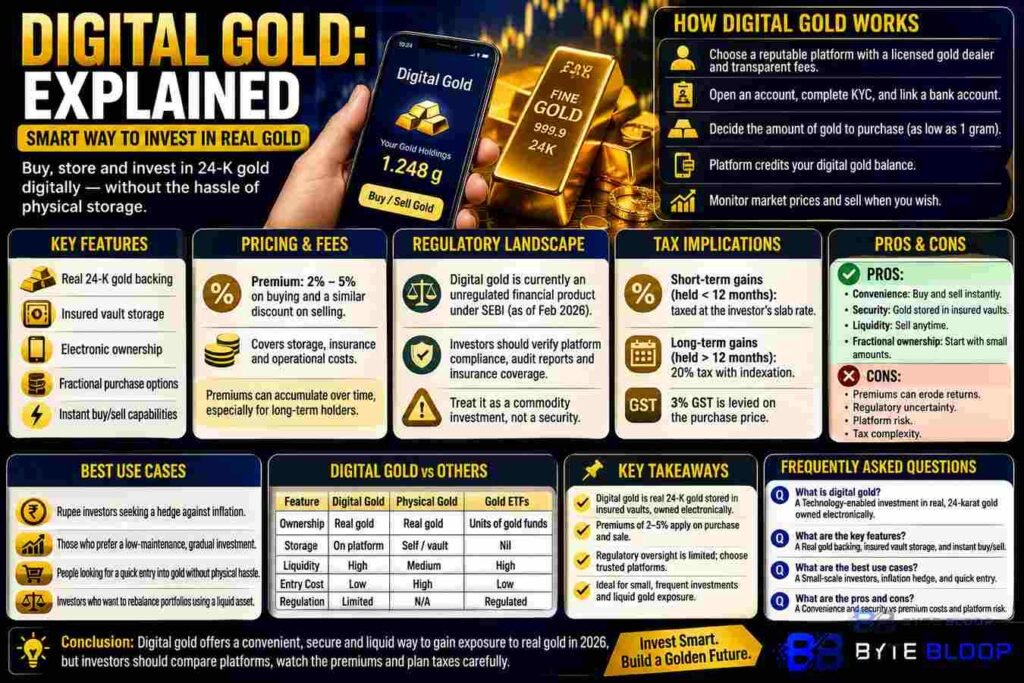
Digital Gold: Explained
Introduction
Digital gold has become a buzzword in India’s investment landscape, offering a tech‑savvy alternative to traditional bullion. In 2026, the concept remains the same: you buy a fraction of a gram of real, 24‑karat gold, but the ownership is recorded electronically on a secure platform. This model eliminates the need for physical storage, paperwork, and the logistical headaches that come with buying and selling physical bars or coins. For many investors, digital gold provides a convenient way to diversify portfolios, especially for those who prefer small, frequent purchases rather than large lump‑sum investments. The technology behind digital gold is built on secure ledgers and insurance‑backed vaults, ensuring that each gram you own is backed by tangible gold stored in audited facilities. At the same time, the sector faces regulatory ambiguities, as SEBI classifies it as an unregulated financial product, which can influence pricing and investor protection. Understanding the mechanics, costs, and legal backdrop is essential before committing capital to digital gold.
In this guide, we break down the core components of digital gold, compare it to physical bullion and gold ETFs, and outline practical steps for investing. We’ll also highlight the key fees, tax implications, and the best use cases for different investor profiles. Whether you’re a seasoned investor or a first‑time buyer, this article will equip you with the knowledge to make an informed decision about digital gold in 2026.
How Digital Gold Works
At its core, digital gold represents real, high‑purity gold that you own electronically. When you purchase a digital gold unit, the platform deposits the corresponding weight of gold in a secure vault, typically insured by a third‑party. Your ownership is recorded on a digital ledger, and you can buy, sell, or transfer your holdings through the platform’s app or website. The gold is usually 24‑karat and stored in government‑approved vaults, ensuring authenticity and safety.
Key Steps to Invest
- Choose a reputable platform that partners with a licensed gold dealer and has a transparent fee structure.
- Open an account, complete KYC, and link a bank account for fund transfers.
- Decide on the amount of gold to purchase; most platforms allow purchases as low as a gram.
- Confirm the transaction, and the platform will credit your digital gold balance.
- Monitor market prices and sell when you wish, keeping in mind the buyback premium.
Pricing and Fees
Unlike physical gold, digital gold platforms typically add a premium over the spot price. According to a 2026 guide, the premium ranges from 2% to 5% when buying and a similar discount when selling. This spread covers storage, insurance, and operational costs. While the premium is modest, it can accumulate over time, especially for long‑term holders. Some platforms offer tiered pricing or lower fees for high‑volume investors, so it’s worth comparing options before committing.
Regulatory Landscape
As of February 2026, digital gold remains an unregulated financial product under SEBI. This means that while the gold itself is a tangible asset, the investment vehicle is not subject to the same oversight as mutual funds or ETFs. Investors should therefore scrutinize the platform’s compliance record, audit reports, and insurance coverage. SEBI’s guidance suggests that investors should treat digital gold as a commodity investment rather than a security, and should be aware that the lack of regulatory protection could impact dispute resolution.
Tax Implications
Digital gold is taxed similarly to physical gold. Capital gains are classified as short‑term or long‑term based on the holding period. Short‑term gains (held less than 12 months) are taxed at the investor’s slab rate, while long‑term gains (held more than 12 months) attract a 20% tax with indexation. Additionally, a 3% GST is levied on the purchase price of gold, which is typically included in the platform’s fee structure. Investors should factor these taxes into their return calculations.
Pros and Cons
Pros
- Convenience: Buy and sell instantly via mobile apps.
- Security: Gold is stored in insured vaults; no physical handling required.
- Liquidity: Digital gold can be sold at any time, often within minutes.
- Fractional ownership: Ideal for small investors or those who want to dip into gold without large capital outlay.
Cons
- Premiums and discounts can erode returns over time.
- Regulatory uncertainty: Lack of SEBI oversight may raise concerns for risk‑averse investors.
- Platform risk: The safety of your gold depends on the platform’s operational integrity.
- Tax complexity: Investors must track holding periods and GST to calculate accurate returns.
Best Use Cases
Digital gold is particularly suited for:
- Rupee‑denominated investors who want a hedge against inflation.
- Those who prefer a low‑maintenance investment that can be added to gradually.
- People looking for a quick entry into gold without the hassle of physical storage.
- Investors who want to rebalance portfolios using a liquid asset.
Comparing to Physical Gold and ETFs
Physical gold offers tangible ownership but comes with storage, insurance, and security costs. Gold ETFs provide liquidity and are regulated, but they involve management fees and may not offer direct gold ownership. Digital gold sits between the two: it offers the liquidity of ETFs and the ownership of physical gold, albeit with a modest premium.
Key Takeaways
- Digital gold is real 24‑K gold stored in insured vaults, owned electronically.
- Premiums of 2‑5% apply on purchase and sale, affecting long‑term returns.
- Regulatory oversight is limited; investors should verify platform compliance.
- Tax treatment mirrors physical gold: short‑term gains taxed at slab rates, long‑term at 20% with indexation.
- Ideal for small, frequent investments and those seeking liquid gold exposure.
Frequently Asked Questions
What is digital gold?
Digital gold is a technology‑enabled investment that lets you buy and own real, 24‑karat gold electronically, with ownership recorded on a secure platform.
What are the key features of digital gold?
Real gold backing, insured vault storage, electronic ownership, fractional purchase options, and instant buy/sell capabilities.
What are the best use cases for digital gold?
Small‑scale investors seeking liquidity, those wanting a hedge against inflation, and anyone who wants to avoid the hassles of physical storage.
What are the pros and cons of digital gold?
Pros include convenience, security, and liquidity; cons involve premium costs, regulatory uncertainty, and platform risk.
Conclusion
Based on the available information and industry analysis, digital gold in 2026 offers a convenient, secure, and liquid way for investors to gain exposure to real gold, though the modest premiums and regulatory gaps require careful platform selection and tax planning.
Related Reading
- Physical Gold vs Digital Gold: Which Is Better for 2026?
This article is for informational and educational purposes only and should not be considered financial, investment, or trading advice.
This article is for informational and educational purposes only and should not be considered financial, investment, or trading advice.
