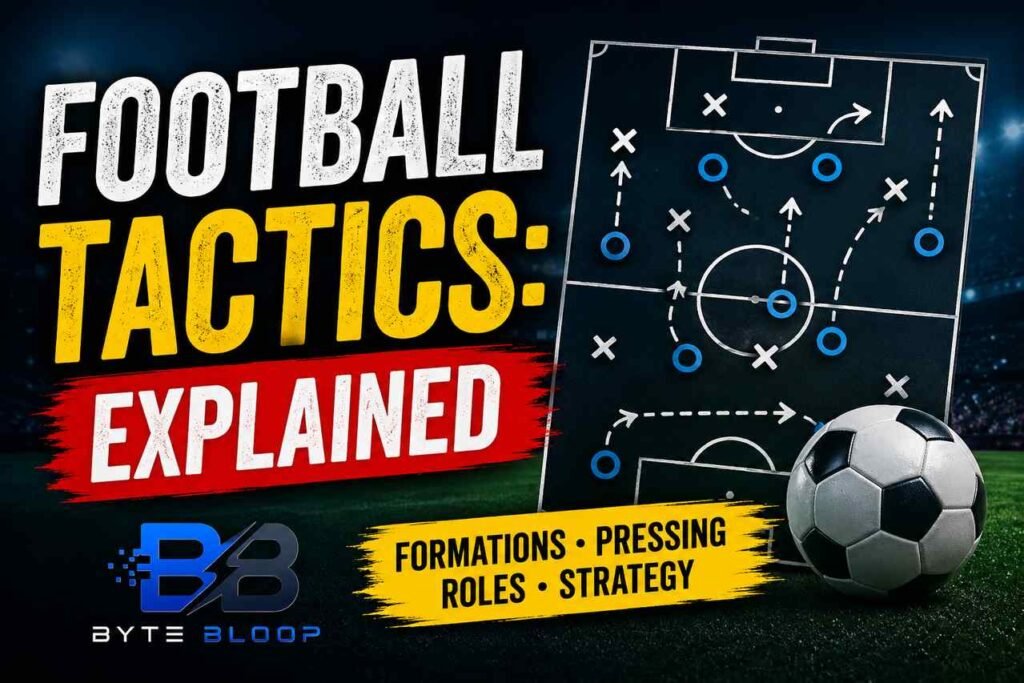
Football Tactics: Explained
Introduction
Football is a game of strategy as much as skill. The way a team arranges its players, the shape it adopts on the pitch, and the decisions it makes in moments of pressure are all governed by tactics. Coaches spend years studying these patterns, translating complex ideas into simple instructions that can be executed by a squad of 11. Understanding football tactics is essential for players, managers, and fans alike, as it unlocks the hidden logic behind a team’s success or failure. Modern football has moved beyond rigid formations; it now emphasizes fluidity, pressing intensity, and role specialization. This guide breaks down the core concepts of football tactics, illustrating how they work in practice and offering actionable insights for anyone looking to deepen their tactical acumen.
What Are Tactics in Football?
Tactics are the strategic frameworks coaches use to organize players in both attacking and defensive phases of play. They dictate positioning, movement, and decision‑making, tailored to a team’s strengths and the opposition’s weaknesses. Unlike rules, which are fixed, tactics are dynamic and evolve during a match, responding to the flow of the game.
Foundational Pillars of Modern Play
Recent analyses identify five pillars that define elite tactical approaches: pressing, build‑up play, modern roles, case studies, and metrics. Pressing involves coordinated pressure to win the ball quickly, while build‑up play focuses on how a team transitions from defense to attack. Modern roles assign specific responsibilities—such as the ball‑playing center‑back or the inverted winger—to create space and overloads. Case studies of clubs like Manchester City and Bayern Munich illustrate how these pillars are woven into daily training. Metrics, including pass completion rates and expected goals, provide objective data to refine tactics.
Popular Formations and Their Tactics
Formations are the visible skeleton of a team’s tactical plan. The 4-3-3, for instance, balances width and midfield control, enabling high‑pressing and quick counter‑attacks. The 4-2-3-1 offers defensive solidity with two holding midfielders, while still allowing creative freedom in the attacking midfield trio. The 3-5-2 provides a strong central presence and wingbacks who can drift wide or drop back. Coaches choose formations based on squad depth, player attributes, and the opponent’s style.
Adapting Formations Mid‑Game
Successful managers shift formations during matches to exploit weaknesses or protect a lead. A common tactic is the 4-4-2 to 4-3-3 switch when chasing a goal, adding an extra midfielder to dominate the center of the pitch. Conversely, a team trailing might adopt a 3-5-2 to increase attacking options while maintaining defensive coverage.
Pressing Systems Explained
Pressing can be high, medium, or low. High pressing forces the opposition into mistakes near their own penalty area, while low pressing protects the backline and forces long‑range shots. The “gegenpress” system, popularized by Guardiola, emphasizes immediate pressure after losing possession, aiming to recover the ball within three tackles.
Role Specialization: Modern Player Positions
Traditional roles—striker, midfielder, defender—have evolved into specialized positions. The ball‑playing center‑back initiates attacks from the back, the inverted winger cuts inside to create shooting angles, and the defensive midfielder shields the defense while distributing passes. Understanding these roles helps coaches assign tasks that maximize each player’s strengths.
Using Data to Refine Tactics
Analytics now guide tactical decisions. Teams track pass networks, heat maps, and expected goals to identify patterns and gaps. By comparing a team’s metrics against league averages, coaches can adjust pressing intensity, width, or tempo. Data-driven insights also inform player recruitment, ensuring new signings fit the tactical framework.
Practical Tips for Players and Coaches
1. Study match footage: Break down opponent formations and identify key players. 2. Practice shape drills: Rehearse pressing triggers and defensive lines. 3. Communicate constantly: Clear verbal cues keep the squad cohesive. 4. Use metrics: Review pass accuracy and possession statistics after each game. 5. Embrace flexibility: Be ready to switch formations based on match context.
What Happens Next?
Football tactics continue to evolve as technology and player skill sets advance. Emerging trends include hybrid formations that blend defensive solidity with attacking flair, and the use of AI to predict opponent movements. Staying updated with tactical literature and real‑time analytics will keep coaches and players ahead of the curve.
Key Takeaways
- Tactics blend formation, pressing, and role specialization into a cohesive game plan.
- Modern teams use data analytics to refine tactics and make informed decisions.
- Flexibility—shifting formations mid‑game—can turn the tide of a match.
- Understanding player roles is essential for maximizing squad potential.
- High‑pressing and build‑up play are core pillars of elite tactical systems.
Frequently Asked Questions
What is a football tactic?
A football tactic is a strategic plan that dictates how players position themselves, move, and make decisions during a game, tailored to a team’s strengths and the opposition’s weaknesses.
What are the key features of modern football tactics?
Modern tactics emphasize pressing intensity, fluid build‑up play, specialized player roles, data‑driven decision making, and the ability to shift formations during matches.
What are the best use cases for the 4-3-3 formation?
The 4-3-3 is ideal for teams that want width, midfield control, and high pressing, allowing quick transitions and multiple attacking options.
What are the pros and cons of a high‑pressing system?
Pros include forcing opponent mistakes and recovering possession quickly; cons involve high energy demands, potential defensive gaps, and vulnerability to long balls.
Conclusion
Based on the available information and industry analysis, football tactics explained reveal that success hinges on a blend of structured formations, dynamic pressing, role specialization, and data‑driven insights. By mastering these elements, teams can adapt to any opponent and maintain competitive advantage on the modern pitch.
Related Reading
- Top 10 Football Formations of 2026