Free Software: Explained
Introduction
Free Software Explained is a topic worth understanding well. Free software is often misunderstood as simply “no cost.” In reality, it refers to a set of user freedoms that empower individuals to run, copy, study, modify, and share software. The concept, championed by the Free Software Foundation, emphasizes that freedom is the key metric, not price. By granting these rights, free software fosters collaboration, security, and innovation across communities worldwide. It also provides a counterbalance to proprietary ecosystems where source code is hidden and control is centralized.
For developers, students, and businesses, understanding these freedoms can unlock new possibilities for customization and cost‑efficiency. This guide breaks down the core principles, explores real‑world applications, and offers practical tips for selecting the right free tools for your projects.
What Free Software Actually Means
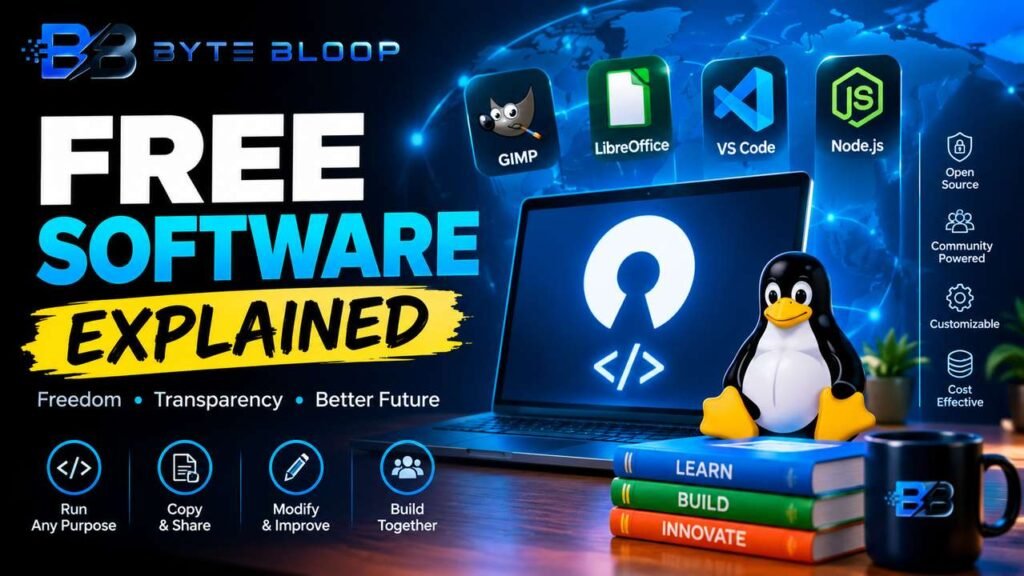
According to What is Free Software?, free software grants users the freedom to run the program for any purpose, copy it, modify it, and redistribute copies of either the original or modified versions. These rights are protected by licenses such as GPL, MIT, or Apache, which ensure that the software remains free for all future users. The term “free” refers to freedom, not price, and is often abbreviated as FOSS (Free and Open‑Source Software).
Why Free Software Matters
Free software’s impact extends beyond individual users. It promotes transparency, allowing anyone to audit code for security flaws or privacy concerns. According to the Free Software Foundation, this openness leads to faster bug fixes and more robust security patches. Additionally, the ability to modify software means that communities can adapt tools to local languages, regulatory requirements, or niche workflows that proprietary vendors may ignore.
This matters directly for anyone exploring free software explained.
Key Features of Free Software
1. Source Code Availability – The code is openly accessible, enabling learning and modification.
2. Freedom to Distribute – Users can share copies with friends, colleagues, or the public.
3. Community Collaboration – Developers worldwide contribute improvements, bug fixes, and new features.
4. Cost Efficiency – No licensing fees reduce operational expenses for individuals and businesses.
Getting free software explained right can make a real difference.
Best Use Cases
Free software shines in environments where customization and cost control are paramount. For example, educational institutions can adapt learning management systems to fit local curricula without paying licensing fees. Startups can build prototypes quickly using open‑source frameworks, then scale without vendor lock‑in. Governments often adopt free tools for transparency and auditability. In the creative sector, designers use free graphic suites to produce high‑quality assets without subscription costs.
That is a core part of understanding free software explained.
Practical Examples
1. GIMP – A powerful image editor that rivals commercial options like Photoshop.
2. LibreOffice – A full office suite that supports all major document formats.
3. VS Code – A lightweight, extensible code editor with a vast marketplace of plugins.
4. Apache OpenOffice – An alternative office suite with strong compatibility.
5. Node.js – A runtime that powers countless web applications and microservices.
Many readers look into free software explained for exactly this reason.
Pros and Cons
Pros include zero upfront costs, community support, and the ability to audit and modify code. Cons can involve fragmented support channels, variable documentation quality, and the need for technical expertise to maintain or extend the software. However, many projects now offer professional support contracts that mitigate these risks.
It is worth revisiting free software explained as things develop.
Choosing the Right Free Software
When evaluating free tools, consider the following criteria: active development community, compatibility with your operating system, licensing terms that match your project goals, and available commercial support options. Reading user reviews, exploring GitHub activity, and testing the software in a sandbox environment can help ensure a good fit.
Free Software Explained remains highly relevant here.
Key Takeaways
- Free software grants users rights to run, copy, modify, and share code.
- Open source drives transparency, faster bug fixes, and community innovation.
- It offers cost savings and flexibility for startups, educators, and governments.
- Choosing the right tool requires assessing community activity, license compatibility, and support options.
- Free software can coexist with proprietary solutions, providing a hybrid approach to IT strategy.
Frequently Asked Questions
What is free software explained?
Free software refers to programs that grant users the freedom to run, copy, modify, and distribute the code, ensuring openness and community collaboration.
This is a key consideration when it comes to free software explained.
What are the key features of free software?
Key features include source code availability, the ability to redistribute, community-driven development, and cost‑free licensing.
What are the best use cases for free software?
Ideal for education, startups, government, and any scenario needing customization, transparency, and cost control.
What are the pros and cons of free software?
Pros: zero cost, community support, security transparency. Cons: variable documentation, need for technical skill, potential fragmented support.
Conclusion
Based on the available information and industry analysis, free software provides a powerful framework that balances user freedom with practical benefits. By embracing open source, organizations can reduce costs, accelerate innovation, and maintain control over their digital assets. The collaborative nature of these tools ensures continuous improvement and adaptability, making free software an indispensable component of modern technology ecosystems.
Related Reading
- Top 10 Free Software for Windows 2026
Sources & References
- What is Free Software?
- What is free software and why is it so important for society?
- What Is Software? The Complete 2026 Guide
- Free and open-source software
Related Articles