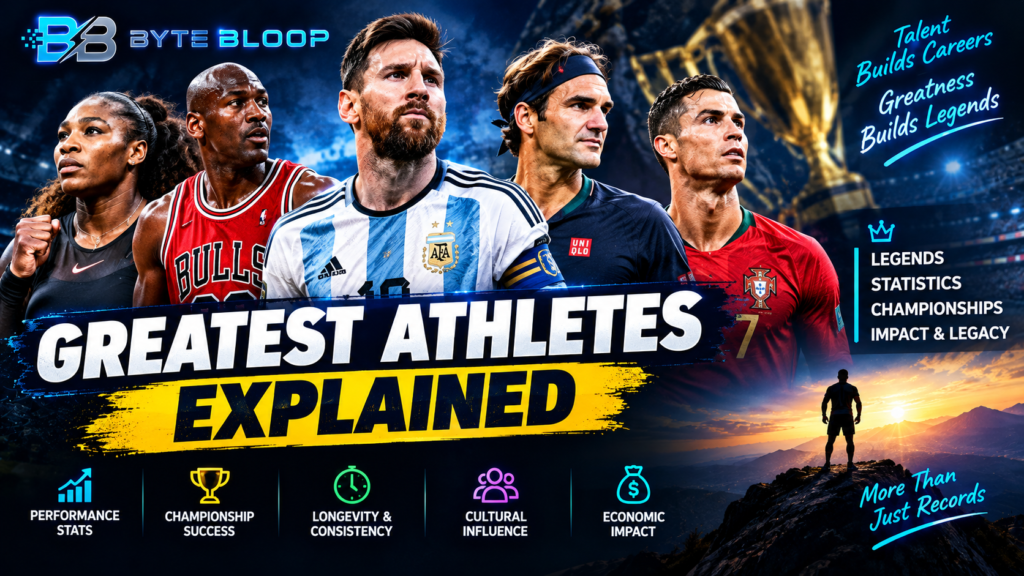
Greatest Athletes: Explained
Introduction (Greatest Athletes Explained)
Greatest Athletes Explained is a topic worth understanding well. When people talk about the greatest athletes, they often picture iconic figures who have redefined their sports and captured global admiration. These legends are more than just record holders; they embody perseverance, innovation, and cultural influence that transcend the playing field. In the modern era, the conversation around greatness is shaped by a blend of statistical dominance, championship pedigree, and off‑court impact.
The 2026 TIME 100 list of most influential people in sports illustrates how athletes, coaches, and even investors are reshaping the landscape, while Forbes’ 2026 highest‑paid athletes list highlights the economic power that comes with sporting excellence. Yet, determining who truly belongs on the pantheon of greatness remains subjective, hinging on context, era, and personal values.
This article demystifies the criteria that experts use to rank athletes, showcases a selection of names that frequently appear in scholarly and popular rankings, and offers a framework for readers to evaluate greatness in their own sports. By blending statistical analysis with cultural significance, we aim to provide a balanced perspective that respects both the numbers and the narratives that make these athletes legendary.
Defining Greatness in Sports
Greatness is rarely a single metric. Scholars and journalists often combine performance statistics, championships, longevity, and influence. For instance, the 2026 TIME list includes not only athletes but also coaches and advocates, underscoring that leadership and innovation are integral to the definition. Similarly, Forbes’ list of highest‑paid athletes signals market impact, but earnings alone do not equate to on‑field dominance.
In practice, analysts look at:
This matters directly for anyone exploring greatest athletes explained.
- Statistical dominance – league‑wide records, MVP awards, and all‑star selections.
- Championship success – titles won, finals appearances, and clutch performances.
- Longevity and consistency – career length, injury resilience, and sustained excellence.
- Influence and legacy – cultural impact, philanthropy, and contributions to the sport’s evolution.
Legendary Names Across Sports
Across disciplines, certain names recur in lists of the greatest. The Wikipedia compilation of sports figures considered the greatest includes icons such as Mia Hamm, Jack Nicklaus, Wayne Gretzky, Ma Long, Roger Federer, Serena Williams, and Lionel Messi. Each of these athletes exemplifies a unique blend of skill, consistency, and influence.
Getting greatest athletes explained right can make a real difference.
For example, Lionel Messi’s 2026 World Cup performance cemented his status as the best male athlete of the decade, as reported by ESPN. His record of 100+ international goals and 10 Ballon d’Or awards illustrate a career that balances individual brilliance with team success.
That is a core part of understanding greatest athletes explained.
In basketball, Michael Jordan’s five NBA championships and six Finals MVPs, combined with his cultural imprint on sneaker culture and global marketing, place him high on most greatness scales. Similarly, Serena Williams’ 23 Grand Slam titles and her role in advancing women’s tennis and social causes demonstrate how influence extends beyond the court.
Many readers look into greatest athletes explained for exactly this reason.
Economic Power and Market Influence
The Forbes 2026 list of highest‑paid athletes shows that financial success often parallels athletic excellence. Cristiano Ronaldo’s record payday, for instance, reflects not only his on‑pitch talent but also his brand equity and global fan base. While earnings can be a proxy for influence, they are not a sole indicator of greatness.
It is worth revisiting greatest athletes explained as things develop.
Evaluating Greatness in Your Own Sport
When assessing athletes in a niche or emerging sport, use the same multidimensional framework. Start with key performance indicators relevant to the sport, then assess championship outcomes, longevity, and off‑court impact. Look for athletes who have consistently pushed the sport’s boundaries, inspired new generations, or driven structural changes.
Greatest Athletes Explained remains highly relevant here.
Future Trends and the Evolving Definition
As sports science, analytics, and global media continue to evolve, the criteria for greatness will shift. Emerging athletes who combine data‑driven performance with social media influence may redefine what it means to be a legend. The 2026 TIME 100 list already showcases a growing number of athletes who are also activists and entrepreneurs, hinting at a broader, more inclusive definition of greatness.
This is a key consideration when it comes to greatest athletes explained.
Practical Takeaway for Fans and Analysts
Use a balanced approach: quantify performance, celebrate championships, and weigh cultural impact. Remember that greatness is as much about legacy as it is about numbers. By applying these principles, fans can form informed opinions and analysts can craft nuanced rankings.
This matters directly for anyone exploring greatest athletes explained.
Key Takeaways
- Greatness blends stats, championships, longevity, and cultural influence.
- Athletes like Messi, Jordan, and Williams exemplify multi‑dimensional excellence.
- Economic impact signals influence but is not the sole metric for greatness.
- Use a consistent framework to evaluate athletes across all sports.
- Greatness evolves with science, media, and societal values.
Frequently Asked Questions
What defines a great athlete?
Greatness is determined by a mix of statistical dominance, championship success, longevity, and cultural influence, as highlighted by TIME and Forbes reports.
Which sports figures are most frequently cited as the greatest?
Names such as Lionel Messi, Michael Jordan, Serena Williams, Roger Federer, and Wayne Gretzky appear repeatedly in expert lists and Wikipedia compilations.
How does financial success relate to athletic greatness?
High earnings, like Cristiano Ronaldo’s record payday, often reflect an athlete’s market power and influence, but they are not the sole indicator of on‑field excellence.
Can a player be considered great in a niche sport?
Yes—apply the same multidimensional criteria: performance metrics, titles, consistency, and off‑court impact.
Conclusion
Based on the available information and industry analysis, the concept of greatness in sports is multifaceted, intertwining statistical mastery, championship pedigree, longevity, and cultural influence. By applying these criteria, fans and analysts can navigate the complex landscape of athletic legend status and appreciate the diverse ways athletes shape their sports and society.
Related Reading
- How to Measure Athletic Performance in Emerging Sports
Sources & References
- TIME100 Most Influential People in Sports 2026
- World’s Highest-Paid Athletes: 2026 Forbes List
- List of sports figures considered the greatest
- This World Cup sealed it: Messi is the best male athlete of …
Related Articles