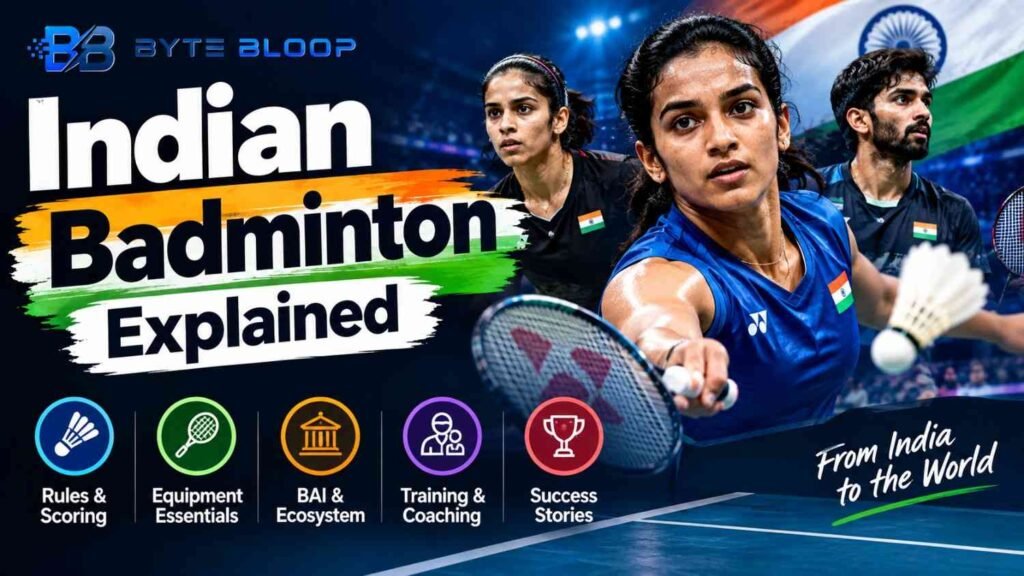
Indian Badminton: Explained
Introduction (Indian Badminton Explained)
Indian Badminton Explained is a topic worth understanding well. Badminton has surged from a casual pastime to a national passion in India, with players like P.V. Sindhu and Saina Nehwal breaking international records and inspiring a new generation. The sport’s growth mirrors the country’s broader investment in grassroots development, coaching academies, and international exposure. India’s journey from a sporadic presence in the 1980s to a consistent contender in the Olympics and Asian Games is a testament to strategic planning and talent cultivation.
Today, the Badminton Association of India (BAI) oversees a structured pathway that nurtures athletes from school level to the world stage, while private academies add depth and competition. Understanding the foundations—rules, equipment, training culture—helps fans appreciate why Indian players are increasingly dominant on the global circuit. This guide unpacks the sport’s core elements, the Indian badminton ecosystem, and what the future holds for the country’s badminton ambitions.
What Is Badminton?
Badminton is a fast‑paced racket sport played by two singles players or two pairs in doubles. The objective is to strike a shuttlecock over a net and land it within the opponent’s court, scoring a point when the shuttle touches the ground or an error occurs. According to Britannica, the game evolved from ancient “patteng” played in India and China, gaining Olympic status in 1992. The modern game uses a lightweight racket and a feathered or synthetic shuttlecock, and follows a rally‑point scoring system to 21 points.
Rules and Scoring Simplified
Badminton matches are best‑of‑three games. Each game is played to 21 points, and a player must win by a two‑point margin unless the score reaches 29‑29, where the next point wins. According to the Olympic badminton guide, matches are governed by the International Badminton Federation’s (BWF) regulations, which also dictate court dimensions, net height, and permissible equipment. The BAI aligns with these standards, ensuring Indian players compete on a level playing field internationally.
This matters directly for anyone exploring indian badminton explained.
Equipment Essentials for Indian Players
Choosing the right racket is pivotal. The 2026 guide from Kibi Sports categorizes rackets into head‑heavy, head‑light, and even‑balance models, each suiting different play styles. Indian players often favor head‑light rackets for agility, while seasoned professionals may opt for head‑heavy for power. The shuttlecock itself comes in feather and synthetic varieties; feather shuttles offer a classic feel but require careful handling, whereas synthetic shuttles are more durable for high‑volume training.
Getting indian badminton explained right can make a real difference.
The Badminton Association of India (BAI)
Founded in 1977 and headquartered in New Delhi, the BAI is the official governing body for badminton in India. According to the BAI’s website, it is responsible for organizing national championships, selecting national teams, and coordinating with the BWF. The association runs talent‑scouting programs across the country, partnering with schools and local clubs to identify promising athletes. Recent initiatives include the “National Badminton Talent Hunt” and the “Youth Development Programme,” which have produced several world‑ranked players.
That is a core part of understanding indian badminton explained.
Training Pathways and Coaching Culture
India’s badminton ecosystem blends government support with private academies. The BAI’s National Training Center in Hyderabad offers world‑class facilities, while academies such as the Gopichand Badminton Academy in Coimbatore provide specialized coaching. Players typically progress through district, state, and national levels, participating in tournaments like the National Junior Championship and the India Open. The BAI’s structured coaching certification ensures that trainers adhere to international standards, fostering technical excellence and sports science integration.
Many readers look into indian badminton explained for exactly this reason.
International Success Stories
P.V. Sindhu’s silver medal at the 2016 Rio Olympics marked India’s first badminton Olympic medal, followed by a bronze in 2020. Saina Nehwal’s bronze at the 2012 London Games and her world ranking peak in 2013 further cemented India’s presence. More recently, Kidambi Srikanth and B. Sai Praneeth have broken into the top 10 world rankings, showcasing the depth of talent. These achievements have spurred increased media coverage, sponsorship deals, and a growing fan base.
It is worth revisiting indian badminton explained as things develop.
Upcoming Tournaments and Opportunities
India is slated to host several high‑profile events, including the 2026 Asian Games where the badminton teams face tough competition from regional powerhouses. According to the Times of India, the men’s and women’s squads have challenging routes starting with Bangladesh. The AECOM India Pvt. Ltd. Badminton Tournament 2026, as outlined in its rules, follows a knockout format with a rally‑point scoring system, offering local players a chance to compete against international talent. These tournaments not only provide exposure but also help players earn world ranking points.
Indian Badminton Explained remains highly relevant here.
Future Outlook for Indian Badminton
The Indian badminton scene is poised for continued growth, driven by increased investment in coaching, infrastructure, and athlete welfare. The BAI’s strategic plan includes expanding grassroots programs to rural areas, enhancing sports science support, and fostering collaborations with overseas training centers. With a growing pool of talent and a supportive ecosystem, India is set to challenge traditional powerhouses in the coming Olympic cycles.
This is a key consideration when it comes to indian badminton explained.
Key Takeaways
- India’s badminton rise is rooted in structured talent pathways and strong governance by the BAI.
- Rally‑point scoring to 21 points defines modern match play and aligns Indian players with global standards.
- Head‑light rackets are favored for agility, while head‑heavy models offer power for advanced players.
- Coaching academies blend government support with private expertise, creating a robust development network.
- Upcoming tournaments like the 2026 Asian Games and AECOM India Tournament provide critical international exposure.
Frequently Asked Questions
What is the governing body for badminton in India?
The Badminton Association of India (BAI) oversees all national badminton activities, from talent scouting to international representation.
This matters directly for anyone exploring indian badminton explained.
What are the key features of the rally‑point scoring system?
Matches are best‑of‑three games to 21 points, with a two‑point advantage required to win unless the score reaches 29‑29, where the next point decides the game.
Getting indian badminton explained right can make a real difference.
What are the best use cases for head‑light versus head‑heavy rackets?
Head‑light rackets suit players who prioritize speed and maneuverability, while head‑heavy rackets benefit those who need extra power in smashes.
That is a core part of understanding indian badminton explained.
What are the pros and cons of synthetic shuttlecocks?
Synthetic shuttles are durable and less expensive, ideal for high‑volume training, but they may lack the classic feel and flight precision of feather shuttles.
Many readers look into indian badminton explained for exactly this reason.
Conclusion
Based on the available information and industry analysis, Indian badminton has evolved from a niche sport to a national powerhouse, driven by strategic governance, robust coaching infrastructure, and a growing talent pipeline. The Badminton Association of India’s structured development programs, coupled with private academies, have produced world‑ranked athletes who now compete with the best on the global stage. As India continues to invest in grassroots initiatives and international exposure, the country is positioned to secure more medals in future Olympic and Asian Games competitions, solidifying its status as a dominant force in the sport.
Related Reading
- Top Indian Badminton Players to Watch in 2026
Sources & References
- The Official website of Badminton Association of India …
- How to play badminton: rules, scoring system and equipment
- Badminton Racket Buying Guide 2026
- Badminton Rules & Basics Explained | A Rookie’s Guide to Sports
- Badminton | History, Olympics, Rules, Equipment, & …
- AECOM India Pvt. Ltd. Badminton Tournament 2026 Rules
- Asian Games 2026: India Badminton full schedule, fixtures …
- Complete Guide to History, Rules, Court, Gear & Tips (2026)
Related Articles