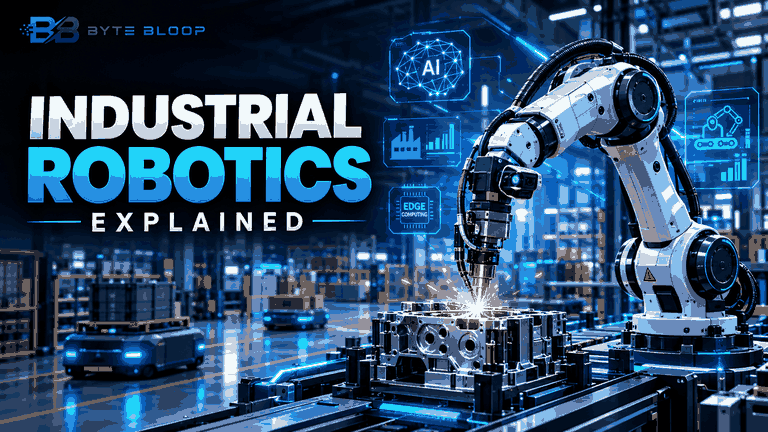
Industrial Robotics: Explained
Introduction
Industrial robotics has moved beyond the iconic factory line robot to become a versatile, intelligent partner across sectors. These machines, equipped with sensors, advanced control systems, and AI‑driven perception, now handle tasks ranging from precision welding to autonomous warehouse sorting. Their integration not only boosts productivity but also enhances safety and product quality, reducing human error and operational costs by up to 30% in manufacturing settings. As Industry 4.0 matures, the line between human workers and robotic systems blurs, creating collaborative workspaces where robots and humans co‑operate seamlessly. This article unpacks the core components of industrial robotics, explores real‑world applications, and examines the market forces driving rapid adoption. By the end, readers will understand why industrial robotics are a cornerstone of modern production and how they can future‑proof their operations.
What Makes an Industrial Robot?
At its heart, an industrial robot is a programmable, multi‑axis manipulator designed for repetitive or hazardous tasks. Key elements include:
- Mechanical Structure – arms, joints, grippers, and end effectors that define reach and payload.
- Control Architecture – embedded PLCs or ROS‑based systems that translate high‑level commands into precise motion.
- Sensing Suite – vision cameras, force sensors, and proximity detectors that provide real‑time feedback.
– machine learning models for defect detection, path optimization, and predictive maintenance.
Advanced Applications and Trends
Recent research highlights a shift toward non‑intensive, flexible automation. According to a 2021 review by A Dzedzickis, robotic solutions are now deployed in small‑batch production, food processing, and even high‑precision biomedical manufacturing. These systems adapt to changing product lines without costly retooling, a critical advantage for SMEs looking to compete with larger manufacturers.
In warehousing, collaborative robots (cobots) are redefining order fulfillment. Novus Hi‑Tech’s 2026 market analysis shows that smart, scalable cobot fleets can reduce picking times by 25% while maintaining high accuracy. Meanwhile, autonomous mobile robots (AMRs) navigate dynamic environments, carrying parts between stations and freeing human workers for more value‑added tasks.
Economic Impact
Robotics in manufacturing has proven to cut operational costs by up to 30% while improving product quality, as reported by TDK. The global market is projected to reach USD 65.1 billion in 2026, expanding to USD 343.8 billion by 2036, underscoring the rapid growth trajectory. This surge is fueled by decreasing hardware costs, improved AI algorithms, and a growing talent pipeline—evidenced by the 2026–27 BTech in Robotics Engineering program that equips students with skills to design and maintain these systems.
Challenges to Adoption
Despite the benefits, several hurdles remain. High upfront capital investment can deter small firms, while integration complexity requires specialized expertise. Cybersecurity is another concern; as robots connect to industrial IoT networks, protecting against malicious attacks becomes paramount. Finally, workforce displacement fears persist, though evidence suggests that automation often creates new roles focused on oversight, programming, and maintenance.
Future Outlook
The next wave of industrial robotics will emphasize soft robotics, advanced perception, and edge computing. Soft actuators will enable safer human‑robot interaction, while edge AI will reduce latency in decision making. Manufacturers that adopt modular, cloud‑connected platforms—such as those highlighted in the Expert Guide to Automation and Industrial Robotics 2026—will be better positioned to scale operations and respond to market shifts.
Key Takeaways
- Industrial robots combine mechanical precision with AI-driven perception to perform complex tasks.
- They reduce operational costs by up to 30% and improve product quality across manufacturing sectors.
- Collaborative robots and autonomous mobile units are transforming warehouse logistics and order fulfillment.
- Adoption challenges include capital costs, integration complexity, and cybersecurity risks.
- Future trends point to soft robotics, edge computing, and modular cloud‑connected platforms.
Frequently Asked Questions
What is industrial robotics explained?
Industrial robotics refers to the use of programmable, multi‑axis machines—often equipped with sensors and AI—to automate tasks in manufacturing, logistics, and other industrial settings.
What are the key features of industrial robots?
Key features include a mechanical structure with joints and end effectors, a robust control architecture, a suite of sensors for feedback, and software that enables programming, AI, and predictive maintenance.
What are the best use cases for industrial robotics?
Common use cases span precision welding, assembly, packaging, quality inspection, warehouse picking, and even high‑precision biomedical manufacturing.
What are the pros and cons of industrial robotics?
Pros: cost reduction, improved quality, safety, and flexibility. Cons: high initial investment, integration complexity, cybersecurity vulnerabilities, and workforce transition concerns.
Conclusion
Based on the available information and industry analysis, industrial robotics provide measurable cost savings, enhanced product quality, and new operational flexibility, positioning manufacturers to thrive in an increasingly digital economy. The projected market growth to USD 343.8 billion by 2036 underscores the strategic importance of early adoption and continuous innovation in robotics technology.
Related Reading
- The Rise of Collaborative Robots in Small‑Scale Manufacturing
Sources & References
- Advanced Applications of Industrial Robotics: New Trends …
- Robotics Engineering: Courses and Scope (2026–27)
- Robotics in Manufacturing
- Expert Guide to Automation and Industrial Robotics 2026
- Industrial Robotics Market 2026 | Factory Automation Guide
- Explore the Global Industrial Robotics Market
- Substantial capabilities of robotics in enhancing industry …