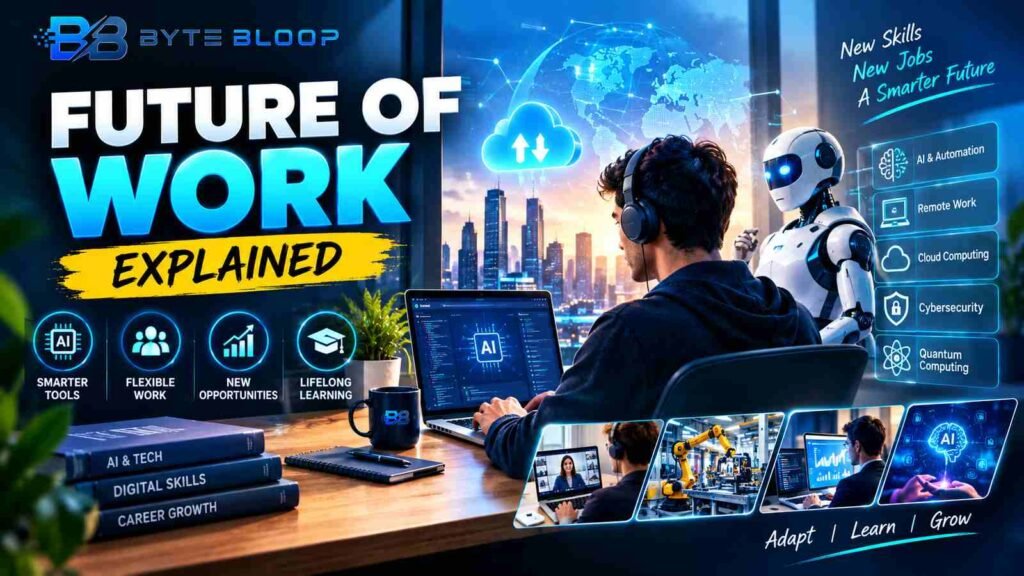
Future of Work: Explained
Introduction (Future of Work Explained)
Future of Work Explained is a topic worth understanding well. In the next decade, the workplace will shift from office desks to distributed, AI‑augmented ecosystems. Companies increasingly rely on cloud, data analytics, and cybersecurity to stay competitive, driving a surge in demand for tech talent. At the same time, flexible work models—remote, hybrid, and gig‑based—are becoming mainstream, reshaping how work is organized and delivered. Emerging technologies such as robotics, agentic AI, and quantum computing promise to automate routine tasks and unlock new creative possibilities.
These forces converge to create a dynamic labor market where continuous learning and adaptability are essential. Understanding the future of work is therefore crucial for professionals, managers, and policymakers alike. This article explains the key drivers, skill shifts, and practical steps to thrive in the evolving employment landscape. It also highlights real‑world examples of companies and roles that are already embracing these changes.
Drivers of the New Work Paradigm
Technology is the primary engine behind the future of work. According to the Future of Work report from TechUK, robotics and AI are set to become commonplace across industries, automating repetitive tasks and enabling human workers to focus on higher‑value activities. Cloud computing, data analytics, and cybersecurity are also central, with investment in digital transformation expected to hit $3.4 trillion by 2026, as noted in a YouTube presentation on the topic. These investments create new job categories—AI ethics officers, cloud architects, and data scientists—while transforming traditional roles such as project managers and accountants.
Another driver is the shift toward flexible work arrangements. The World Economic Forum’s Future of Jobs Report 2023 outlines how remote and hybrid models are no longer optional but necessary for attracting and retaining talent. This flexibility is supported by robust collaboration tools, secure VPNs, and a culture that values outcomes over presence. The result is a more diverse and inclusive workforce, with opportunities for people who previously faced geographical or mobility constraints.
This matters directly for anyone exploring future of work explained.
Skill Shifts and Emerging Roles
As automation takes over routine tasks, the demand for soft skills—critical thinking, emotional intelligence, and adaptability—has risen. At the same time, hard skills in AI, quantum computing, and IoT are becoming essential. A guide on key technologies to learn in 2026 highlights agentic AI and hyper‑automation as top skills for the coming years. The ScienceDirect review on Employment 5.0 notes that digital transformation is reshaping job profiles, requiring continuous upskilling and reskilling.
Getting future of work explained right can make a real difference.
New roles are emerging that blend technical and human expertise. For instance, AI explainability specialists help organizations interpret algorithmic decisions, while cybersecurity analysts now focus on protecting AI models from adversarial attacks. Cloud architects design resilient, scalable infrastructures that support remote work, and data privacy officers ensure compliance with evolving regulations.
That is a core part of understanding future of work explained.
Practical Examples of the Future of Work in Action
Several companies illustrate how the future of work is already unfolding. A multinational tech firm has adopted a fully remote model, leveraging AI‑driven project management tools to keep teams aligned across time zones. A manufacturing plant uses robotics to handle repetitive assembly tasks, freeing human workers to engage in quality control and process improvement. In the financial sector, AI chatbots manage routine customer inquiries, allowing analysts to focus on complex financial modeling.
Many readers look into future of work explained for exactly this reason.
Educational institutions are also adapting. Universities now offer micro‑credentials and online bootcamps that focus on emerging technologies such as quantum computing and AI ethics, enabling learners to acquire market‑relevant skills quickly. These programs often partner with industry to provide real‑world projects, bridging the gap between theory and practice.
It is worth revisiting future of work explained as things develop.
Strategies to Prepare for the Future
Individuals can adopt a growth mindset, prioritizing lifelong learning. Online platforms like Coursera, Udacity, and specialized bootcamps offer courses in AI, cloud, and data analytics. Building a personal brand on professional networks and contributing to open‑source projects can also increase visibility in the tech community.
Future of Work Explained remains highly relevant here.
Organizations should invest in upskilling initiatives and create flexible career paths that encourage mobility across functions. Policies that support remote work, such as clear communication protocols and robust cybersecurity measures, can improve employee satisfaction and productivity.
This is a key consideration when it comes to future of work explained.
Policymakers must address the digital skills gap by funding STEM education and encouraging public‑private partnerships that offer apprenticeships and internships. Regulations should also evolve to protect workers in the gig economy, ensuring fair wages and benefits.
This matters directly for anyone exploring future of work explained.
Challenges and Risks
While technology offers many benefits, it also introduces challenges. Job displacement due to automation remains a concern, particularly for low‑skill roles. Data privacy and algorithmic bias are risks that require stringent governance. Additionally, the rapid pace of change can overwhelm workers who lack the resources to adapt.
Getting future of work explained right can make a real difference.
Addressing these challenges requires a coordinated effort between employers, educators, and governments to create inclusive policies, provide retraining programs, and enforce ethical standards in AI deployment.
That is a core part of understanding future of work explained.
Key Takeaways
- AI, cloud, and cybersecurity are the core drivers reshaping jobs
- Flexibility—remote, hybrid, gig—has become essential for talent attraction
- Continuous learning and upskilling are mandatory for career resilience
- Emerging roles blend technical expertise with human judgment
- Governments must support education and ethical AI governance
Frequently Asked Questions
What is the future of work?
The future of work refers to the evolving landscape of employment driven by technology, flexible arrangements, and new skill demands, where AI, cloud, and data analytics play central roles.
What are the key features of the future of work?
Key features include widespread automation, remote and hybrid work models, a focus on continuous learning, and the emergence of new roles such as AI ethics officers and cloud architects.
What are the best use cases for emerging technologies in the workplace?
Use cases span automating routine tasks with robotics, enhancing decision‑making through AI analytics, ensuring data security with advanced cybersecurity, and enabling scalable collaboration via cloud platforms.
What are the pros and cons of adopting a flexible work model?
Pros include increased talent reach, higher employee satisfaction, and reduced overhead costs. Cons involve potential isolation, challenges in team cohesion, and the need for robust digital security.
Conclusion
Based on the available information and industry analysis, the future of work is defined by rapid technological adoption, a shift toward flexible arrangements, and an escalating demand for advanced digital skills. Organizations that invest in reskilling, embrace AI responsibly, and foster inclusive remote cultures will not only survive but thrive in this new era. Individuals who proactively cultivate both hard and soft skills will find themselves better positioned to navigate the evolving job market and seize emerging opportunities.
Related Reading
- AI Ethics in the Workplace
Sources & References
- 10 Future Technologies That Will Shape India by 2030
- Key Technologies and Skills to Learn in 2026
- Future of work
- Future of Work: Science and Technology
- Employment 5.0: The work of the future and the future of work
- Top Technology Skills That Will Be in Demand by 2030
- Future of Work 2026 : AI Jobs, Careers & Skills for the New …
- The Future of Jobs Report 2023
Related Articles