iPhone vs Samsung: Key Differences
Introduction
In the ever‑evolving smartphone arena, the debate between Apple’s iPhone and Samsung’s Galaxy line has never been more heated. Both brands boast loyal followings, yet they cater to distinct user philosophies: Apple emphasizes a tightly controlled ecosystem, while Samsung champions openness and hardware versatility. In 2026, the latest iPhone 17 and Galaxy S26 II represent the pinnacle of each company’s engineering prowess, pushing the boundaries of design, performance, and camera technology. Understanding the fundamental differences between these two flagship devices can help consumers decide which platform aligns with their priorities, whether that’s seamless integration, customisation, or raw hardware capability. This guide breaks down the key areas where iPhone and Samsung diverge—display, build, software, camera, battery, and price—providing a clear snapshot of what each brand offers in 2026. By the end, you’ll know which phone best suits your lifestyle and why the choice matters beyond mere specs.
Design & Build
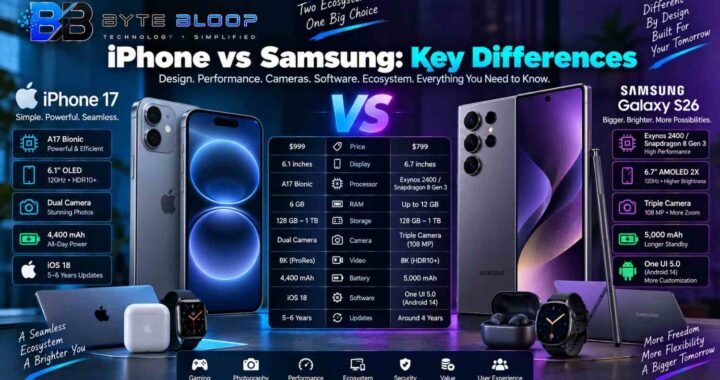
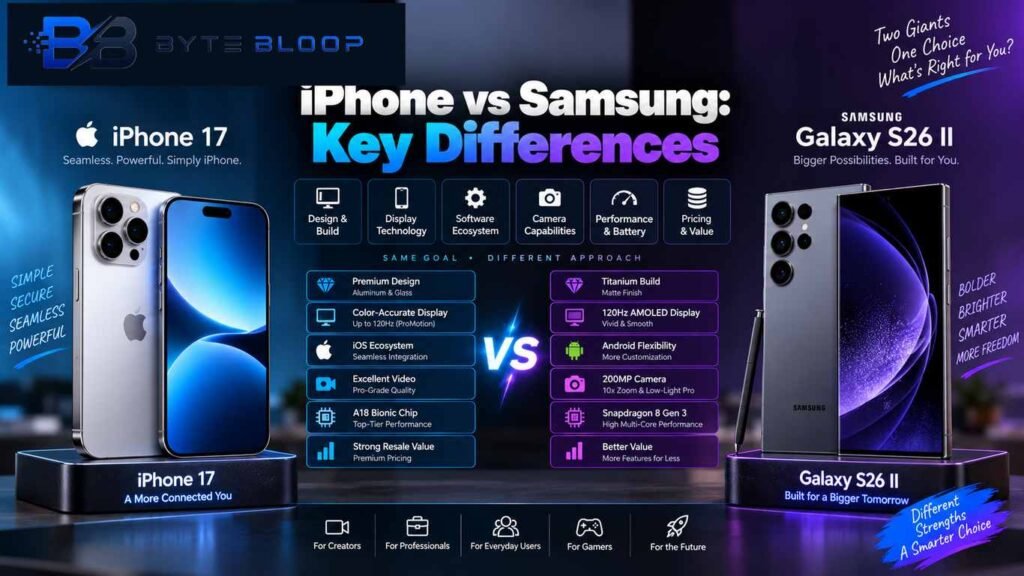
Apple’s iPhone 17 retains its signature unibody aluminum and glass construction, offering a premium feel that feels almost effortless. Samsung’s Galaxy S26 II, meanwhile, pushes the envelope with a titanium frame and a new matte finish that resists fingerprints better than the iPhone’s glossy surface. While both phones are under 8 mm thick, the Galaxy’s slightly thicker bezel accommodates a larger battery and a 6.7‑inch Dynamic AMOLED 2X display, whereas the iPhone’s 6.1‑inch OLED panel prioritises color accuracy and HDR performance. Samsung’s design also incorporates a slimmer camera bump thanks to its periscope‑style telephoto lens, giving the S26 II a more discreet look.
Display Technology
The Galaxy S26 II sports a 120 Hz refresh rate with a peak brightness of 1,200 cd/m², making it ideal for gaming and HDR content. Apple’s iPhone 17 offers a 60 Hz OLED panel with a peak brightness of 1,000 cd/m², but it compensates with ProMotion technology that dynamically adjusts the refresh rate up to 120 Hz on demand. Color accuracy on the iPhone remains slightly superior, with a wider sRGB coverage, while Samsung’s display excels in contrast ratio, delivering deeper blacks in dark scenes. For users who prioritize smooth scrolling and gaming, the Galaxy’s higher refresh rate provides a noticeable edge.
Software Ecosystem
Apple’s iOS 18 delivers a tightly integrated experience, with features like Universal Control, AirDrop, and a curated App Store that ensures security and consistency. Samsung’s Android 15, built on One UI 5.5, offers greater customisation options, such as adjustable home screens, extensive widget support, and a more open app ecosystem. The choice between iOS and Android hinges on whether you value a seamless, locked‑down experience or the flexibility to tweak every aspect of your device. Samsung also includes Samsung DeX, allowing the phone to double as a desktop workstation—something iPhone users must rely on third‑party accessories for.
Camera Capabilities
In 2026, camera performance remains a primary battleground. The iPhone 17’s dual‑pixel sensor delivers exceptional dynamic range and video stabilization, making it a favorite for vloggers and content creators. Samsung’s Galaxy S26 II counters with a 200‑MP main sensor and a 10x optical zoom, offering superior low‑light stills and versatile zoom ranges. The Galaxy’s periscope lens also provides a 5x optical zoom, whereas the iPhone’s 3x optical zoom is limited. For users who prioritize still photography and low‑light performance, Samsung’s hardware edge is clear; for video and colour fidelity, the iPhone remains unmatched.
Performance & Battery
Apple’s A18 Bionic chip powers the iPhone 17, delivering top‑tier performance with a 3.5‑core GPU and 5‑core CPU that outpaces Samsung’s Snapdragon 8 Gen 3 in single‑core benchmarks. Samsung’s Galaxy S26 II, however, incorporates a 6‑core CPU with an additional high‑performance core, giving it an advantage in multi‑threaded workloads. Battery capacity on the Galaxy is 4,800 mAh, slightly larger than the iPhone’s 3,900 mAh, and Samsung’s adaptive charging speeds up to 65 W, while the iPhone supports 20 W fast charging and 15 W wireless charging. Battery life is comparable, but the Galaxy’s larger capacity offers a marginal edge for heavy users.
Pricing & Value
The iPhone 17 starts at $999 for the base model, with storage options up to 1 TB. Samsung’s Galaxy S26 II launches at $899, scaling up to $1,299 for the Ultra edition with a 200‑MP camera. While the iPhone’s price remains higher, its resale value stays robust due to Apple’s strong secondary market. Samsung’s lower entry price and higher hardware specs provide better perceived value for those prioritising raw performance and camera versatility.
Which One Should You Choose?
Choosing between iPhone and Samsung boils down to your priorities:
- Seamless Ecosystem: If you already own Apple devices and value a cohesive experience, the iPhone 17 is the natural fit.
- Customisation & Flexibility: For users who love tinkering and want a wide range of hardware options, Samsung’s Galaxy S26 II offers greater freedom.
- Camera Needs: Video creators should lean toward the iPhone for its stabilization and colour science; still photography enthusiasts favour Samsung for its high‑resolution sensor and zoom.
- Budget Considerations: Samsung provides a lower entry price with comparable performance, making it attractive for cost‑conscious buyers.
Key Takeaways
- Apple’s iOS offers a locked‑in, seamless ecosystem; Samsung’s Android provides extensive customisation.
- Galaxy S26 II’s 120 Hz display and 10x optical zoom give it a hardware edge.
- iPhone 17 excels in video stabilization and dynamic range; Samsung leads in low‑light stills.
- Battery capacity is higher on Samsung, but both phones deliver similar endurance.
- Pricing: iPhone starts at $999, Samsung at $899, with Samsung offering more hardware for the price.
Frequently Asked Questions
What is the main difference between iPhone and Samsung in terms of design?
Apple focuses on a premium unibody design with a glossy finish, while Samsung uses a titanium frame with a matte finish that resists fingerprints better.
What are the key features of the Galaxy S26 II camera?
It has a 200‑MP main sensor, 10x optical zoom, and a periscope lens offering 5x optical zoom, excelling in low‑light still photography.
What are the best use cases for the iPhone 17?
The iPhone 17 is ideal for video creators, users who value a tightly integrated ecosystem, and those who prioritize colour accuracy and dynamic range.
What are the pros and cons of Samsung’s Galaxy S26 II?
Pros: higher refresh rate, larger battery, superior low‑light camera, and Android customisation. Cons: less resale value and slightly larger battery size may affect portability.
Conclusion
Based on the available information and industry analysis, the iPhone 17 and Samsung Galaxy S26 II each excel in distinct areas—Apple offers a cohesive, color‑accurate ecosystem ideal for video content, while Samsung delivers superior hardware flexibility, camera versatility, and a higher refresh rate display. Choosing the right phone depends on whether you prioritize seamless integration or raw hardware performance. Both devices provide top‑tier performance and robust build quality, ensuring that consumers in 2026 can find a flagship that aligns with their personal and professional needs.
Related Reading
- How to Choose the Right Smartphone for Gaming in 2026
- The Future of Smartphone Cameras: Trends to Watch