Open Source Software: Explained
Introduction (Open Source Software Explained)
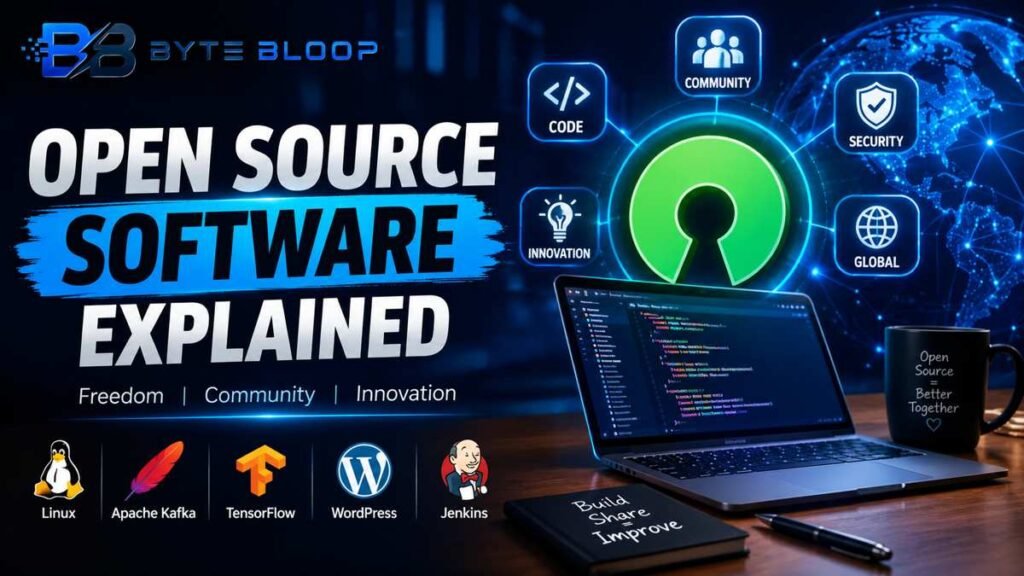
Open Source Software Explained is a topic worth understanding well. Open source software (OSS) has reshaped the tech landscape by making source code publicly available, allowing anyone to inspect, modify, and distribute it. This collaborative model democratizes innovation, enabling developers worldwide to build on each other’s work. In 2026, OSS drives everything from operating systems to AI frameworks, proving that transparency can coexist with commercial success. The movement’s ethos—freedom, community, and shared progress—has attracted major corporations, startups, and hobbyists alike. Understanding OSS is essential for anyone working with technology, whether you’re a coder, product manager, or business leader. This guide breaks down the core concepts, showcases practical examples, and explains why OSS matters today.
What Is Open Source Software?
According to Wikipedia, OSS is software whose source code is publicly available, enabling users to use, study, modify, and distribute it. Open source is more than a license; it’s a philosophy that encourages peer review, rapid iteration, and collective ownership. The Open Source Initiative (OSI) defines the criteria that a license must meet to be considered open source, ensuring that the code remains freely accessible.
Key Features of OSS
- Transparency: Anyone can view the code, fostering trust and security.
- Collaboration: Developers worldwide contribute fixes and new features.
- Freedom: Users can run the software for any purpose without vendor lock‑in.
- Community: Projects often have active forums, documentation, and mentorship programs.
- Cost Efficiency: Many OSS projects are free, reducing licensing expenses.
Why OSS Matters in 2026
Recent statistics show that 77% of organizations believe OSS improves security outcomes, while 59% are increasing usage by defining clear open source strategies. The decentralized development model allows rapid bug fixes and feature rollouts that proprietary vendors may lag behind. Moreover, OSS can accelerate time‑to‑market for new products, as teams can cherry‑pick components from mature repositories.
This matters directly for anyone exploring open source software explained.
Practical Examples of OSS in 2026
Below are some high‑impact OSS projects that power modern infrastructure and applications:
Getting open source software explained right can make a real difference.
- Linux Kernel – The backbone of servers, smartphones, and embedded devices.
- Apache Kafka – A distributed event‑streaming platform used by Fortune 500 companies.
- TensorFlow & PyTorch – Leading AI frameworks that fuel machine learning research.
- WordPress – Powers over 40% of the web, enabling bloggers and enterprises alike.
- Jenkins – Automates CI/CD pipelines for millions of developers.
Use Cases for Open Source Software
OSS is ideal for:
That is a core part of understanding open source software explained.
- Enterprise Infrastructure: Building scalable, secure back‑ends without vendor lock‑in.
- Startups: Rapid prototyping using mature libraries and frameworks.
- Education: Providing students with real codebases to learn from.
- Research: Open datasets and reproducible experiments in AI and data science.
Pros and Cons of OSS
Pros include cost savings, community support, and rapid innovation. Cons can involve fragmented documentation, varying quality of contributions, and the need for in‑house expertise to maintain and secure the code.
Many readers look into open source software explained for exactly this reason.
Getting Started with OSS
To dive into OSS, start by exploring GitHub or GitLab repositories, read the README, and try running the software locally. Many projects offer Docker images or pre‑built binaries for quick setup. If you’re new, consider contributing to documentation or bug reports before tackling core code.
It is worth revisiting open source software explained as things develop.
Key Takeaways
- OSS provides free, transparent code that fuels innovation.
- Major corporations rely on OSS for security and speed.
- Community support accelerates bug fixes and feature rollouts.
- OSS enables cost‑effective, scalable infrastructure.
- Starting with small contributions can ease entry into open source.
Frequently Asked Questions
What is open source software?
Open source software is any program whose source code is publicly available, allowing anyone to inspect, modify, and distribute it.
Open Source Software Explained remains highly relevant here.
What are the key features of open source software?
Transparency, collaboration, freedom to use, community support, and cost efficiency are the hallmark features of OSS.
This is a key consideration when it comes to open source software explained.
What are the best use cases for open source software?
Enterprise infrastructure, startups, education, research, and rapid prototyping are common scenarios where OSS shines.
What are the pros and cons of open source software?
Pros include lower cost, community support, and rapid innovation; cons involve documentation gaps, variable code quality, and maintenance overhead.
Conclusion
Based on the available information and industry analysis, open source software provides a powerful, collaborative framework that fuels innovation, reduces costs, and enhances security across the technology ecosystem. Its widespread adoption by enterprises and developers alike underscores its value as a cornerstone of modern software development.
Related Reading
- Top 10 Open Source Projects for 2026
Sources & References
- Open-source software — Open-source software (OSS) is computer software whose source code is publicly available, allowing users to use, study, modify, and distribute it
- What is open source? — Open source software is software with source code that anyone can inspect, modify, and enhance
- A Complete Guide to Open Source Software — Open source software (OSS) is a type of software whose source code is available to the public
Related Articles