UPI Payments: A Comprehensive Guide
Introduction
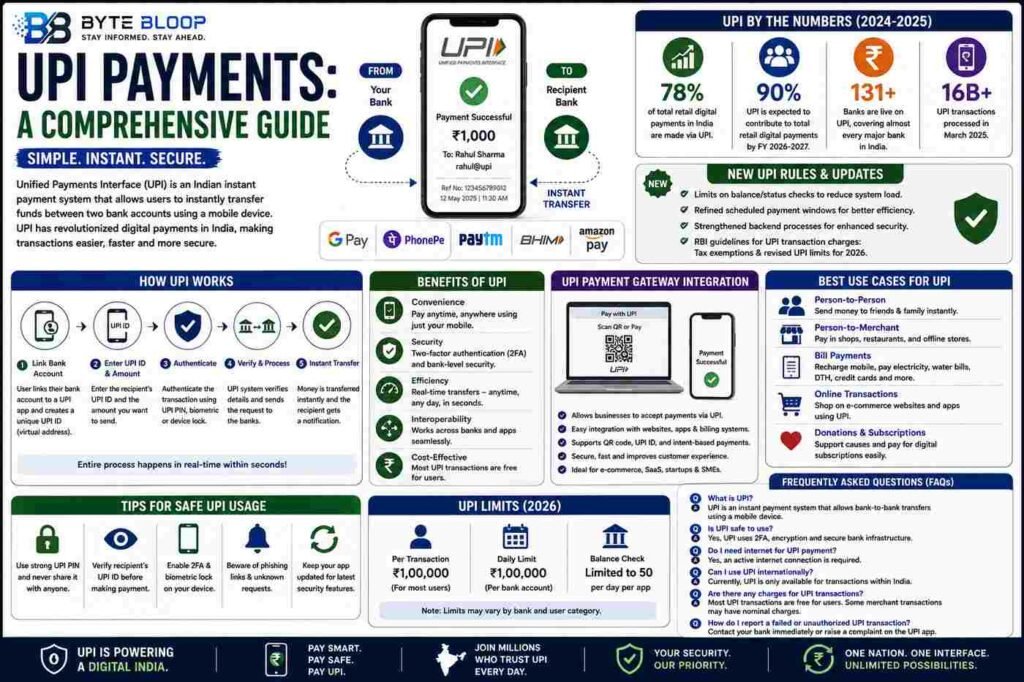
Unified Payments Interface (UPI) is an Indian instant payment system that has revolutionized the way people make transactions. It allows users to instantly transfer funds between two bank accounts using a mobile device. UPI has become a widely accepted payment method in India, with over 78% of total retail digital payments in the country being made through this interface. The Indian government has been actively promoting the use of UPI, and it is expected to contribute 90% of total retail digital payments in India by FY 2026-2027. UPI enables real-time, frictionless payments, making it a convenient option for users. The system is designed to provide a secure and efficient way of making transactions, with features such as two-factor authentication (2FA) and standardized payment processes.
The UPI system has undergone significant changes in recent years, with new rules and regulations being introduced to enhance security and efficiency. For instance, the new UPI rules emphasize limits on balance/status checks, refined scheduled payment windows, and strengthened backend processes. These changes aim to provide a more seamless and secure payment experience for users. Additionally, the Reserve Bank of India (RBI) has introduced guidelines for UPI transaction charges, which include tax exemptions and new UPI limits for 2026. UPI payment gateway integration has also become a key focus area for businesses, with many companies opting for UPI-enabled payment systems to provide a convenient and secure payment experience for their customers.
How UPI Works
UPI works by allowing users to link their bank accounts to a virtual address, which can be used to make transactions. This virtual address is unique to each user and is used to identify the recipient’s bank account. When a user initiates a transaction, the UPI system uses this virtual address to verify the recipient’s account details and facilitate the transfer of funds. The entire process is completed in real-time, making it a fast and efficient way of making transactions.
Benefits of UPI
UPI offers several benefits to users, including convenience, security, and efficiency. It eliminates the need for cash and card transactions, making it a convenient option for users. UPI also provides a secure way of making transactions, with features such as two-factor authentication (2FA) and standardized payment processes. Additionally, UPI enables real-time transactions, making it a fast and efficient way of making payments.
UPI Payment Gateway Integration
UPI payment gateway integration has become a key focus area for businesses, with many companies opting for UPI-enabled payment systems to provide a convenient and secure payment experience for their customers. UPI payment gateway integration allows businesses to accept payments from customers through UPI, making it a convenient option for users. It also provides a secure way of making transactions, with features such as two-factor authentication (2FA) and standardized payment processes.
Best Use Cases for UPI
UPI is suitable for a wide range of use cases, including person-to-person transactions, person-to-merchant transactions, and bill payments. It is also used for online transactions, such as buying goods and services from e-commerce websites. UPI is a convenient option for users, as it eliminates the need for cash and card transactions. It is also a secure way of making transactions, with features such as two-factor authentication (2FA) and standardized payment processes.
Key Takeaways
- UPI is an Indian instant payment system that allows users to instantly transfer funds between two bank accounts using a mobile device.
- UPI has become a widely accepted payment method in India, with over 78% of total retail digital payments in the country being made through this interface.
- UPI enables real-time, frictionless payments, making it a convenient option for users.
- The UPI system has undergone significant changes in recent years, with new rules and regulations being introduced to enhance security and efficiency.
- UPI payment gateway integration has become a key focus area for businesses, with many companies opting for UPI-enabled payment systems to provide a convenient and secure payment experience for their customers.
Frequently Asked Questions
What is UPI?
UPI is an Indian instant payment system that allows users to instantly transfer funds between two bank accounts using a mobile device.
What are the benefits of UPI?
UPI offers several benefits to users, including convenience, security, and efficiency. It eliminates the need for cash and card transactions, making it a convenient option for users.
How does UPI work?
UPI works by allowing users to link their bank accounts to a virtual address, which can be used to make transactions. This virtual address is unique to each user and is used to identify the recipient’s bank account.
What are the best use cases for UPI?
UPI is suitable for a wide range of use cases, including person-to-person transactions, person-to-merchant transactions, and bill payments. It is also used for online transactions, such as buying goods and services from e-commerce websites.
Is UPI secure?
Yes, UPI is a secure way of making transactions, with features such as two-factor authentication (2FA) and standardized payment processes.
Can I use UPI for online transactions?
Yes, UPI can be used for online transactions, such as buying goods and services from e-commerce websites.
Conclusion
Based on the available information and industry analysis, UPI payments have revolutionized the way people make transactions in India, providing a convenient, secure, and efficient way of making payments. With its widespread acceptance and increasing popularity, UPI is expected to continue to play a major role in the country’s digital payments landscape.
Related Reading
- Digital Payments in India: Trends and Opportunities
This article is for informational and educational purposes only and should not be considered financial, investment, or trading advice.
This article is for informational and educational purposes only and should not be considered financial, investment, or trading advice.
