Malware: Explained
Introduction
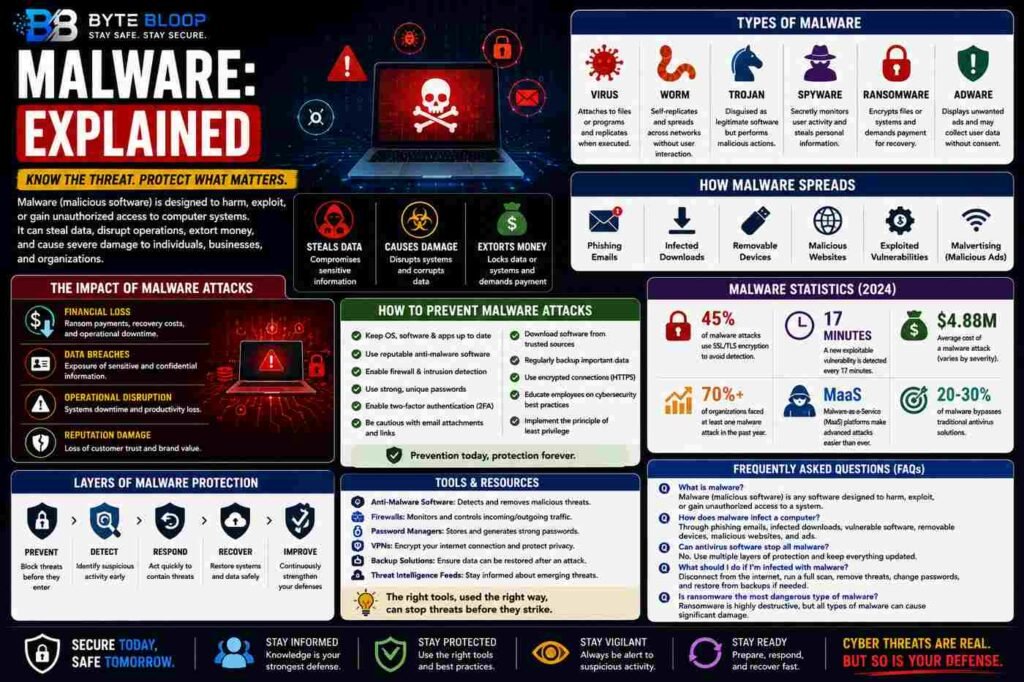
Malware, short for malicious software, refers to any software program designed to cause harm or exploit a computer system. It is used to steal data, inflict damage on computer or software systems, or disrupt system services. Malware includes various types of cyber threats such as viruses, adware, and ransomware, all of which are designed to compromise the security and integrity of computer systems and networks. The primary goal of malware is to gain unauthorized access to sensitive information, disrupt system operations, or extort money from victims. Understanding malware is crucial in today’s digital age, as it can have severe consequences for individuals, businesses, and organizations. Malware can spread through various means, including infected software downloads, phishing emails, and exploited vulnerabilities in operating systems and applications. The impact of malware can be devastating, resulting in financial loss, compromised personal data, and damaged reputation. Furthermore, the increasing use of SSL/TLS encryption by malware attacks makes them harder to detect, emphasizing the need for robust cybersecurity measures.
The types of malware are diverse, ranging from viruses and worms to Trojans, spyware, and ransomware. Each type of malware has its unique characteristics and modes of operation, but all share the common goal of causing harm or exploiting vulnerabilities. For instance, viruses replicate themselves by attaching to other programs or files, while worms spread from system to system without requiring human interaction. Ransomware, on the other hand, encrypts files and demands payment in exchange for the decryption key. The variety of malware types necessitates a comprehensive approach to cybersecurity, including regular software updates, robust firewalls, and employee education on safe computing practices. Additionally, the use of anti-malware software and intrusion detection systems can help identify and mitigate malware threats. The financial impact of malware attacks can be significant, with the average cost of a malware attack ranging from thousands to millions of dollars, depending on the severity of the attack and the effectiveness of the response.
Types of Malware
There are several types of malware, each with its own unique characteristics and goals. Viruses, for example, are designed to replicate themselves and spread to other computers, while worms are self-replicating malware that can spread without human interaction. Trojans, on the other hand, are disguised as legitimate software but actually contain malicious code. Spyware is designed to gather sensitive information about a computer user, such as their browsing habits or personal data, without their consent. Ransomware, as mentioned earlier, encrypts files and demands payment in exchange for the decryption key. Adware, while not always malicious, can be used to display unwanted advertisements or collect user data without consent. The diversity of malware types requires a multifaceted approach to cybersecurity, including the use of anti-virus software, firewalls, and intrusion detection systems.
How to Prevent Malware Attacks
Preventing malware attacks requires a combination of technical, administrative, and educational measures. Technically, this involves keeping software up to date, using anti-virus software, and implementing firewalls and intrusion detection systems. Administratively, it involves developing and enforcing robust cybersecurity policies, including guidelines for safe computing practices and incident response plans. Educationally, it involves training employees on how to identify and avoid phishing emails, how to use strong passwords, and how to safely download and install software. Additionally, regular backups of critical data can help mitigate the impact of a malware attack. The use of encryption can also help protect sensitive data, both in transit and at rest. Furthermore, implementing a defense-in-depth approach, which involves layering multiple security controls, can provide comprehensive protection against malware threats.
Malware Statistics
Malware statistics highlight the severity and prevalence of malware attacks. According to recent statistics, 45% of malware attacks use SSL/TLS encryption to avoid detection, and new exploitable vulnerabilities can be detected every 17 minutes. This emphasizes the need for continuous monitoring and updating of cybersecurity measures. The financial impact of malware attacks is also significant, with the average cost of a malware attack ranging from thousands to millions of dollars. Moreover, the increasing use of malware-as-a-service (MaaS) platforms has democratized sophisticated attacks, making it easier for attackers to launch malware attacks without requiring extensive technical expertise. The statistics also highlight the importance of incident response planning, as the timely detection and response to malware attacks can significantly reduce the impact of the attack.
Conclusion Preparation
In conclusion, malware is a significant threat to computer systems and networks, and understanding its types, modes of operation, and prevention strategies is crucial for maintaining cybersecurity. The diversity of malware types and the increasing use of sophisticated attack methods, such as MaaS platforms, emphasize the need for a comprehensive and multifaceted approach to cybersecurity. By combining technical, administrative, and educational measures, individuals and organizations can protect themselves against malware attacks and mitigate their impact. The importance of cybersecurity awareness and education cannot be overstated, as it is the first line of defense against malware attacks. Furthermore, the use of advanced security technologies, such as artificial intelligence and machine learning, can help detect and respond to malware attacks more effectively.
Key Takeaways
- Malware refers to any software program designed to cause harm or exploit a computer system.
- Understanding malware types, including viruses, worms, Trojans, spyware, and ransomware, is crucial for cybersecurity.
- Preventing malware attacks requires a combination of technical, administrative, and educational measures.
- Malware statistics highlight the severity and prevalence of malware attacks, emphasizing the need for continuous monitoring and updating of cybersecurity measures.
- The financial impact of malware attacks can be significant, ranging from thousands to millions of dollars.
- A comprehensive approach to cybersecurity, including the use of anti-virus software, firewalls, and intrusion detection systems, is essential for protecting against malware threats.
Frequently Asked Questions
What is malware?
Malware, short for malicious software, refers to any software program designed to cause harm or exploit a computer system.
What are the types of malware?
The types of malware include viruses, worms, Trojans, spyware, ransomware, and adware, each with its unique characteristics and modes of operation.
How can malware attacks be prevented?
Preventing malware attacks requires a combination of technical, administrative, and educational measures, including keeping software up to date, using anti-virus software, and implementing firewalls and intrusion detection systems.
What is the impact of malware attacks?
The impact of malware attacks can be devastating, resulting in financial loss, compromised personal data, and damaged reputation.
How can individuals and organizations protect themselves against malware attacks?
Individuals and organizations can protect themselves against malware attacks by combining technical, administrative, and educational measures, including the use of anti-virus software, firewalls, and intrusion detection systems, as well as employee education on safe computing practices.
What is the importance of cybersecurity awareness and education in preventing malware attacks?
Cybersecurity awareness and education are crucial in preventing malware attacks, as they provide individuals and organizations with the knowledge and skills necessary to identify and avoid phishing emails, use strong passwords, and safely download and install software.
Conclusion
Based on the available information and industry analysis, malware poses a significant threat to computer systems and networks, and understanding its types, modes of operation, and prevention strategies is crucial for maintaining cybersecurity. The increasing use of sophisticated attack methods, such as MaaS platforms, emphasizes the need for a comprehensive and multifaceted approach to cybersecurity.
Related Reading
- Cybersecurity 101
- The Ultimate Guide to Ransomware