Web Privacy: Explained
Introduction
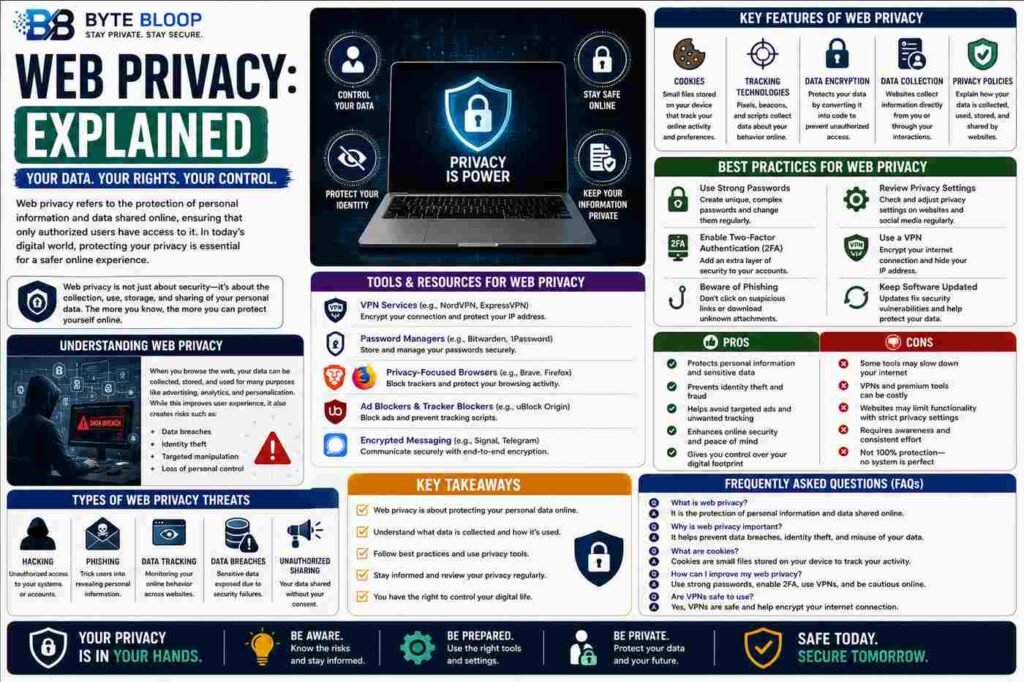
Web privacy refers to the protection of personal information and data shared online, ensuring that only authorized users have access to it. The importance of web privacy cannot be overstated, as it affects not only individuals but also businesses and organizations. In today’s digital age, where online transactions and interactions are the norm, web privacy has become a critical concern. With the rise of data breaches and cyber attacks, it is essential to understand the concept of web privacy and take measures to protect oneself. Web privacy involves various aspects, including data collection, storage, and transmission, as well as the use of cookies, tracking devices, and other technologies. The primary goal of web privacy is to prevent unauthorized access to personal information and ensure that individuals have control over their online data. As the internet continues to evolve, web privacy has become a complex issue, with multiple stakeholders involved, including governments, corporations, and individuals.
The concept of web privacy is closely related to online security, as both are essential for protecting personal information and preventing cyber threats. However, web privacy goes beyond online security, as it involves the collection, use, and disclosure of personal data. With the increasing use of online services, such as social media, e-commerce, and online banking, web privacy has become a critical concern. Individuals need to be aware of the risks associated with online transactions and take steps to protect their personal information. This includes using strong passwords, enabling two-factor authentication, and being cautious when clicking on links or downloading attachments. Moreover, individuals should also be aware of the privacy policies of websites and online services they use, as these policies can affect their personal data.
Understanding Web Privacy
Web privacy is a multifaceted concept that involves various aspects, including data collection, storage, and transmission. When individuals interact with websites or online services, they often provide personal information, such as names, addresses, and credit card numbers. This information can be collected, stored, and used by websites and online services for various purposes, including marketing, advertising, and customer service. However, this collection and use of personal data can also pose risks to individuals, as it can be vulnerable to data breaches, cyber attacks, and other forms of exploitation.
Key Features of Web Privacy
There are several key features of web privacy that individuals should be aware of. These include the use of cookies, tracking devices, and other technologies that can collect and store personal data. Cookies are small files that are stored on an individual’s device, which can be used to track their online activities and provide personalized experiences. However, cookies can also be used to collect and store personal data, which can pose risks to individuals. Tracking devices, such as pixels and beacons, can also be used to collect and store personal data, which can be used for targeted advertising and other purposes.
Best Practices for Web Privacy
There are several best practices that individuals can follow to protect their web privacy. These include using strong passwords, enabling two-factor authentication, and being cautious when clicking on links or downloading attachments. Individuals should also be aware of the privacy policies of websites and online services they use, as these policies can affect their personal data. Moreover, individuals should also use virtual private networks (VPNs) and other technologies that can help protect their online activities and personal data.
Tools and Resources for Web Privacy
There are several tools and resources available that can help individuals protect their web privacy. These include VPNs, password managers, and other technologies that can help protect online activities and personal data. Individuals can also use browser extensions and other tools that can help block tracking devices and other technologies that can collect and store personal data. Moreover, individuals can also use online resources, such as privacy guides and tutorials, that can provide information and guidance on how to protect their web privacy.
Key Takeaways
- Web privacy is a critical concern that affects individuals, businesses, and organizations
- Web privacy involves various aspects, including data collection, storage, and transmission
- Individuals should be aware of the risks associated with online transactions and take steps to protect their personal information
- Using strong passwords, enabling two-factor authentication, and being cautious when clicking on links or downloading attachments can help protect web privacy
- Individuals should be aware of the privacy policies of websites and online services they use, as these policies can affect their personal data
Frequently Asked Questions
What is web privacy?
Web privacy refers to the protection of personal information and data shared online, ensuring that only authorized users have access to it.
What are the key features of web privacy?
The key features of web privacy include the use of cookies, tracking devices, and other technologies that can collect and store personal data.
What are the best practices for web privacy?
The best practices for web privacy include using strong passwords, enabling two-factor authentication, and being cautious when clicking on links or downloading attachments.
What are the pros and cons of using VPNs for web privacy?
The pros of using VPNs for web privacy include protecting online activities and personal data, while the cons include potential slowdowns in internet speeds and costs associated with subscription.
How can individuals protect their web privacy?
Individuals can protect their web privacy by using strong passwords, enabling two-factor authentication, being cautious when clicking on links or downloading attachments, and using VPNs and other technologies that can help protect online activities and personal data.
Conclusion
Based on the available information and industry analysis, web privacy is a critical concern that requires attention and action from individuals, businesses, and organizations. By understanding the concept of web privacy and taking measures to protect personal information, individuals can help prevent data breaches, cyber attacks, and other forms of exploitation.
Related Reading
- Online Security Guide