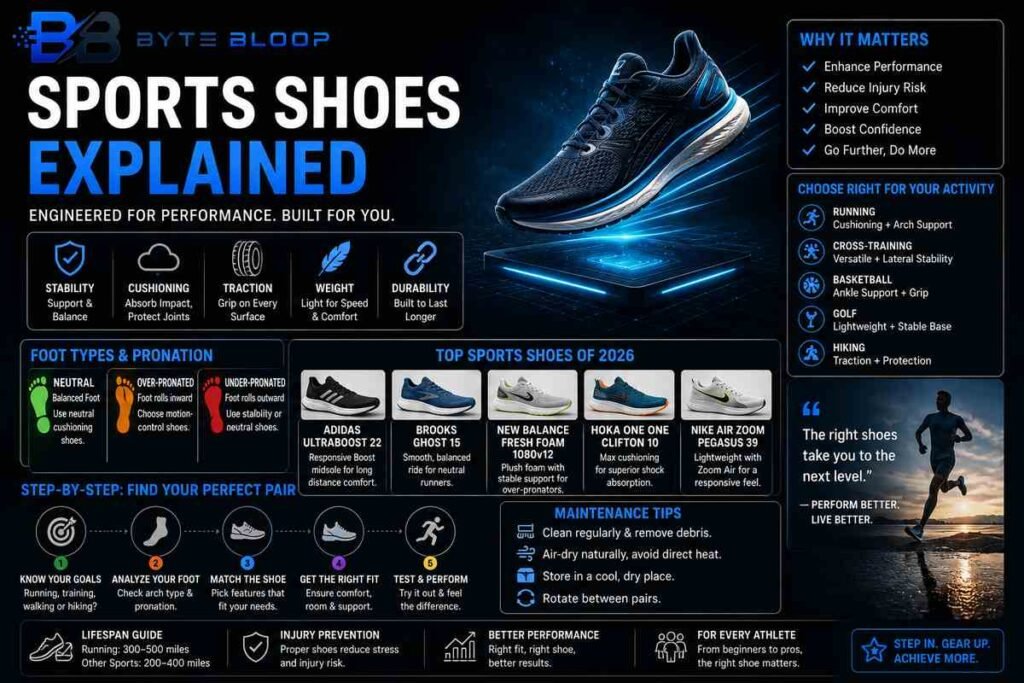
Sports Shoes: Explained
Introduction
Sports shoes are far more than stylish footwear; they are engineered to meet the specific demands of physical activity. Whether you’re sprinting on a track, hiking rugged trails, or simply walking to work, the right pair can enhance performance, reduce injury risk, and improve comfort. Each sport imposes unique forces on the foot, requiring tailored support, cushioning, and traction. Modern sports shoes incorporate advanced materials, biomechanical research, and smart design to match these needs. Choosing the correct shoe involves understanding foot type, movement patterns, and the activity’s impact profile. The market now offers a spectrum of options, from minimalist runners to heavily cushioned trainers, each with distinct benefits. This guide breaks down the key elements that define sports shoes, highlights top 2026 models, and provides a clear buying framework for athletes of all levels.
What Makes a Shoe “Sports”?
Unlike everyday sneakers, sports shoes are built around specific performance criteria. Core design goals include:
- Stability – Preventing over‑pronation or supination during dynamic movements.
- Cushioning – Absorbing impact forces to protect joints.
- Traction – Providing grip on varied surfaces.
- Weight – Keeping mass low to avoid fatigue.
- Durability – Withstanding repetitive stress and abrasion.
Manufacturers use materials like EVA foam, polyurethane, carbon fiber, and responsive gels to balance these factors. The shoe’s midsole architecture, heel counter, and outsole tread pattern are all engineered to align with the sport’s mechanics.
Foot Types and Movement Patterns
Every athlete’s foot behaves differently. The three primary foot types—neutral, over‑pronated, and under‑pronated—dictate the level of support required. Additionally, the way a runner lands (heel strike, mid‑foot, or forefoot) influences cushioning placement.
To match a shoe to your biomechanics, consider:
- Arch height – Low, medium, or high arch affects stability needs.
- Pronation rate – Over‑pronators benefit from motion‑control models; under‑pronators may need stability or neutral shoes.
- Stride length and cadence – Longer strides often call for more cushioning.
Running experts recommend a gait analysis at a specialty shop or using an online assessment tool to identify the optimal shoe category.
Top 2026 Sports Shoe Models
Industry reviews have highlighted several standout models across categories:
- Adidas Ultraboost 22 – Known for its responsive Boost midsole and breathable Primeknit upper, ideal for long‑distance training.
- Brooks Ghost 15 – Offers balanced cushioning and a smooth ride, favored by neutral runners.
- New Balance Fresh Foam 1080v12 – Combines plush foam with a stable heel counter, suitable for over‑pronators.
- Hoka One One Clifton 10 – Features a maximalist midsole for superior shock absorption, popular among trail runners.
- Nike Air Zoom Pegasus 39 – A versatile, lightweight option with a Zoom Air unit for responsive feel.
Each model incorporates technology designed to enhance specific performance metrics, such as energy return, breathability, and weight reduction.
Choosing the Right Shoe for Your Activity
When shopping, align the shoe’s primary function with your sport:
- Running – Look for cushioning that matches your stride and arch support that matches pronation.
- Cross‑Training – Opt for a versatile trainer with lateral stability and durable outsole.
- Basketball – Prioritize ankle support, lateral grip, and a snug fit.
- Golf – Seek lightweight construction and a stable platform for swing consistency.
- Hiking – Choose shoes with aggressive treads, waterproofing, and reinforced toe caps.
Remember that a shoe’s lifespan is typically 300–500 miles for runners and 200–400 miles for other sports. Regular inspection for wear on the outsole and midsole can prevent injury.
Maintenance and Longevity
Proper care extends a shoe’s life and performance:
- Cleaning – Remove debris after each use and wash the upper with mild soap.
- Drying – Air‑dry away from direct heat; avoid machine drying.
- Storage – Keep in a cool, dry place; avoid compressing the midsole.
- Rotation – Alternate between two pairs to allow midsoles to recover.
Following these steps ensures that the cushioning remains responsive and the structural integrity stays intact.
Key Takeaways
- Sports shoes are engineered for specific activities, balancing stability, cushioning, traction, weight, and durability.
- Foot type and gait analysis are essential to match the right shoe to your biomechanics.
- Top 2026 models like Adidas Ultraboost, Brooks Ghost, and Hoka Clifton offer advanced tech for performance and injury prevention.
- Regular maintenance and proper rotation can extend a shoe’s lifespan and keep performance consistent.
- Choosing the correct shoe for each sport reduces injury risk and enhances overall performance.
Frequently Asked Questions
What is the difference between a running shoe and a general sports shoe?
Running shoes are specifically designed to handle the repetitive impact of forward motion, featuring cushioning, arch support, and lightweight construction. General sports shoes cater to a broader range of activities, offering versatility in traction, lateral support, and durability for sports like basketball, soccer, or cross‑training.
What are the key features to look for in a running shoe?
Key features include appropriate cushioning for your foot strike, arch support matching your pronation, a breathable upper, a stable heel counter, and a durable outsole with adequate traction.
What are the best use cases for minimalist shoes?
Minimalist shoes are suited for athletes who have developed strong foot musculature and want to improve proprioception. They are ideal for short‑distance runs, speed work, or training phases where a lighter, more natural feel is desired.
What are the pros and cons of using a heavily cushioned shoe?
Pros: superior shock absorption, reduced joint impact, and comfort over long distances. Cons: increased weight, potential for reduced proprioception, and sometimes less responsiveness in sprinting or agility drills.
Conclusion
Based on the available information and industry analysis, sports shoes provide a critical link between athletic performance and injury prevention by tailoring cushioning, support, and traction to specific activities. Choosing the right pair—guided by foot type, movement pattern, and sport demands—ensures optimal comfort, durability, and results for athletes at every level.
Related Reading
- Top Running Shoe Technologies of 2026
- How to Maintain Your Athletic Footwear