Bluetooth Speakers: Explained
Introduction
Bluetooth speakers have become the go‑to audio companion for anyone who wants high‑quality sound without the clutter of wires. From the first tiny speaker that fit in a pocket to today’s rugged, water‑proof models that can survive a beach day, the technology has matured into a versatile category that caters to every lifestyle. At their core, these devices convert digital audio signals into audible sound through a small, battery‑powered speaker driver, all while maintaining a wireless link to smartphones, tablets, or laptops. The convenience of a single button to pair, play, and pause, combined with the ability to stack multiple units for a surround‑sound experience, has turned Bluetooth speakers into a staple for parties, workouts, and travel.
But what makes one model superior to another? Understanding the key technical specs—such as wattage, driver size, battery life, and connectivity protocols—helps you choose a speaker that matches your use case. In 2026, the market has expanded to include smart assistants, adaptive EQ, and even true 360‑degree audio, all wrapped in sleek, eco‑friendly designs. This guide breaks down the fundamentals, highlights the top performers of the year, and offers practical tips to keep your speaker sounding great for years.
How Bluetooth Speakers Work
At a high level, a Bluetooth speaker receives a digital audio stream from a source device via the Bluetooth Low Energy (BLE) or Classic Bluetooth protocol. The receiver then processes the data through an analog‑to‑digital converter (ADC), amplifies the signal, and drives one or more drivers—usually a woofer for bass and a tweeter for highs. The quality of this chain determines the overall soundstage, clarity, and volume. Modern speakers also incorporate DSP (digital signal processing) to adjust frequency response, reduce distortion, and sometimes add virtual surround effects.
Key Specs to Compare
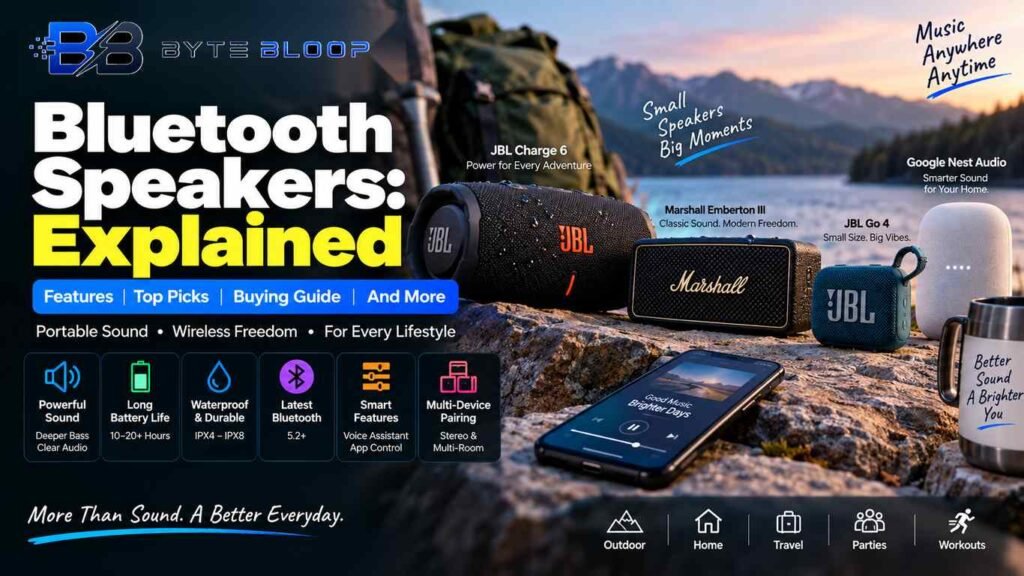
- Wattage and Driver Size – Higher wattage (e.g., 15W+) and larger drivers (4–6 inches) typically deliver deeper bass and louder output.
- Battery Life – Look for 10+ hours for casual use; rugged models often offer 20+ hours.
- Waterproof Rating – IPX4 is standard for light splashes; IPX7 or IPX8 for full submersion.
- Connectivity – Dual‑mode Bluetooth 5.2 or higher ensures low latency and better range.
- Smart Features – Built‑in voice assistants, app control, and multi‑room pairing add convenience.
Top 2026 Picks for Every Budget
Premium: JBL Charge 6
The Charge 6 tops the list for its 30W output, 20‑hour battery, and true 360‑degree sound. Its rugged design and built‑in power bank make it ideal for outdoor adventures.
Mid‑Range: Marshall Emberton III
With a 10W driver and a distinctive vintage look, the Emberton III balances price and performance. Its 12‑hour battery and Bluetooth 5.2 connectivity suit everyday use.
Budget: JBL Go 4
At under $50, the Go 4 delivers surprisingly solid audio for its size. Its 5‑hour battery and IPX7 rating make it a pocket‑friendly choice for commuters.
Best for Smart Home: Google Nest Audio
While not a pure speaker, Nest Audio integrates Google Assistant and offers excellent 360‑degree sound for a $100 price point. It’s a great entry for those who want voice control.
Performance and User Experience
Most reviewers agree that the JBL Charge 6’s bass is the most punchy among 2026 models, thanks to its dual‑driver setup. The Marshall Emberton III excels in clarity, especially in the midrange, making it a favorite for podcasts and music. Battery life is where the Go 4 falls short, but its portability offsets this limitation. Smart speakers like Nest Audio shine in home environments but lack the portability of the others.
Pros and Cons
- Pros – Wireless freedom, varied price points, improved battery tech, and smart integration.
- Cons – Some budget models sacrifice bass, and high‑end speakers can be heavy.
Who Should Buy a Bluetooth Speaker?
If you enjoy music on the go, host gatherings, or need a backup audio source for presentations, a Bluetooth speaker is a smart investment. Professionals who travel frequently will appreciate the portability and battery longevity of models like the Charge 6.
Who Should Skip It?
Those who prefer studio‑grade audio or require studio monitors for mixing should look toward wired, high‑fidelity options. Also, users who need a speaker for a large venue might find Bluetooth speakers insufficient without a sound system.
Key Takeaways
- Bluetooth speakers convert digital audio to sound via drivers and Bluetooth connectivity.
- Wattage, driver size, battery life, and waterproof rating are critical specs.
- 2026 top models span premium (JBL Charge 6), mid‑range (Marshall Emberton III), and budget (JBL Go 4).
- Smart assistants are now common, adding voice control and multi‑room pairing.
- Battery life has improved, with many models offering 20+ hours for outdoor use.
Frequently Asked Questions
What is the difference between Bluetooth 5.0 and 5.2 in speakers?
Bluetooth 5.2 offers lower latency, higher data throughput, and better range, which translates to smoother audio playback and more reliable connections.
What are the key features of the JBL Charge 6?
30W output, 20-hour battery, 360° sound, IPX7 waterproofing, and a built‑in power bank.
What are the best use cases for a portable Bluetooth speaker?
Outdoor picnics, travel, home parties, and as a backup for presentations where wired connections are impractical.
What are the pros and cons of the JBL Go 4?
Pros: affordable, pocket‑size, IPX7 waterproof. Cons: limited battery life (5 hours) and lower bass response.
Conclusion
Based on the available information and industry analysis, Bluetooth speakers in 2026 have evolved into versatile, high‑performance audio solutions that balance portability, sound quality, and smart features, making them indispensable for both casual listeners and travel enthusiasts.
Related Reading
- Top 10 Smart Home Audio Devices of 2026