Generative AI: Key Features
Introduction (Generative ai key features)
Generative ai key features is a topic worth understanding well. Generative AI has moved beyond simple chatbots to become a versatile engine that crafts text, images, audio, and even code. By learning patterns from massive datasets, these models can produce new content that mimics human style and intent. The technology now powers creative studios, marketing teams, and product designers worldwide. It also fuels automation, enabling businesses to generate reports, code snippets, and design mockups with minimal human input. As companies adopt generative AI, understanding its core features helps teams leverage the tool effectively and responsibly.
At its heart, generative AI relies on large neural networks that predict the next token in a sequence This is especially true when it comes to generative ai key features. This statistical approach allows the model to generate coherent sentences, realistic images, or plausible code blocks. The models are trained on diverse data, from books and articles to images and code repositories, which gives them a broad knowledge base. Because they can handle multiple modalities, a single system can respond to text prompts with images or videos, a trend highlighted in 2026 multimodal AI reports.
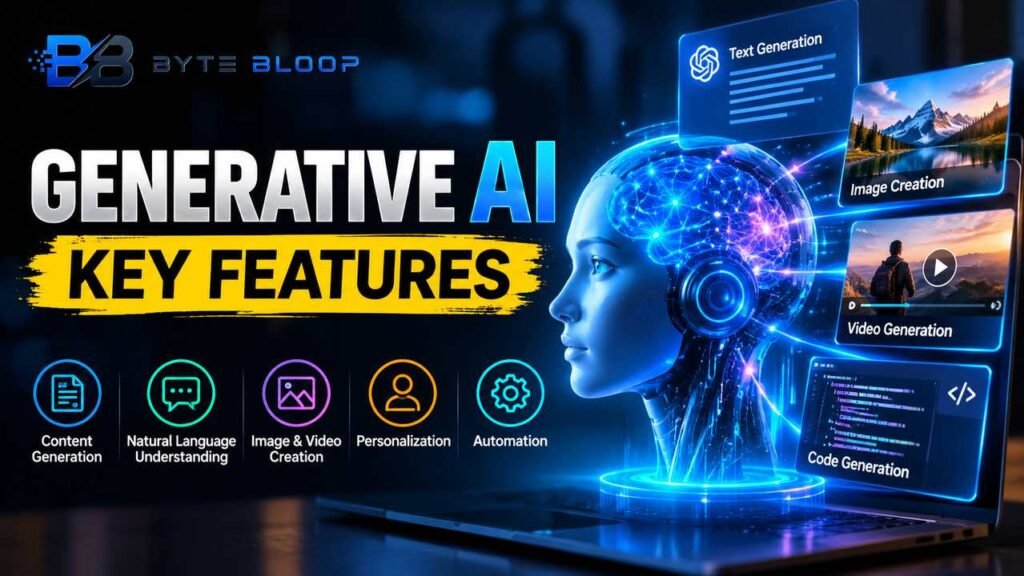
Key features of generative AI include content generation, natural language understanding, image and video creation, personalization, and automation This is especially true when it comes to generative ai key features. These capabilities enable a range of use cases, from drafting marketing copy to accelerating drug discovery. However, the technology also brings challenges such as hallucinations, bias, and ethical concerns. By exploring each feature in depth, this guide shows how to harness generative AI while mitigating risks.
Content Generation
Generative AI excels at producing written material that reads like a human author. According to the 2026 IBM Guide to AI, the models can draft blog posts, social media captions, and even complex reports. They adapt to tone, style, and domain, making them valuable for content teams that need high-volume, consistent output. For example, a marketing agency can use a generative model to generate dozens of ad copy variations in minutes, then refine the best candidates.
Natural Language Understanding
Beyond writing, these models interpret user intent and context. They can parse questions, summarize long documents, and translate languages. This dual capability—understanding and generating—creates seamless conversational agents. A customer support chatbot, for instance, can read a user’s complaint, extract key points, and draft a helpful response without human intervention.
Image and Video Creation
Multimodal AI now supports simultaneous text, image, and audio inputs. According to the Generative AI in 2026 guide, models can produce photorealistic images from textual prompts, generate music, or edit video frames. Designers can iterate quickly by describing a scene and letting the AI render it, then refine the output with simple edits. In advertising, this speeds up visual asset creation and reduces costs.
Personalization
Generative AI tailors content to individual users by learning preferences from interaction data. This feature powers recommendation engines that generate product descriptions, email subject lines, or chatbot responses tailored to each customer. A retailer can use the model to craft personalized email campaigns that increase click‑through rates.
Automation
Automation is a cornerstone of generative AI’s business impact. By generating code snippets, drafting legal documents, or creating financial summaries, the technology frees human workers from repetitive tasks. For example, a software developer can provide a high‑level requirement and receive a working prototype in seconds, accelerating the development cycle.
Practical Examples
• Content teams use AI to draft blog posts and social media updates. Designers generate mockups from text descriptions. Developers receive auto‑generated code for common patterns. Marketers personalize email campaigns at scale. Healthcare researchers use AI to propose drug candidates based on molecular data.
Pros and Cons
Pros: Rapid content creation, cost savings, scalability, and new creative possibilities. Cons: Potential for hallucinations, bias in outputs, and the need for human oversight to ensure accuracy and compliance.
Key Takeaways
- Generative AI crafts text, images, and code by predicting next tokens in sequences.
- Multimodal models handle text, image, audio, and video simultaneously.
- Key use cases span content creation, design, coding, marketing, and healthcare.
- Benefits include speed, cost savings, and personalization; risks involve hallucinations and bias.
- Human oversight remains essential for quality control and ethical use.
Frequently Asked Questions
What is generative AI?
Generative AI refers to models that learn patterns from large datasets and produce new content, such as text, images, or code, that mimics human style.
What are the key features of generative AI?
The core features include content generation, natural language understanding, multimodal image/video creation, personalization, and automation.
What are the best use cases for generative AI?
Popular applications are drafting marketing copy, generating design mockups, auto‑coding, personalizing customer interactions, and accelerating drug discovery.
What are the pros and cons of generative AI?
Pros: rapid output, cost efficiency, scalability. Cons: hallucinations, bias, and the need for human review to ensure accuracy.
Conclusion
Based on the available information and industry analysis, generative AI offers a powerful blend of content creation, multimodal understanding, and automation that can transform how businesses produce and personalize content. However, its effectiveness hinges on careful oversight to mitigate hallucinations, bias, and ethical concerns. By leveraging its key features responsibly, organizations can unlock significant productivity gains while maintaining quality and trust.
Related Reading
- How to Choose the Right Generative AI Tool for Your Business
Sources & References
- Gen AI Explained: The Complete 2026 Guide
- The 2026 IBM Guide to AI
- Generative AI in 2026: Tools, Use Cases, and Career …
- The Ultimate Guide to Generative AI in 2027: Concepts, …
- Explore Top Generative AI Tools You Should Learn in 2026
- Types of AI: A Guide (2026)
- The 2026 Guide to GenAI – Andy O’Sullivan – Medium
- Key Features of Generative AI: A Complete Guide
Related Articles