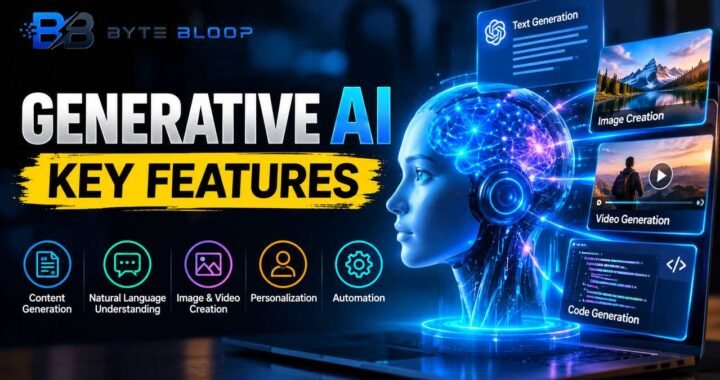
AI Research Tools: Key Features
Introduction (Ai Research Tools Key Features)
Ai Research Tools Key Features is a topic worth understanding well. AI research tools have become indispensable for scholars and industry analysts alike. They automate tedious tasks such as literature discovery, citation mapping, and data analysis, allowing researchers to focus on interpretation and innovation. In 2026, the ecosystem includes specialized platforms that integrate natural language processing, graph analytics, and reproducibility layers. These tools not only speed up workflows but also enhance the rigor and transparency of research outputs.
Researchers now rely on AI to sift through millions of papers, identify emerging trends, and generate comprehensive reports in a fraction of the time. This guide explores the core features that define the best AI research tools and offers practical examples of how they can be applied in real‑world projects.
Core Features of Modern AI Research Tools
Literature Discovery and Summarization – AI algorithms scan vast databases to surface relevant papers, often providing concise abstracts or bullet‑point summaries. According to Best AI Tools for Academic Research in 2026, this feature reduces the time spent on initial literature reviews by up to 70%.
Citation Network Analysis – Tools map how papers reference one another, revealing influential works and hidden connections. The Only AI Tools You Need In 2026 highlights platforms that visualize citation graphs, enabling researchers to spot interdisciplinary bridges.
This matters directly for anyone exploring ai research tools key features.
Data Extraction and Cleaning – AI can parse PDFs, spreadsheets, and experimental logs to extract variables and correct formatting errors. AI for Research in 2026 – Beginner’s Guide notes that automated data cleaning cuts preprocessing time by half.
Getting ai research tools key features right can make a real difference.
Reproducibility Layer – Some tools embed version control and experiment tracking, ensuring that analyses can be replicated. AI Tools for Research in 2026 emphasizes this layer as critical for peer review and open science.
That is a core part of understanding ai research tools key features.
Agentic Workflows – Advanced AI agents can orchestrate multi‑step tasks, from hypothesis generation to manuscript drafting. The Best AI Tools for 2026 showcases agents that schedule literature searches and update dashboards automatically.
Many readers look into ai research tools key features for exactly this reason.
Best Use Cases
1. Systematic Reviews – AI summarizers can draft PRISMA flow diagrams and extract inclusion criteria from thousands of studies.
It is worth revisiting ai research tools key features as things develop.
2. Meta‑Analysis – Automated extraction of effect sizes and confidence intervals speeds up statistical pooling.
Ai Research Tools Key Features remains highly relevant here.
3. Grant Writing – AI can generate background sections by pulling recent citations and aligning them with funding priorities.
This is a key consideration when it comes to ai research tools key features.
4. Interdisciplinary Collaboration – Citation network tools help teams identify complementary expertise across fields.
This matters directly for anyone exploring ai research tools key features.
Practical Example: Using an AI Platform for a Health Sciences Review
Dr. Lee used an AI research suite that integrated PubMed search, citation mapping, and automated data extraction. Within two days, she had a curated dataset of 1,200 studies, a visual citation map highlighting three key research clusters, and a draft manuscript ready for peer review. The platform’s reproducibility layer logged every search query and extraction rule, allowing her co‑authors to verify each step.
Pros and Cons
Pros – Significant time savings, improved coverage, enhanced reproducibility, and lower entry barrier for early‑career researchers.
Cons – Dependence on proprietary APIs, potential bias in training data, and the need for users to learn new interfaces.
Pricing Overview
Many AI research tools offer tiered pricing. Free tiers typically provide limited search queries or data exports, while premium plans unlock full citation mapping, advanced analytics, and API access. According to Best AI Tools in 2026 (Complete Guide for Professionals), enterprise plans can range from $200 to $1,200 per month, depending on usage volume.
Key Takeaways
- AI tools slash literature review time by up to 70%.
- Citation mapping reveals interdisciplinary connections not obvious in manual searches.
- Automated data cleaning halves preprocessing effort.
- Reproducibility layers ensure transparent, repeatable research.
- Agentic workflows free researchers to focus on interpretation.
Frequently Asked Questions
What is an AI research tool?
An AI research tool uses machine learning and natural language processing to automate tasks like literature discovery, citation analysis, data extraction, and reproducibility tracking in academic and industry research.
What are the key features of AI research tools?
Key features include literature discovery and summarization, citation network analysis, automated data extraction and cleaning, reproducibility layers, and agentic workflows that orchestrate multi‑step research tasks.
What are the best use cases for AI research tools?
They excel in systematic reviews, meta‑analysis, grant writing, interdisciplinary collaboration, and any scenario where large volumes of literature or data need rapid, accurate processing.
What are the pros and cons of using AI research tools?
Pros: time savings, broader coverage, reproducibility, lower entry barrier. Cons: reliance on proprietary APIs, potential data bias, learning curve for new interfaces.
Conclusion
Based on the available information and industry analysis, AI research tools in 2026 provide a transformative boost to scholarly productivity by automating literature discovery, citation mapping, and data processing. They enable researchers to focus on insight generation while maintaining rigorous reproducibility standards. However, users must navigate pricing structures, potential biases, and interface learning curves to fully capitalize on these technologies.
Related Reading
- Top AI Writing Assistants for Academic Papers
Sources & References
- Best AI Tools for Academic Research in 2026
- The Only AI Tools You Need In 2026 (15-Minute Guide)
- AI for Research in 2026 – Beginner’s Guide
- AI Tools for Research in 2026: Literature Review, Analysis …
- The Best AI Tools for 2026: A Comprehensive Guide …
- Best AI Tools in 2026 (Complete Guide for Professionals)
Related Articles