Learning Management Systems: Explained
Introduction
Learning Management Systems (LMS) have become the backbone of modern education and corporate training. By centralizing course creation, delivery, and assessment, they replace scattered emails, paper handouts, and disparate learning tools with a single, cohesive platform. An LMS not only hosts content but also tracks learner progress, generates compliance reports, and provides analytics that inform instructional design. For institutions, this means scalable distance learning and streamlined classroom management. For businesses, it translates to consistent onboarding, skill development, and regulatory adherence. The rise of hybrid work and online education has amplified the need for robust LMS solutions that integrate with existing tech stacks. As a result, vendors now offer features ranging from AI‑driven personalization to mobile accessibility, ensuring learners can engage anytime, anywhere. Understanding the core functions, benefits, and best use cases of an LMS is essential for educators, HR teams, and IT professionals looking to invest wisely.
What an LMS Actually Does
An LMS is a software application that facilitates the planning, delivery, and tracking of learning programs. It stores course materials, manages enrollments, administers quizzes, and records completion data. In addition to content hosting, most systems provide discussion forums, peer‑review tools, and integration points with external applications like HRIS or CRM. By automating administrative tasks, instructors can focus on pedagogy rather than paperwork.
Core Features Every LMS Should Offer
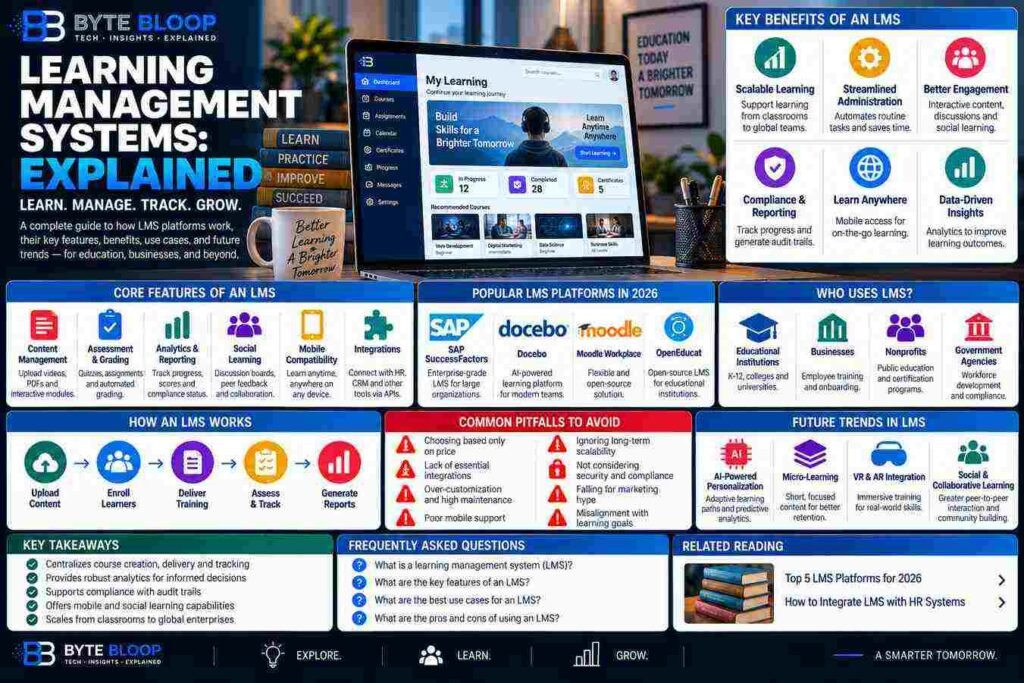
- Content Management: Upload videos, PDFs, and interactive modules.
- Assessment & Grading: Build quizzes, assignments, and automated grading.
- Analytics & Reporting: Track completion rates, assessment scores, and compliance status.
- Social Learning: Discussion boards, peer feedback, and collaboration spaces.
- Mobile Compatibility: Responsive design or dedicated apps for on‑the‑go learning.
- Integration Ecosystem: APIs for HR, payroll, and communication tools.
Benefits Across Sectors
In K‑12 and higher education, LMSs enable blended classrooms and open‑access courses, reducing administrative overhead and expanding reach. Corporate training benefits from consistent onboarding, skill tracking, and audit trails that simplify compliance with industry regulations. Nonprofits and government agencies use LMSs to deliver public education programs and monitor certifications required for workforce development. Across all settings, the data generated helps stakeholders make evidence‑based decisions about curriculum effectiveness.
Choosing the Right LMS for Your Needs
When evaluating LMS vendors, consider the following criteria:
- Scalability: Can the platform grow with your user base?
- User Experience: Is the interface intuitive for both learners and administrators?
- Customization: Does it allow branding, course authoring, and workflow adjustments?
- Security & Compliance: Does it meet data protection standards and provide audit logs?
- Cost Structure: Is the pricing transparent and aligned with your budget?
Popular options in 2026 include SAP SuccessFactors, Docebo, Moodle Workplace, and open‑source solutions like OpenEducat. Each offers a balance of features tailored to different organizational sizes and industries.
Common Pitfalls to Avoid
Many organizations fall into the trap of selecting an LMS based solely on price or marketing hype. A low‑cost platform may lack essential integrations or fail to support mobile learning. Over‑customization can also lead to maintenance headaches. It’s crucial to align the LMS’s capabilities with your strategic learning objectives, not just your budget.
Future Trends in LMS Technology
Artificial intelligence is increasingly shaping LMS experiences, from adaptive learning paths to predictive analytics that flag learners at risk of falling behind. Micro‑learning modules and social learning features are gaining traction, reflecting the shift toward bite‑sized, on‑demand content. Integration with virtual and augmented reality tools is also on the horizon, promising immersive training scenarios for complex skill sets.
Key Takeaways
- Centralizes course creation, delivery, and tracking
- Provides robust analytics for informed decisions
- Supports compliance with audit trails
- Offers mobile and social learning capabilities
- Scales from classrooms to global enterprises
Frequently Asked Questions
What is a learning management system (LMS)?
An LMS is a software platform that centralizes the planning, delivery, and tracking of educational or training content, enabling instructors to manage courses and learners to access materials and assessments.
What are the key features of an LMS?
Core features include content management, assessment tools, analytics and reporting, social learning components, mobile compatibility, and integration with other enterprise systems.
What are the best use cases for an LMS?
LMSs excel in blended and online education, corporate onboarding and compliance training, and any setting that requires scalable, trackable learning experiences.
What are the pros and cons of using an LMS?
Pros: centralized learning, automation, data insights, and scalability. Cons: potential high implementation costs, learning curves, and risk of vendor lock‑in if integration options are limited.
Conclusion
Based on the available information and industry analysis, learning management systems provide a unified platform that streamlines content delivery, automates administrative tasks, and delivers actionable data for continuous improvement. By selecting an LMS that aligns with organizational goals, users can achieve higher engagement, faster skill acquisition, and robust compliance reporting, positioning themselves for success in an increasingly digital learning landscape.
Related Reading
- Top 5 LMS Platforms for 2026
- How to Integrate LMS with HR Systems