AI Coding Assistants: Key Features
Introduction (Ai Coding Assistants Key Features)
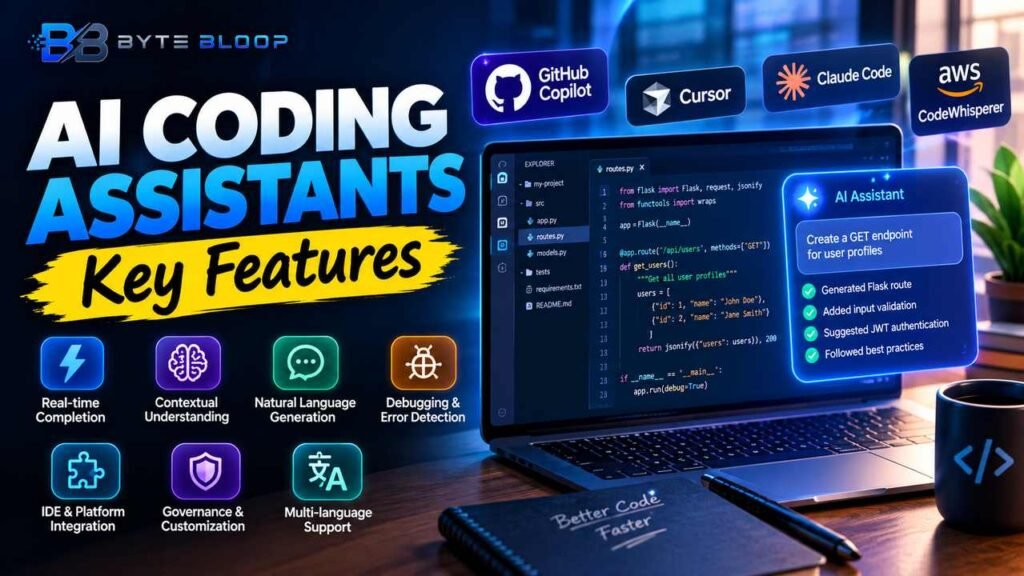
Ai Coding Assistants Key Features is a topic worth understanding well. AI coding assistants are transforming how developers write, test, and maintain code. They blend natural language processing with code intelligence to offer real‑time suggestions, auto‑completion, and even debugging help. In 2026, the market has matured, with tools like GitHub Copilot, Cursor, Claude Code, and Amazon CodeWhisperer leading the pack. These assistants reduce boilerplate, catch bugs early, and help teams adhere to best practices.
They also integrate tightly with popular IDEs and version‑control systems, making them a core part of modern workflows. As teams scale, the ability to onboard new members quickly and maintain code quality becomes critical, and AI assistants address both needs. Understanding their key features helps developers choose the right tool for their projects.
Core Features of Modern AI Coding Assistants
Real‑time code completion is the most visible benefit. The assistant predicts the next token or block, often completing entire functions in a few keystrokes. This speeds up routine coding and reduces syntax errors. According to the LinkedIn guide on top AI coding assistants, most tools support a wide range of languages, from JavaScript to Python and Java.
Contextual understanding goes beyond simple autocompletion. The assistant reads surrounding code, comments, and even project files to suggest relevant snippets. It can adapt to a team’s style guide or naming conventions, offering consistent output. The AI Corner article notes that this feature helps maintain uniform code style across large codebases.
This matters directly for anyone exploring ai coding assistants key features.
Code generation from natural language allows developers to describe a function or feature in plain English and receive a working implementation. This is especially useful for prototyping or generating boilerplate. The Hivel blog highlights that such generation supports multiple frameworks, reducing setup time for new projects.
Getting ai coding assistants key features right can make a real difference.
Debugging and error detection is a growing area. Assistants flag syntax errors, potential runtime issues, and security vulnerabilities as you type. They can also suggest fixes or refactorings. The 10 Best AI Code Assistants list cites Amazon CodeWhisperer for its robust security scanning guidance.
That is a core part of understanding ai coding assistants key features.
IDE and platform integration ensures the assistant feels native. Most tools offer plugins for VS Code, JetBrains IDEs, and even web-based editors like Replit. Integration with GitHub or GitLab pipelines allows suggestions to be reviewed before merging. According to the Kilo.ai buyer’s guide, seamless integration is a top criterion for enterprise adoption.
Many readers look into ai coding assistants key features for exactly this reason.
Governance and customization lets teams control data usage and model behavior. Features include fine‑tuning on internal codebases, setting privacy policies, and filtering content. The Kilo.ai guide stresses that governance is essential for regulated industries.
It is worth revisiting ai coding assistants key features as things develop.
Multi‑language support is standard. Most assistants cover the major languages and frameworks, but some specialize. For example, Cursor focuses on JavaScript and TypeScript, while Claude Code offers strong support for Python and Go.
Ai Coding Assistants Key Features remains highly relevant here.
Best Use Cases
AI coding assistants excel in three primary scenarios. First, onboarding new developers. By providing instant code examples and explanations, assistants shorten the learning curve. Second, rapid prototyping where ideas need to move from concept to test quickly. Third, code quality maintenance, especially in large teams where consistent style and security standards are hard to enforce manually.
This is a key consideration when it comes to ai coding assistants key features.
Pros and Cons
Pros include faster development, reduced boilerplate, and improved code quality. They also democratize coding by lowering the entry barrier for junior developers. Cons involve potential overreliance, occasional inaccurate suggestions, and privacy concerns when code is sent to cloud models. Teams should weigh these factors and implement governance policies accordingly.
This matters directly for anyone exploring ai coding assistants key features.
Practical Example
Imagine building a REST API in Python. With an AI assistant, you can type "Create a GET endpoint for user profiles" and receive a fully formed Flask route, complete with input validation. The assistant will also flag missing authentication checks and suggest adding a JWT guard. This saves hours of manual coding and ensures best practices are followed.
Key Takeaways
- Real‑time completion speeds coding and reduces errors
- Contextual understanding maintains style consistency
- Natural language generation accelerates prototyping
- Debugging features catch bugs early
- IDE integration makes assistants feel native
- Governance controls data privacy and model behavior
Frequently Asked Questions
What is an AI coding assistant?
An AI coding assistant is a tool that uses machine learning to suggest, generate, and debug code in real time, often integrated into popular IDEs.
What are the key features of AI coding assistants?
Key features include real‑time code completion, contextual understanding, natural language code generation, debugging support, IDE integration, governance controls, and multi‑language support.
What are the best use cases for AI coding assistants?
They shine in onboarding new developers, rapid prototyping, and maintaining code quality across large teams.
What are the pros and cons of AI coding assistants?
Pros: faster development, reduced boilerplate, improved quality. Cons: potential overreliance, occasional inaccuracies, privacy concerns.
Conclusion
Based on the available information and industry analysis, AI coding assistants provide a powerful blend of speed, quality, and consistency for modern development teams. By leveraging real‑time completion, contextual insight, and robust debugging, they enable developers to focus on higher‑level problem solving while maintaining best practices across projects.
Related Reading
- How to Choose the Right AI Coding Assistant for Your Team
Sources & References
- Top AI Coding Assistants in 2026: The Ultimate Guide for …
- AI Coding Assistant Buyer’s Guide 2026
- Best AI Coding Assistant in 2026: Complete Guide for …
- 7 Best AI Coding Assistant Tools in 2026
- The complete guide to AI coding in 2026
- AI coding assistants 2026 guide – Rishi Koushal
- 10 Best AI Code Assistants in 2026
Related Articles