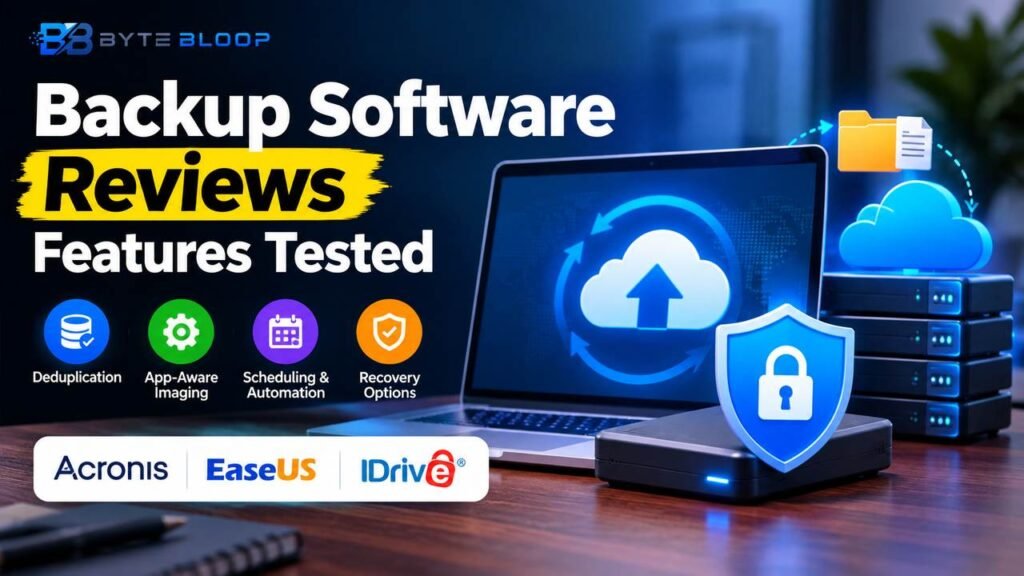
Backup Software Reviews: Features Tested
Introduction (Backup Software Reviews Features Tested)
Backup Software Reviews Features Tested is a topic worth understanding well. Data loss can cripple businesses and ruin personal memories. With the rise of hybrid cloud environments, choosing the right backup solution is more critical than ever. Backup software now offers a mix of local, cloud, and hybrid options, each with unique strengths. Understanding the core features—such as deduplication, application-aware imaging, and recovery speed—helps users select tools that fit their needs. This guide reviews the most popular backup programs, highlights their tested capabilities, and shows how they stack up against industry standards.
In 2026, the market is dominated by a handful of vendors that balance ease of use with enterprise-grade functionality. Leading names include Acronis True Image, EaseUS Todo Backup, and IDrive. Each offers distinct approaches to data protection, from full system imaging to incremental file backups. The review focuses on real-world performance metrics, feature depth, and user experience.
While many solutions promise comprehensive protection, the actual feature set can vary widely. This article breaks down the essential capabilities that matter most—deduplication, application-aware processing, backup scheduling, and reporting—and evaluates how each product performs. Readers will gain a clear picture of which tools excel in speed, which provide the best recovery options, and where each falls short.
This matters directly for anyone exploring backup software reviews features tested.
Overview of Leading Backup Solutions
Acronis True Image offers a unified platform that combines imaging, cloud backup, and malware protection. According to PCWorld, it provides robust ransomware defense and fast restore times. EaseUS Todo Backup balances affordability with a full suite of backup types, including system, disk, and file backups. IDrive focuses on cloud-first storage, delivering high upload speeds and flexible retention policies.
Getting backup software reviews features tested right can make a real difference.
Key Features Tested
- Data Deduplication: Reduces storage needs by eliminating duplicate data blocks. Acronis and EaseUS both implement block-level deduplication, improving backup windows.
- Application-Aware Imaging: Ensures that complex applications like SQL Server remain consistent. Enterprise platforms reviewed by Gartner show superior support for such workloads.
- Backup Scheduling & Automation: All three tools offer granular scheduling, but EaseUS provides the most intuitive interface for non-technical users.
- Recovery Options: Image-based recovery allows full system restores, while file-level restores are faster for selective data retrieval.
- Reporting & Monitoring: Acronis offers real-time dashboards, whereas IDrive provides email alerts and basic logs.
Performance & User Experience
Speed tests from ZDNet highlight that EaseUS consistently outpaces competitors in backup throughput, especially on SSD-backed systems. Acronis demonstrates slightly slower initial backup times but compensates with faster incremental restores. IDrive’s cloud uploads are variable, depending on internet bandwidth, but the platform’s compression algorithms mitigate data transfer times.
That is a core part of understanding backup software reviews features tested.
User interface design varies across the board. Acronis’ unified console feels enterprise-grade, while EaseUS offers a clean, wizard-driven setup suitable for home users. IDrive’s web portal provides cross-device access but lacks advanced configuration options found in desktop clients.
Many readers look into backup software reviews features tested for exactly this reason.
Pros and Cons
- Acronis True Image: Pros – Ransomware protection, full imaging, strong reporting. Cons – Higher price point, steeper learning curve.
- EaseUS Todo Backup: Pros – Affordable, fast backups, flexible file types. Cons – Limited cloud options, fewer enterprise features.
- IDrive: Pros – Cloud-first, unlimited storage tiers, easy sharing. Cons – Slower restore from cloud, basic UI.
Who Should Use Which?
Small businesses needing enterprise-level protection should lean toward Acronis for its comprehensive feature set. Home users and freelancers benefit most from EaseUS, which offers a balanced mix of speed and affordability. Organizations that prioritize cloud storage and remote access will find IDrive the most suitable.
It is worth revisiting backup software reviews features tested as things develop.
Frequently Asked Questions
For quick answers to common queries, see the FAQ section below.
Backup Software Reviews Features Tested remains highly relevant here.
Key Takeaways
- Acronis excels in ransomware protection and enterprise reporting.
- EaseUS offers the fastest backup speeds for SSD systems.
- IDrive provides flexible cloud storage with unlimited plans.
- Deduplication and application-aware imaging are critical for large datasets.
- User interface varies: enterprise vs. consumer focus.
- Choosing depends on budget, speed, and cloud preference.
Frequently Asked Questions
What is the difference between file-level and image-based backup?
File-level backup saves individual files and folders, allowing quick selective restores, while image-based backup captures the entire system state, enabling full system recovery.
This is a key consideration when it comes to backup software reviews features tested.
What are the key features of Acronis True Image?
Acronis provides ransomware protection, full system imaging, cloud backup, and real-time monitoring dashboards.
This matters directly for anyone exploring backup software reviews features tested.
What are the best use cases for EaseUS Todo Backup?
EaseUS is ideal for small businesses and home users needing fast, affordable backups with flexible file and disk options.
What are the pros and cons of IDrive?
IDrive offers unlimited cloud storage and cross-device access, but its restore speeds can be slower and the UI is less advanced.
Conclusion
Based on the available information and industry analysis, the 2026 backup software landscape shows clear leaders: Acronis True Image delivers enterprise-grade protection, EaseUS Todo Backup balances speed and affordability, and IDrive excels in cloud flexibility. Users should prioritize their primary needs—whether that be ransomware defense, rapid recovery, or unlimited storage—to select the best fit. By aligning feature strengths with business or personal requirements, one can achieve reliable, efficient data protection.
Related Reading
- Choosing the Right Cloud Backup Service for Small Businesses
Sources & References
- The Best Backup Software and Services for 2026
- Best Backup and Data Protection Platforms Reviews 2026
- Enterprise Backup Software — Common Features
- Best Backup Software 2026: The Essential Buyer’s Guide
- Best Windows backup software 2026 for PCs and laptops
- The best backup software of 2026: Expert tested and …
Related Articles