Introduction
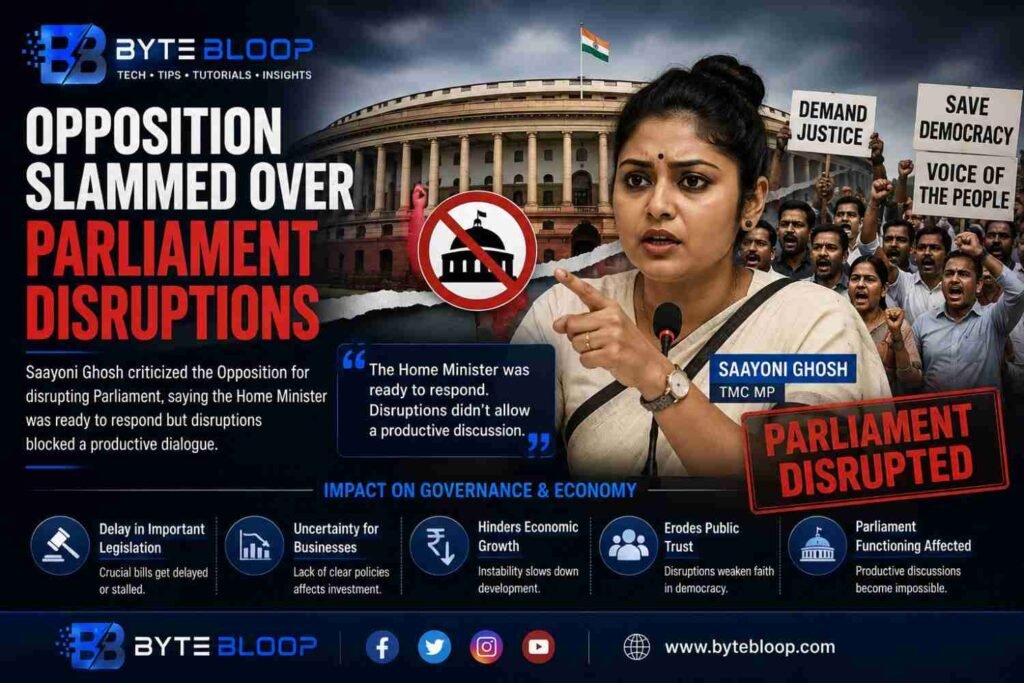
In a recent turn of events, Saayoni Ghosh has come forward to criticize the Opposition for their role in disrupting the proceedings of Parliament. According to Ghosh, the Home Minister was ready to respond to the questions and concerns raised by the Opposition, but the disruptions did not allow for a productive dialogue. This criticism has sparked a heated debate, with many questioning the motives behind the Opposition’s actions.
The disruptions in Parliament have been a recurring issue, with various political parties engaging in protests and walkouts over different issues. While the Opposition claims that these disruptions are necessary to bring attention to critical issues, others argue that they hinder the functioning of the legislative body and prevent important work from being done. As the debate continues, it is essential to examine the background and historical context of these disruptions to understand their significance and impact.
Background & Historical Context
Parliamentary disruptions are not a new phenomenon in Indian politics. Over the years, various political parties have resorted to disruptions as a means of protest, often citing issues such as government policies, corruption, and social injustices. While some argue that these disruptions are a necessary evil, allowing marginalized voices to be heard, others see them as a hindrance to the democratic process. The frequency and intensity of these disruptions have increased in recent years, with some sessions of Parliament being completely washed out due to protests and walkouts.
Historically, the Indian Parliament has been a platform for debate, discussion, and the passage of legislation. However, the increasing frequency of disruptions has raised concerns about the effectiveness of this institution. As the Opposition and the ruling party engage in a war of words, it is essential to consider the long-term implications of these disruptions on the country’s governance and democratic fabric. The role of the Home Minister and other key government officials in addressing these disruptions and facilitating a productive dialogue is critical in this context.
Key Details & Impact Analysis
The recent disruptions in Parliament have been particularly contentious, with the Opposition protesting over various issues, including government policies and alleged corruption. The Home Minister’s readiness to respond to these concerns has been highlighted by Saayoni Ghosh, who argues that the Opposition’s actions prevented a meaningful discussion from taking place. This has significant implications for the functioning of Parliament, as it hinders the passage of important legislation and prevents the government from being held accountable for its actions.
The impact of these disruptions extends beyond the walls of Parliament, affecting the country’s governance and economy. As the legislative body is unable to function effectively, important bills and policies are delayed or stalled, leading to uncertainty and instability. The business community, in particular, is affected, as the lack of clear policies and regulations hinders investment and growth. Furthermore, the disruptions undermine the public’s faith in the democratic process, leading to disillusionment and disenchantment with the political system.
Frequently Asked Questions (FAQs)
What are the main reasons behind the disruptions in Parliament?
The main reasons behind the disruptions in Parliament vary, but they often include protests over government policies, alleged corruption, and social injustices. The Opposition may also disrupt proceedings to bring attention to specific issues or to express dissent against the ruling party.
How do the disruptions in Parliament affect the country’s governance and economy?
The disruptions in Parliament have significant implications for the country’s governance and economy. They hinder the passage of important legislation, prevent the government from being held accountable for its actions, and create uncertainty and instability. This, in turn, affects the business community, leading to delayed investments and hindered growth.
What role can the Home Minister and other government officials play in addressing the disruptions?
The Home Minister and other government officials can play a crucial role in addressing the disruptions by facilitating a productive dialogue with the Opposition. This can involve listening to their concerns, addressing their grievances, and working towards finding common ground. By doing so, the government can help to build trust and confidence in the democratic process, reducing the likelihood of disruptions and ensuring that Parliament functions effectively.
Conclusion
In conclusion, the disruptions in Parliament are a complex issue, with significant implications for the country’s governance and economy. As Saayoni Ghosh criticizes the Opposition for their role in these disruptions, it is essential to consider the background and historical context of these events. The Home Minister’s readiness to respond to the Opposition’s concerns is a positive step, but more needs to be done to address the underlying issues and facilitate a productive dialogue. By working together and finding common ground, the government and the Opposition can help to restore the public’s faith in the democratic process and ensure that Parliament functions effectively.
Source: ANI News