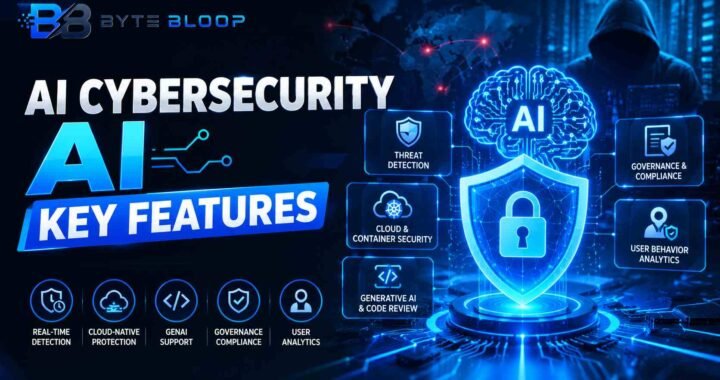
AI Cybersecurity AI: Explained
Introduction
Artificial intelligence is reshaping the cybersecurity landscape, turning reactive defense into proactive threat anticipation. In 2026, enterprises increasingly deploy AI to scan vast data streams, detect anomalies, and automate incident response, all while grappling with new risks such as prompt injection and model theft. The convergence of machine learning and security operations promises faster detection of zero‑day exploits, smarter phishing filters, and adaptive Zero‑Trust frameworks. However, the same intelligence that spotlights threats can be weaponized by attackers, making governance and robust model protection essential. Understanding AI’s role in cybersecurity—its capabilities, limitations, and the frameworks that guide its safe use—is critical for any organization that wants to stay ahead of evolving threats. This article unpacks the core concepts of AI cybersecurity, highlights real‑world tools, and offers actionable guidance for building a resilient security posture. We’ll explore how AI enhances detection, automates response, and supports governance, while also addressing the emerging risks that accompany this powerful technology. Finally, we’ll outline best practices for integrating AI into your security stack and choosing the right tools for your needs.
What AI Brings to Cybersecurity
AI transforms traditional security operations by ingesting terabytes of log data, network traffic, and user behavior in real time. Machine‑learning models can spot subtle deviations that would escape human analysts, flagging potential breaches before they cause damage. In addition to detection, AI powers automated triage, prioritizing alerts and suggesting remediation steps, thereby reducing mean time to response (MTTR). AI also supports predictive analytics, enabling security teams to forecast attack vectors and allocate resources proactively. These capabilities are underpinned by frameworks such as NIST AI RMF and OWASP LLM Top‑10, which provide guidelines for secure model development and deployment.
Key Features of AI‑Driven Security Tools
- Threat Detection & Hunting – Continuous monitoring of endpoints, cloud workloads, and network flows with anomaly scoring.
- Automated Incident Response – Orchestrated playbooks that can isolate compromised hosts, block malicious IPs, and patch vulnerabilities.
- Adaptive Zero Trust – AI‑driven identity verification that adjusts access policies based on contextual risk.
- Phishing Mitigation – Natural language processing that flags deceptive emails before they reach users.
- Model Governance – Tools for tracking data provenance, versioning, and bias mitigation in security models.
Practical Examples in 2026
Large enterprises are integrating AI with SIEM platforms to create “AI‑augmented SOCs.” For instance, a global bank uses a machine‑learning engine to analyze 1.5 million log entries per day, reducing false positives by 70% and cutting investigation time from hours to minutes. In the public sector, AI‑driven threat intelligence feeds are feeding real‑time dashboards that help agencies anticipate ransomware campaigns before they spread. Small‑to‑medium businesses are turning to cloud‑based AI tools that offer out‑of‑the‑box phishing detection and automated patch management, leveling the playing field against sophisticated attackers.
Benefits and Risks
AI’s primary advantage lies in its speed and scale. By automating routine tasks, security teams can focus on strategic initiatives and complex investigations. AI also enhances detection accuracy, especially for novel or polymorphic malware. However, attackers are learning to exploit AI: prompt injection can manipulate model outputs, while adversarial examples can evade detection. Additionally, poorly trained models may generate biased alerts, leading to oversight of legitimate threats. These risks underscore the importance of rigorous model validation, continuous monitoring, and adherence to security standards such as the OWASP LLM Top‑10.
Choosing the Right AI Cybersecurity Tool
When evaluating tools, consider the following criteria:
- Data Security – Does the platform encrypt data at rest and in transit, and does it support on‑prem or hybrid deployment?
- Model Transparency – Are model decisions explainable, and can you audit the training data?
- Integration – Does it natively integrate with existing SIEM, SOAR, and IAM systems?
- Compliance – Does it align with industry regulations such as GDPR, HIPAA, and NIST AI RMF?
- Vendor Support – Look for active community, regular updates, and a clear roadmap for AI governance.
Top vendors in 2026 include Cycode, Checkmarx, and SentinelOne, each offering specialized AI modules for application security, endpoint protection, and threat detection. Many of these platforms provide free trials and open‑source components, allowing organizations to test capabilities before full deployment.
Best Practices for Implementing AI Cybersecurity
- Start with a clear governance framework that defines data ownership, model lifecycle, and risk tolerance.
- Use diversified data sources to train models, reducing bias and improving generalization.
- Implement continuous monitoring of model performance, with alerts for drift or degradation.
- Integrate human oversight in the loop, ensuring analysts can review and override AI decisions.
- Maintain an incident response playbook that accounts for AI‑specific scenarios, such as model poisoning attacks.
Key Takeaways
- AI accelerates threat detection and reduces MTTR by automating alert triage.
- Governance frameworks like NIST AI RMF are essential to secure AI models from theft and bias.
- Enterprise AI tools must balance data security, model transparency, and regulatory compliance.
- Human analysts remain critical for reviewing AI decisions and handling complex incidents.
Frequently Asked Questions
What is AI cybersecurity?
AI cybersecurity refers to the application of artificial intelligence techniques—such as machine learning, natural language processing, and predictive analytics—to detect, prevent, and respond to cyber threats, while also ensuring the security and governance of AI systems themselves.
What are the key features of AI cybersecurity tools?
Key features include real‑time threat detection, automated incident response playbooks, adaptive Zero‑Trust identity verification, phishing mitigation via NLP, and robust model governance for data provenance and bias mitigation.
What are the best use cases for AI in cybersecurity?
Use cases span automated log analysis, anomaly detection in network traffic, predictive threat hunting, phishing email filtering, and dynamic access control in Zero‑Trust architectures.
What are the pros and cons of AI cybersecurity?
Pros: faster detection, reduced false positives, and scalable monitoring. Cons: potential for prompt injection, adversarial attacks, model bias, and the need for rigorous governance and human oversight.
Conclusion
Based on the available information and industry analysis, AI cybersecurity offers transformative capabilities that accelerate threat detection, automate response, and enable adaptive security models. However, these benefits come with new risks—prompt injection, model theft, and bias—that require robust governance, adherence to frameworks like NIST AI RMF, and continuous human oversight. By carefully selecting tools, implementing comprehensive security standards, and maintaining an active audit trail, organizations can harness AI’s power while safeguarding against its vulnerabilities.
Related Reading
- Top AI-Powered Phishing Detection Tools in 2026