AI Writing Apps: Explained
Introduction
This guide covers ai writing apps explained in detail. Understanding ai writing apps explained helps readers make better, more informed decisions.
Artificial intelligence has reshaped the way we create written content, turning what used to be a labor‑intensive task into a rapid, collaborative process. AI writing apps harness large language models—such as OpenAI’s GPT‑4, Google Gemini, and Anthropic’s Claude—to generate prose, suggest edits, and even compose music or code. They are now a staple for marketers, students, and writers looking to cut time while maintaining quality. The technology powers everything from headline generators to full‑length articles, and its integration into mobile platforms means you can write on the go. Understanding how these apps work, what they offer, and where they fit into your workflow is essential for anyone who wants to stay competitive in a content‑driven world. In this guide we’ll unpack the core mechanics, review leading tools, and share practical tips for choosing and using AI writing apps on your phone. By the end, you’ll know which app best suits your needs and how to leverage AI to elevate your writing game. Understanding ai writing apps explained helps readers make better, more informed decisions.
How AI Writing Apps Work — ai writing apps explained
At their core, AI writing apps rely on large language models (LLMs) trained on massive text corpora. When you type a prompt, the model predicts the next word or sentence, generating coherent text that matches your intent. Many apps layer additional features—such as style transfer, tone adjustment, and contextual research—to refine the output. Some incorporate retrieval‑augmented generation (RAG), pulling up‑to‑date facts from the web to keep content accurate. Mobile developers integrate these models via APIs, often using cloud services to manage compute costs and latency. Understanding ai writing apps explained helps readers make better, more informed decisions.
Top AI Writing Apps for 2026
Several apps have emerged as leaders in the mobile space: Understanding ai writing apps explained helps readers make better, more informed decisions.
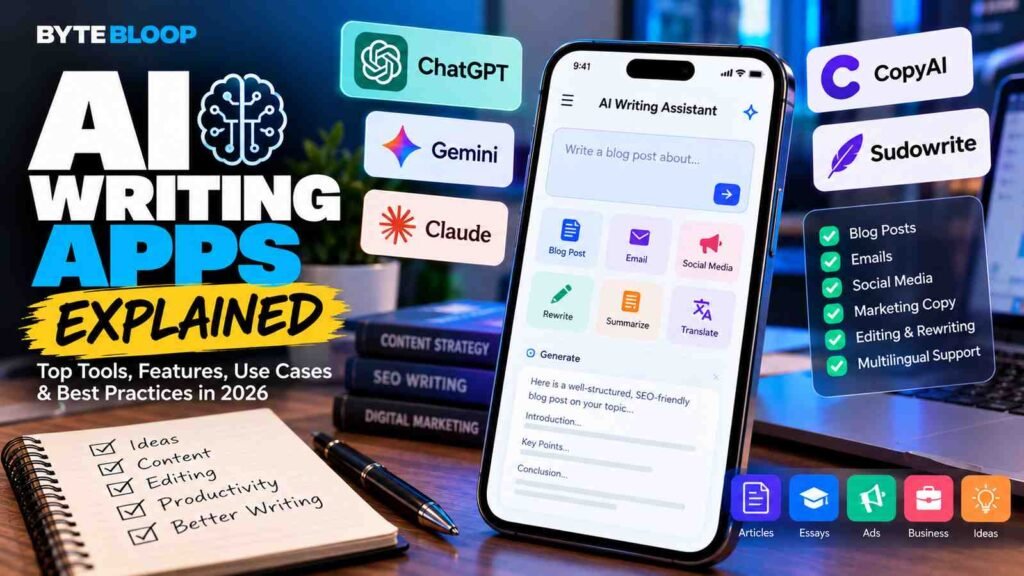
- ChatGPT Mobile – Offers conversational drafting, real‑time editing, and a “smart” suggestion engine that adapts to your voice.
- Google Gemini – Focuses on research‑heavy writing, pulling in recent data and providing citation suggestions.
- Jasper AI – Known for marketing copy, it includes templates for emails, ads, and social posts.
- Writesonic – Balances creativity with SEO, offering keyword‑optimized drafts and headline generators.
- Sudowrite – Tailored for fiction writers, it suggests plot twists, character arcs, and dialogue.
Each app brings unique strengths, so the best choice depends on your genre, workflow, and budget. Understanding ai writing apps explained helps readers make better, more informed decisions.
Use Cases That Excel With AI Writing Apps
1. Content Marketing – Generate blog posts, newsletters, and social media copy faster while maintaining brand voice. Understanding ai writing apps explained helps readers make better, more informed decisions.
2. Academic Writing – Draft research outlines, summarize literature, and format citations with minimal effort.
3. Creative Writing – Brainstorm ideas, overcome writer’s block, and experiment with new styles on the fly.
4. Business Communication – Produce clear proposals, reports, and emails that align with corporate tone guidelines.
Pros and Cons of AI Writing Apps
Pros:
- Speed: Produce drafts in seconds that would otherwise take hours.
- Consistency: Maintain tone and style across multiple documents.
- Accessibility: Ideal for non‑native speakers or those with writing challenges.
Cons:
- Accuracy: Models can hallucinate facts; always verify.
- Creativity Limits: Over‑reliance may stifle unique voice.
- Privacy: Sensitive content may be transmitted to cloud servers.
Choosing the Right App for You
Consider the following criteria:
- Integration – Does the app sync with your cloud services (Google Drive, Notion, etc.)?
- Customization – Can you train the model on your own data or adjust style parameters?
- Cost – Many offer freemium tiers; evaluate usage limits and premium features.
- Security – Check data handling policies, especially if you work with confidential material.
Testing a few free trials can help you gauge which interface feels most natural.
Best Practices for Using AI Writing Apps
1. Start with a clear prompt – The more specific you are, the better the output.
2. Iterate, don’t accept blindly – Treat AI output as a draft; refine for nuance and accuracy.
3. Leverage templates – Many apps provide industry‑specific frameworks that save time.
4. Keep an eye on updates – AI models improve rapidly; new features can change workflow.
By following these guidelines, you can maximize productivity while preserving quality.
Key Takeaways
- AI writing apps use large language models to generate text quickly and consistently.
- Top tools in 2026 include ChatGPT Mobile, Google Gemini, Jasper AI, Writesonic, and Sudowrite.
- Best for content marketing, academic writing, creative projects, and business communication.
- Pros: speed, consistency, accessibility. Cons: potential inaccuracies, creativity limits, privacy concerns.
- Choose apps based on integration, customization, cost, and security.
Conclusion
Based on the available information, this topic provides essential insights for readers looking to understand the core concepts and practical applications.
Related Articles