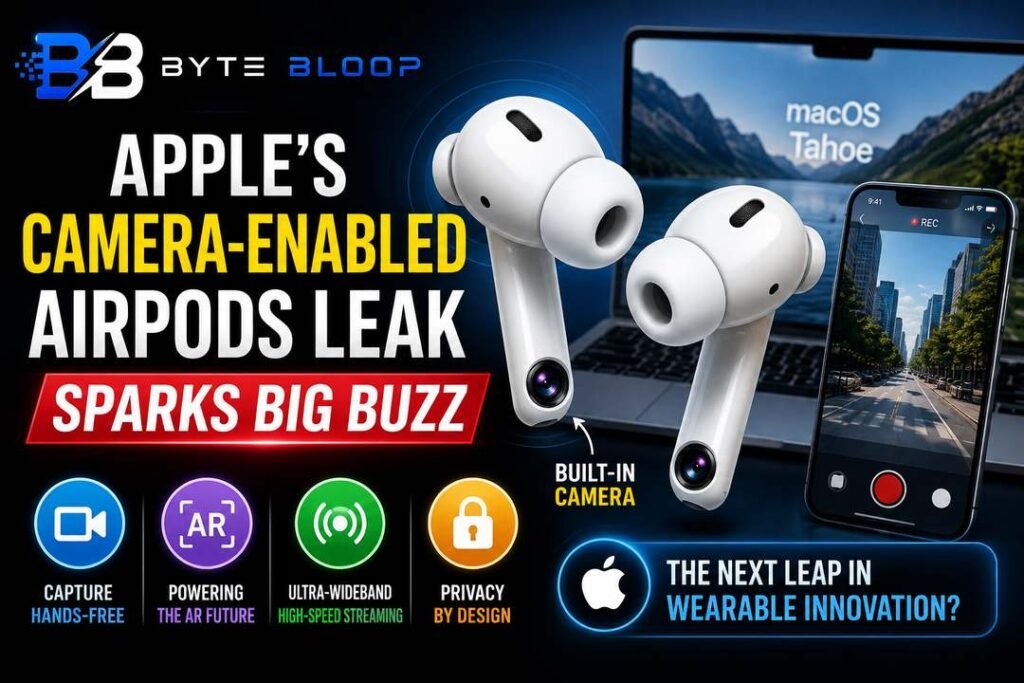
Apple’s Camera‑Enabled AirPods Leak Sparks Big Buzz
Introduction
Apple enthusiasts were treated to a surprise this week when a leaked macOS Tahoe promotional video hinted at a groundbreaking addition to the AirPods lineup: tiny, high‑resolution cameras embedded directly into the earbuds. The clip, which surfaced on social media platforms and was quickly picked up by tech outlets such as Times Now, shows a sleek pair of AirPods capturing video while the user walks, runs, or simply looks around. If the leak is accurate, Apple could be positioning its earbuds as the next frontier for augmented reality (AR) and hands‑free content creation.
While Apple has long been tight‑lipped about upcoming hardware, the visual cues in the video—especially the distinctive camera lenses on the stems—have ignited speculation across forums, Reddit threads, and industry analyst reports. In this article we break down the leak, explore the potential impact on Apple’s ecosystem, and answer the most common questions fans are asking.
Background & Historical Context
Apple’s foray into wearable cameras isn’t entirely new. The company introduced the first-generation iPhone camera in 2007, and over the years has refined its imaging technology to become a market leader. In the wearables space, Apple launched the Apple Watch in 2015, gradually adding health sensors, ECG, and even a modest camera in the 2024 Apple Watch Ultra prototype that never made it to market. The AirPods, first released in 2016, have evolved from simple wireless earbuds to a platform for spatial audio, active noise cancellation, and health monitoring with the recent AirPods Pro 2’s skin‑temperature sensor.
Apple’s AR ambitions have been evident since the 2017 announcement of ARKit, a development framework that enables iOS apps to overlay digital content onto the real world. Rumors of a dedicated AR headset—codenamed “Apple Vision” or “Apple Glass”—have persisted for years, and analysts believe the company is waiting for a compelling form factor and ecosystem before launching. Camera‑enabled AirPods could serve as a stepping stone, providing a low‑cost, everyday AR capture device that integrates seamlessly with iPhone and macOS software.
Key Details & Impact Analysis
The leaked macOS Tahoe video showcases a user wearing the new AirPods while navigating a cityscape. Small, circular lenses sit at the base of each stem, and a subtle LED indicator flashes when the camera is active. The video also demonstrates real‑time video streaming to a MacBook, suggesting that the earbuds will support high‑bandwidth wireless transmission, likely via Apple’s proprietary Ultra‑Wideband (UWB) chip. If true, developers could leverage the camera feed for live translation, contextual information overlays, or even hands‑free video calls.
From a market perspective, camera‑enabled AirPods could reshape how users create content. Imagine vloggers capturing point‑of‑view footage without a handheld camera, or fitness enthusiasts recording form‑perfect workouts from a first‑person perspective. For enterprise, the technology could enable remote inspections, on‑site training, and secure visual documentation without the need for additional hardware. However, privacy concerns will be paramount; Apple will need to implement robust on‑device processing and clear user consent mechanisms to avoid backlash similar to past controversies around facial recognition.
Frequently Asked Questions (FAQs)
When are Apple’s camera AirPods expected to launch?
While Apple has not confirmed a release date, analysts predict a fall 2025 launch to align with the company’s typical product cycle and the anticipated rollout of macOS 15 (codenamed Tahoe). The timing would also give Apple a chance to integrate the new earbuds with the upcoming AR headset rumored for early 2026.
Will the camera AirPods work with iPhone and iPad?
Yes. Apple’s ecosystem strategy suggests seamless cross‑device functionality. The earbuds are expected to pair via the existing H1 chip, while the camera feed will be accessible through iOS and iPadOS apps using a new “AirCam” API, allowing developers to build AR experiences, video journaling tools, and more.
How will Apple address privacy concerns?
Apple is likely to follow its established privacy‑first approach: on‑device processing of video data, visual indicators when the camera is active, and mandatory user permission prompts before any app can access the feed. Additionally, the company may introduce a hardware shutter that physically blocks the lens when not in use.
Conclusion
The macOS Tahoe leak has opened an exciting window into Apple’s next wave of wearable innovation. By embedding cameras into AirPods, Apple could democratize AR content creation, enhance hands‑free communication, and further solidify its dominance in the premium audio market. While the exact specifications and launch timeline remain unconfirmed, the potential applications—from personal vlogging to enterprise inspections—are vast. As Apple continues to blur the line between the digital and physical worlds, consumers and developers alike should stay tuned for official announcements that could redefine how we capture and interact with reality.
Source: Times Now