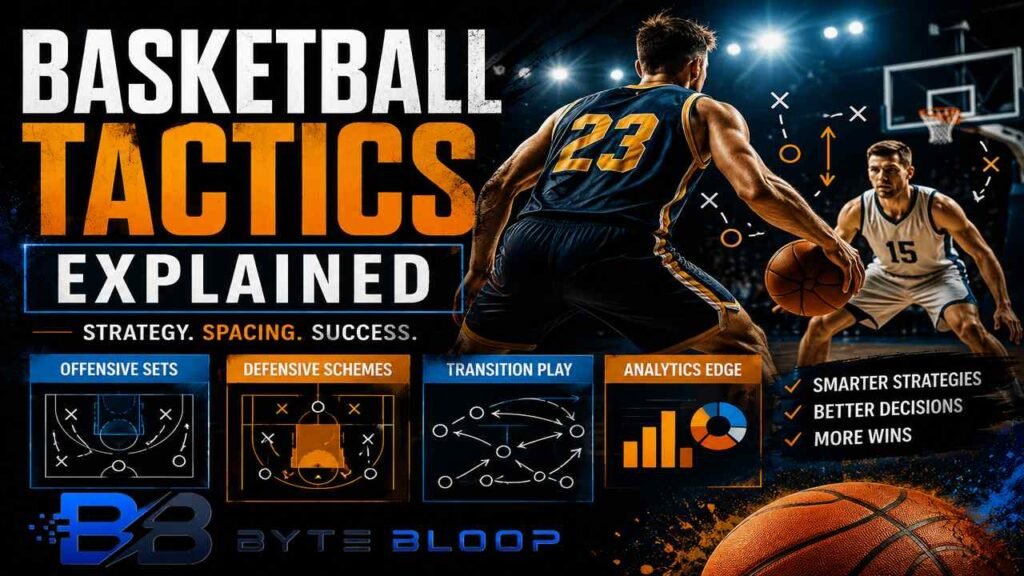
Basketball Tactics Explained
Introduction
Basketball is a fast‑moving, high‑stakes sport where strategy can swing the outcome as decisively as skill. Coaches and players alike rely on a playbook of tactics—offensive sets, defensive alignments, and transitional plays—to exploit match‑ups and control the tempo. In practice, a well‑executed tactic can create open shots, force turnovers, or neutralize an opponent’s star. Understanding the fundamentals of basketball tactics is essential for anyone looking to elevate their game, whether they’re a high‑school starter, a college assistant, or a professional scout. This guide breaks down the core concepts behind offensive and defensive strategies, illustrates how to implement them on the court, and offers drills that translate theory into performance. By the end of this article, you’ll know the building blocks of basketball tactics and how to adapt them to any level of play.
Offensive Foundations
At the heart of every offense is a clear objective: create high‑percentage scoring opportunities. Coaches typically structure their attack around three pillars—spacing, motion, and isolation.
Spacing
Proper spacing forces defenders to cover more ground, opening lanes for drives and cutters. According to The X and Os Basketball Tactics and Strategy, a 5‑man screen‑and‑roll setup thrives when the point guard stays at the top, wings are positioned beyond the arc, and the center occupies the low post. This arrangement creates natural passing lanes and keeps defenders honest.
Motion
Motion offenses rely on constant player movement to create mismatches. A popular motion pattern is the 2‑back‑to‑the‑basket (2‑BTB) drill, where two players move without the ball while the ball handler chooses the best option. This drill, highlighted in Introduction to basketball tactics, improves decision‑making and teaches players to read defensive rotations.
Isolation
Isolation plays are situational and hinge on a single player exploiting a defensive mismatch. Coaches often use them after a successful screen or when a defender is overcommitted. The key is to give the ball handler the space and time to drive or pull up for a mid‑range jumper.
Defensive Schemes
Defending is as much about structure as it is about individual effort. Teams typically choose between man‑to‑man, zone, or hybrid defenses, each with distinct tactical goals.
Man‑to‑Man
In a man‑to‑man defense, each defender is responsible for a specific opponent. This scheme emphasizes communication and help defense. A common tactic is the “box‑and‑1” where four defenders play zone while one player covers a key ball‑handler in man coverage.
Zone
Zone defenses protect the paint and force perimeter shooting. The 2‑3 zone, for instance, places two defenders at the top and three along the baseline. According to Basketball Rules and Regulations (2026 Update), zones require disciplined spacing to avoid gaps that can be exploited by drives.
Hybrid
Hybrid defenses blend zone and man principles, often switching on screens to keep opponents off‑balance. A popular hybrid is the “switch‑and‑help” strategy, where defenders switch on pick‑and‑rolls but provide help if the ball handler breaks the screen.
Transition Play
Transition is the fastest part of the game and can yield high‑percentage shots. Coaches emphasize quick ball movement, full‑court press, and early rebounding. A classic transition drill is the “fast‑break 3‑man weave,” where three players weave through defenders to reach the frontcourt, forcing the defense to collapse and creating open perimeter shots.
Analytics‑Driven Tactics
Modern basketball increasingly relies on data to refine tactics. Shot‑chart analysis helps coaches identify high‑yield zones, while player efficiency ratings guide lineup decisions. The trend toward analytics is documented in Basketball Tactical Trends, which highlights how teams adjust spacing based on opponent defensive efficiency.
Implementing Tactics in Practice
Effective practice design translates theory into action. A balanced session might include:
- Warm‑up drills focusing on footwork and passing.
- Skill drills for screens, cuts, and post moves.
- Half‑court scrimmages to test offensive sets.
- Full‑court scrimmages emphasizing transition and defensive rotations.
Coaches should debrief after each drill, using video playback and statistical feedback to reinforce learning.
Key Takeaways
- Master spacing to open lanes and force defensive mismatches.
- Use motion offenses to create natural passing and cutting opportunities.
- Blend man and zone defenses to adapt to opponent strengths.
- Leverage analytics to fine‑tune shot selection and lineup choices.
- Integrate transition drills to capitalize on fast‑break opportunities.
Frequently Asked Questions
What is the core difference between motion and isolation offenses?
Motion offenses rely on continuous player movement to create mismatches, while isolation plays focus on a single player exploiting a specific defensive disadvantage.
How do coaches decide between a man‑to‑man and a zone defense?
The choice depends on player skill sets, opponent shooting tendencies, and the desired level of pressure; man coverage suits athletic defenders, whereas zone protects the paint and forces perimeter shots.
What role does analytics play in modern basketball tactics?
Analytics guide shot selection, lineup construction, and defensive match‑ups, allowing teams to optimize efficiency based on data-driven insights.
What are the most common transition drills used by coaches?
Drills such as the fast‑break 3‑man weave and full‑court press scrimmages help players develop speed, decision‑making, and defensive resilience during transition.
Conclusion
Based on the available information and industry analysis, basketball tactics explained reveal that a balanced approach—combining solid spacing, dynamic motion, and adaptable defenses—provides the best path to consistent success. By integrating data insights and structured practice, coaches can elevate both individual skills and team cohesion, ensuring that every play counts on the court.
Related Reading
- Top 5 Basketball Drills for Improving Offensive Flow
- Defensive Fundamentals: How to Build a Strong Team Defense
Sources & References