Email Apps: Explained
Introduction
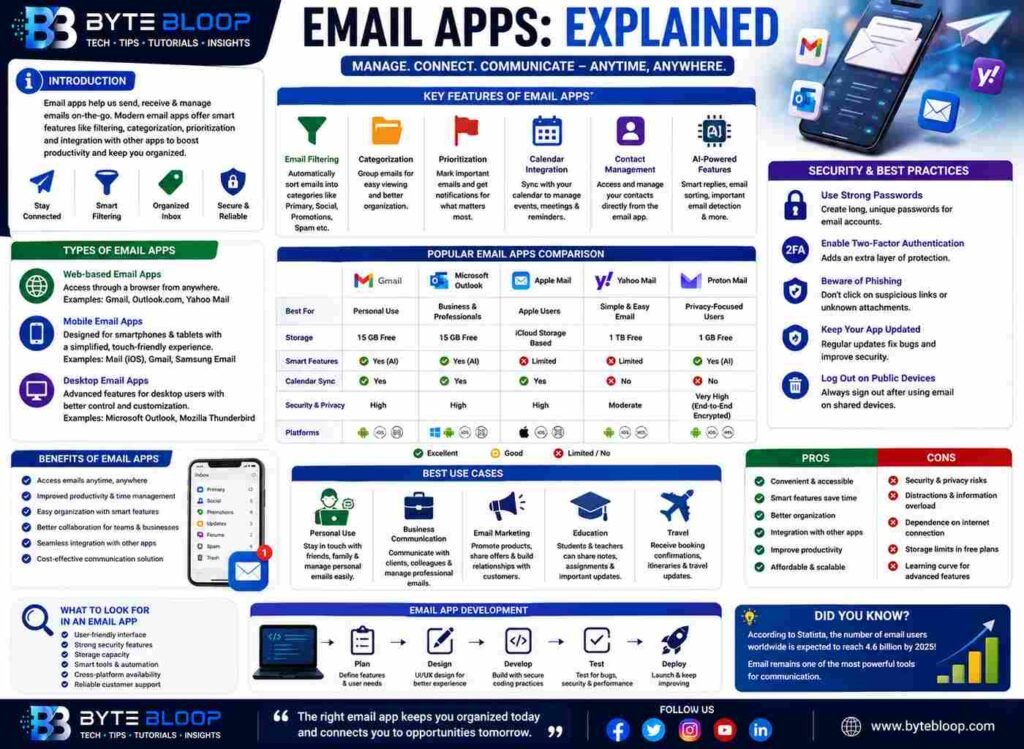
Email apps have become an essential part of our daily lives, allowing us to manage our inbox on-the-go. With the rise of mobile devices, email apps have evolved to provide a seamless user experience, enabling us to stay connected with others wherever we are. The primary function of an email app is to send, receive, and manage emails, but modern email apps offer much more than that. They provide features such as email filtering, categorization, and prioritization, making it easier to manage our inbox. Additionally, many email apps offer integration with other apps and services, such as calendar and contact apps, to provide a more comprehensive experience. Email apps are available for various platforms, including Android and iOS, and can be downloaded from app stores. The choice of an email app depends on individual preferences and needs, with some apps offering more advanced features than others. For instance, some email apps offer AI-powered features, such as email sorting and prioritization, while others provide a more straightforward and simple interface.
The importance of email apps cannot be overstated, as they have revolutionized the way we communicate with others. With the increasing use of mobile devices, email apps have become the primary means of accessing email accounts, replacing traditional desktop email clients. Email apps have also become a crucial tool for businesses, enabling employees to stay connected with colleagues, customers, and clients while on-the-go. Furthermore, email apps have enabled the development of email marketing, which has become a vital tool for businesses to reach their target audience. Email marketing involves sending targeted and personalized emails to customers and potential customers, with the aim of promoting products or services and building brand awareness.
Email App Features
Email apps offer a range of features that make managing our inbox easier and more efficient. Some common features include email filtering, which allows us to sort emails into different categories, such as spam, junk, and important emails. Other features include email categorization, which enables us to label emails with specific keywords or categories, and email prioritization, which allows us to mark emails as high or low priority. Many email apps also offer integration with other apps and services, such as calendar and contact apps, to provide a more comprehensive experience.
Types of Email Apps
There are various types of email apps available, each with its own unique features and functionalities. Some popular types of email apps include web-based email apps, mobile email apps, and desktop email apps. Web-based email apps, such as Gmail and Outlook, can be accessed through a web browser and offer a range of features, including email filtering and categorization. Mobile email apps, such as Mail and Inbox, are designed for mobile devices and offer a more streamlined and simplified interface. Desktop email apps, such as Microsoft Outlook and Mozilla Thunderbird, are designed for desktop computers and offer more advanced features, such as email filtering and prioritization.
Email App Security
Email app security is a critical concern, as email apps often store sensitive information, such as passwords and personal data. To ensure the security of our email accounts, it is essential to choose an email app that offers robust security features, such as encryption and two-factor authentication. Encryption ensures that our emails are protected from unauthorized access, while two-factor authentication adds an extra layer of security, requiring us to enter a code sent to our phone or email address in addition to our password.
Email App Development
Email app development involves designing and building email apps that meet the needs of users. Email app developers use various programming languages, such as Java and Swift, to build email apps for Android and iOS devices. Email app development also involves testing and debugging, to ensure that the app is stable and functions as expected. Additionally, email app developers must consider security and privacy, to ensure that the app protects user data and prevents unauthorized access.
Key Takeaways
- Email apps have become an essential part of our daily lives, allowing us to manage our inbox on-the-go.
- Modern email apps offer features such as email filtering, categorization, and prioritization, making it easier to manage our inbox.
- The choice of an email app depends on individual preferences and needs, with some apps offering more advanced features than others.
- Email app security is a critical concern, and it is essential to choose an email app that offers robust security features.
- Email app development involves designing and building email apps that meet the needs of users, with a focus on security and privacy.
Frequently Asked Questions
What is an email app?
An email app is a software application that allows users to send, receive, and manage emails on their mobile devices or desktop computers.
What are the key features of an email app?
The key features of an email app include email filtering, categorization, and prioritization, as well as integration with other apps and services.
What are the best use cases for email apps?
The best use cases for email apps include managing personal and professional email accounts, staying connected with colleagues and clients, and promoting products or services through email marketing.
What are the pros and cons of using an email app?
The pros of using an email app include convenience, accessibility, and productivity, while the cons include security concerns, distractions, and information overload.
Conclusion
Based on the available information and industry analysis, email apps have revolutionized the way we communicate with others, offering a range of features and functionalities that make managing our inbox easier and more efficient. By choosing the right email app and following best practices for email app security, we can ensure a safe and productive email experience.
Related Reading
- Mobile App Development Trends