Free-to-Play Games: Explained
Introduction
Free‑to‑play (F2P) games have reshaped the gaming landscape, offering instant access to expansive worlds without an upfront cost. Players can download and launch titles on PC, console, or mobile and begin playing immediately, while the game’s revenue comes from optional purchases or micro‑transactions. This model has democratized gaming, letting anyone try a game before deciding whether to spend. Yet the promise of “free” can mask hidden costs, making it essential to understand how F2P games monetize, what you’ll actually pay for, and how to keep your wallet safe. In 2026, the F2P boom continues, with titles ranging from competitive shooters to immersive RPGs, all supported by evolving monetization strategies and platform guidelines. Below we break down the core mechanics, highlight top 2026 picks, and give you practical tips to navigate the free‑to‑play ecosystem.
At its core, a free‑to‑play game is a title that removes the initial purchase barrier, allowing instant gameplay. Developers then monetize through cosmetic items, battle passes, in‑game currency, or subscription services. The goal is to create a large player base, and from that base, a portion of players—often called “whales”—spend enough to sustain the game’s servers and future content. Understanding this model helps players make informed choices and avoid spending more than intended.
How Free‑to‑Play Games Make Money
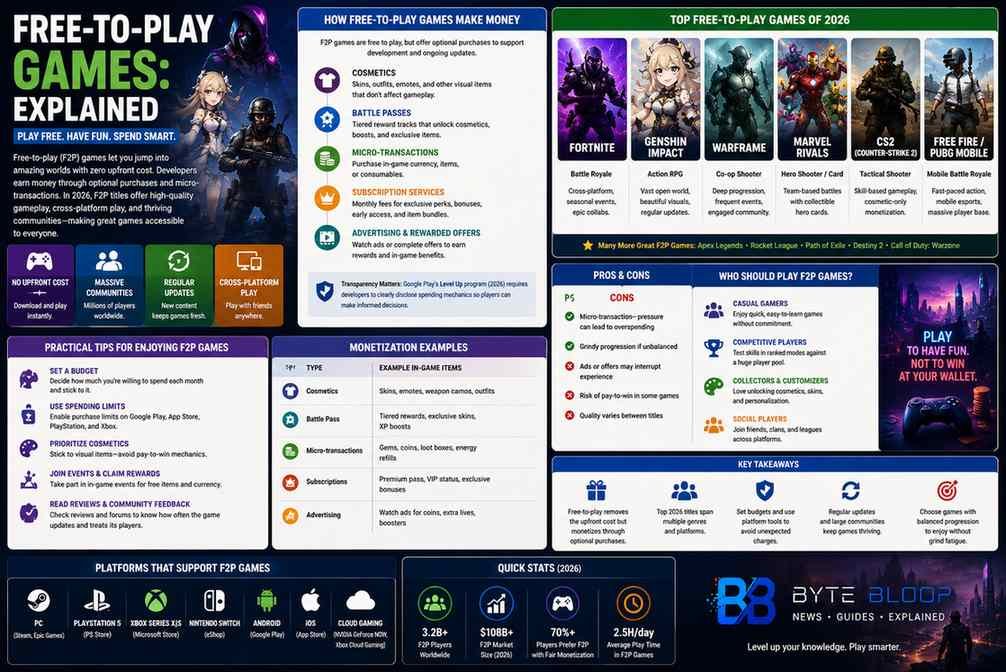
Monetization in F2P titles falls into several categories:
- Cosmetics: Skins, emotes, and visual upgrades that change appearance but not gameplay.
- Battle Passes: Tiered reward systems that unlock cosmetics or small boosts after completing challenges.
- Micro‑transactions: Direct purchases of in‑game currency or consumables.
- Subscription Services: Monthly fees for exclusive perks, early access, or a bundle of items.
- Advertising: Video ads or rewarded offers that grant in‑game benefits.
Platform guidelines, such as Google Play’s Level Up program, now require developers to transparently disclose spending mechanics, ensuring players can make informed decisions before purchasing.
Top Free‑to‑Play Games of 2026
Industry surveys and player reviews point to a handful of titles that stand out across PC, console, and mobile:
- Fortnite – Still a juggernaut, offering cross‑platform play, seasonal content, and a robust battle pass.
- Genshin Impact – A gacha‑style action RPG with a vast open world and regular character drops.
- Warframe – A cooperative shooter with deep progression and frequent events.
- Marvel Rivals – Combines collectible card mechanics with hero‑based combat.
- CS2 (Counter‑Strike 2) – The latest iteration of the classic shooter, now free to play with cosmetic monetization.
- Mobile titles like Free Fire and PUBG Mobile – Offer fast‑paced multiplayer action and large esports scenes.
These games illustrate the range of genres that can thrive under the F2P model, from battle royale to RPG to competitive esports.
Pros and Cons of Free‑to‑Play Games
Every model has trade‑offs. For players, the main advantages are:
- No upfront cost means instant access.
- Regular updates keep content fresh.
- Cross‑platform play expands the community.
Potential drawbacks include:
- Micro‑transaction pressure can lead to overspending.
- Progression can feel grind‑heavy if not balanced.
- Ads or rewarded offers may interrupt gameplay.
Choosing the right F2P game often comes down to how well the monetization feels integrated and whether the game’s core experience satisfies you without spending.
Who Should Play Free‑to‑Play Games?
Free‑to‑play titles appeal to a broad audience:
- Casual gamers who want low‑risk, short sessions.
- Competitive players who want to test skills against a large pool.
- Collectors who enjoy cosmetic customization.
who can join leagues without a purchase barrier.
However, if you’re a strict budget‑conscious player, it’s wise to set spending limits or use tools that track in‑app purchases.
Practical Tips for Enjoying F2P Games
To maximize fun while minimizing costs, consider these strategies:
- Set a monthly spending cap and use app‑store restrictions.
- Prioritize games with strong cosmetic focus over those with pay‑to‑win elements.
- Participate in events that reward free items.
- Read community reviews to gauge how often a game updates.
- Use platform tools like Google Play’s Level Up to track spend.
With these tactics, you can enjoy the best of free‑to‑play gaming without compromising your wallet.
Key Takeaways
- Free‑to‑play removes the upfront cost, but monetization comes from cosmetics, battle passes, and micro‑transactions.
- Top 2026 titles span battle royale, RPG, and competitive shooters, offering cross‑platform play.
- Players should set spending limits and use platform tools to avoid unexpected costs.
- Regular updates and a large player base are key strengths of the F2P model.
- Choosing games with balanced progression reduces grind fatigue.
Frequently Asked Questions
What is a free‑to‑play game?
A free‑to‑play game is a title that can be downloaded and played without an initial purchase, with revenue generated through optional in‑game purchases or micro‑transactions.
What are the key monetization methods in free‑to‑play games?
Common methods include cosmetics, battle passes, micro‑transactions for in‑game currency, subscription services, and advertising.
Which platforms support free‑to‑play games?
Free‑to‑play games are available on PC, consoles like PS5 and Xbox, and mobile devices via app stores.
How can I avoid overspending on free‑to‑play titles?
Set a monthly budget, use app‑store spending limits, prioritize cosmetic purchases, and take advantage of free event rewards.
Are free‑to‑play games fair for competitive players?
Many free‑to‑play titles offer competitive modes with balanced progression, but some games may have pay‑to‑win elements; research each title before investing time.
Conclusion
Based on the available information and industry analysis, free‑to‑play games provide a low‑barrier entry point that has expanded gaming audiences worldwide. By understanding monetization models, selecting titles with balanced progression, and setting spending limits, players can enjoy the rich experiences offered by the F2P ecosystem without compromising their wallets. The continued evolution of platform guidelines and developer transparency suggests that the free‑to‑play model will remain a dominant force in the gaming industry for years to come.
Related Reading
- Top 10 Mobile Free‑to‑Play Games of 2026