Gaming Apps: Explained
Introduction
Gaming apps have become a cornerstone of mobile culture, accounting for a significant share of app downloads and revenue. They range from casual puzzle games that keep you entertained during commutes to immersive multiplayer titles that rival console experiences. The rapid evolution of hardware—high‑refresh‑rate screens, advanced GPUs, and 5G connectivity—has turned smartphones into powerful gaming platforms. Developers now leverage engines like Unity and Unreal, AI-driven NPCs, and AR/VR overlays to create richer gameplay. Understanding the anatomy of a gaming app, from design to monetization, is essential for both players and creators who want to thrive in this competitive space. This guide will walk you through the core components, trends, and best practices that define modern gaming apps, offering actionable insights for developers, marketers, and enthusiasts alike.
What Makes a Gaming App Tick?
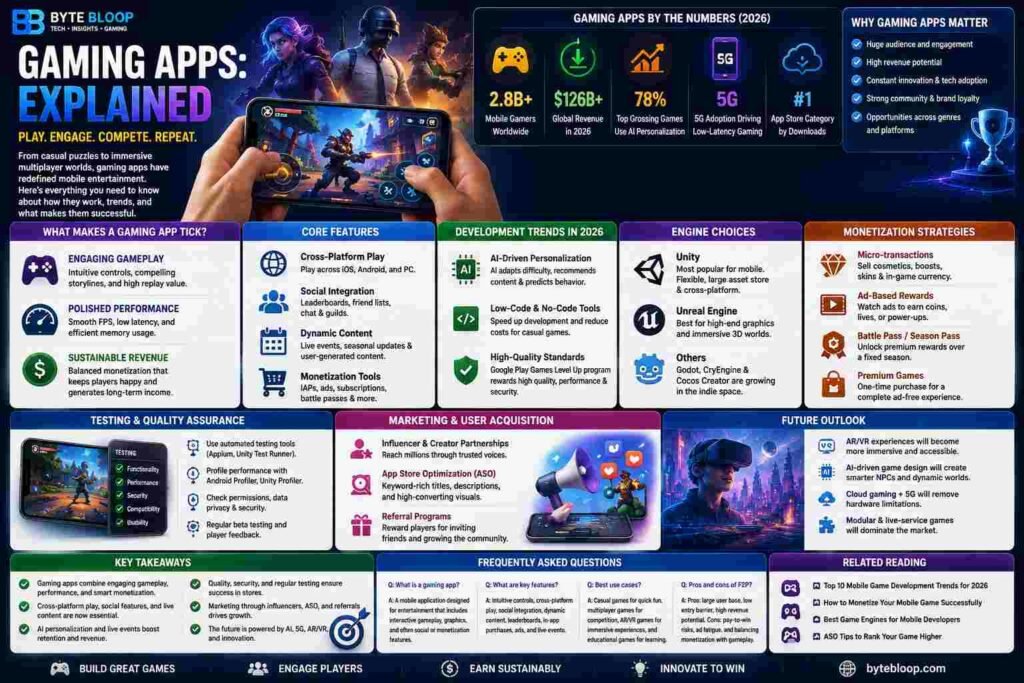
A successful gaming app balances three pillars: engaging gameplay, polished performance, and sustainable revenue. Gameplay is driven by intuitive controls, compelling narratives, and replay value. Performance hinges on smooth frame rates, low latency, and efficient memory use—critical for retaining players. Revenue models vary from free‑to‑play with in‑app purchases to premium one‑time purchases, each requiring careful design to avoid alienating users.
Core Features
- Cross‑Platform Play: Many titles now support iOS and Android, sometimes even PC, allowing a unified community.
- Social Integration: Leaderboards, friend lists, and in‑game chat foster competition and camaraderie.
- Dynamic Content: Live events, seasonal updates, and user‑generated levels keep the experience fresh.
- Monetization Tools: In‑app purchases, ads, subscriptions, and battle passes offer multiple revenue streams.
Development Trends in 2026
According to the 2026 Gaming App Insights Report, 78% of top‑grossing games use AI to personalize difficulty and recommend content. Developers are also adopting low‑code solutions to speed time‑to‑market, especially for casual titles. The Google Play Games Level Up program now rewards developers with enhanced discovery and monetization options for games that meet high quality benchmarks, pushing creators toward stricter performance and security standards.
Engine Choices
Unity remains the most popular engine for mobile, thanks to its extensive asset store and cross‑platform support. Unreal offers superior graphics fidelity, making it the go‑to for high‑end titles. Emerging engines like CryEngine and Godot are gaining traction for indie developers seeking lightweight solutions.
Monetization Strategies
Free‑to‑play (F2P) dominates the market, but success hinges on balancing monetization with player enjoyment. Common tactics include:
- Micro‑transactions for cosmetic items or convenience boosts.
- Ad‑based rewards that let players earn in‑game currency.
- Seasonal battle passes that unlock exclusive content over a fixed period.
Premium games—sold for a one‑time fee—still thrive in niche markets where players value a polished, ad‑free experience.
Testing and Quality Assurance
Quality is non‑negotiable. The 2026 Best Gaming Apps for Android list emphasizes security, permission usage, and performance checks. Automated testing frameworks, such as Appium and Unity Test Runner, help catch bugs early. Performance profiling tools like Android Studio’s Profiler and Unity Profiler provide real‑time insights into frame rates and memory leaks.
Marketing and User Acquisition
Acquiring a player in 2026 costs significantly less than a decade ago, but competition is fierce. Effective strategies include:
- Leveraging social media influencers and short‑form video content.
- Optimizing app store listings with keyword‑rich titles and compelling screenshots.
- Implementing referral programs that reward players for inviting friends.
Retention is equally critical. Push notifications, in‑app events, and personalized offers keep users engaged beyond the first play.
Future Outlook
As AR/VR hardware matures and 5G becomes ubiquitous, mobile gaming will increasingly blur the line between virtual and physical worlds. Developers who adopt modular, AI‑driven architectures will be best positioned to deliver next‑gen experiences that adapt to individual play styles.
Key Takeaways
- Gaming apps blend engaging gameplay, high performance, and smart monetization to dominate mobile markets.
- Cross‑platform play, social features, and dynamic content are now standard expectations.
- AI personalization and live events drive player retention and revenue growth.
- Quality assurance and security checks are critical for app store approval and user trust.
- Effective marketing relies on influencer partnerships, ASO, and referral incentives.
- Future trends point to deeper AR/VR integration and AI‑driven game design.
Frequently Asked Questions
What is a gaming app?
A gaming app is a mobile application designed primarily for entertainment, featuring interactive gameplay, graphics, and often social or monetization components.
What are the key features of modern gaming apps?
Core features include intuitive controls, cross‑platform play, social integration, dynamic live events, and multiple monetization options like micro‑transactions and subscriptions.
What are the best use cases for gaming apps?
Casual puzzle games for short sessions, competitive multiplayer titles for social engagement, and AR/VR experiences for immersive storytelling are top use cases.
What are the pros and cons of free‑to‑play gaming models?
Pros: large user base, low barrier to entry, potential high revenue from micro‑transactions. Cons: risk of pay‑to‑win perception, ad fatigue, and difficulty balancing monetization with enjoyment.
Conclusion
Based on the available information and industry analysis, gaming apps continue to shape mobile entertainment by merging advanced graphics, AI personalization, and robust monetization strategies. Their evolution reflects broader tech trends, and developers who prioritize performance, player experience, and ethical monetization will lead the next wave of mobile gaming innovation.
Related Reading
- Top 10 Mobile Game Development Trends for 2026