How to Start Coding: Step‑by‑Step Guide
Introduction
For anyone who has ever stared at a line of code and wondered how to turn that curiosity into a skill, this guide offers a clear, actionable path. Learning to code is no longer a niche pursuit; it’s a foundational skill that can open doors in tech, data, finance, and even creative fields. The process, however, can feel overwhelming when you’re faced with countless languages, tools, and learning paths. This article breaks down the journey into manageable steps, drawing on the latest 2026 resources and proven learning strategies. By the end, you’ll have a personalized roadmap, a chosen language, and a first small project to keep you motivated. Whether you’re a student, a career changer, or a hobbyist, the steps below will help you move from beginner to confident coder.
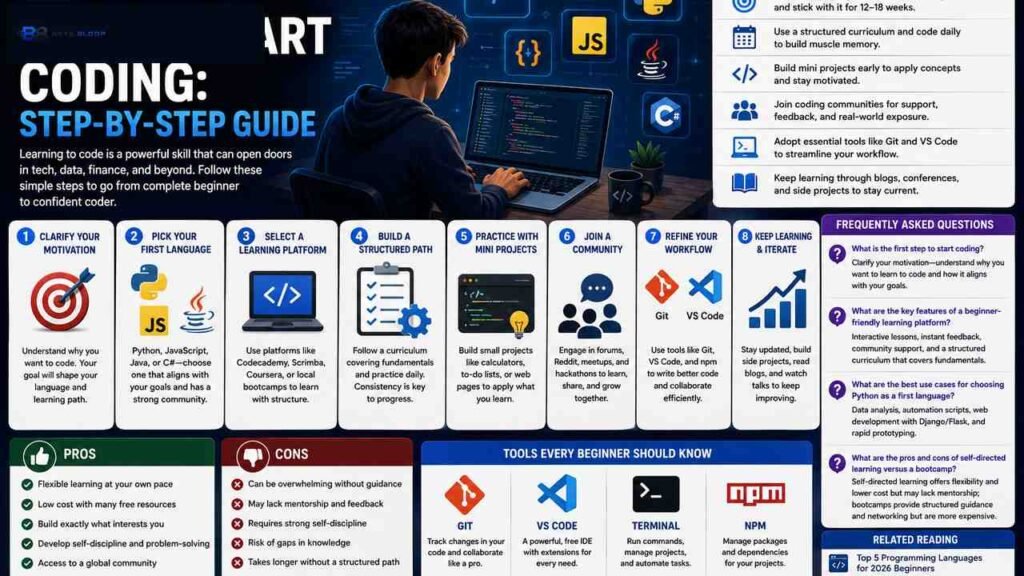
Step 1: Clarify Your Motivation
Before you dive into syntax, ask yourself why you want to code. Are you looking to build a startup, automate a task, or simply understand how software works? Your goal will shape your language choice and learning path. For example, a data analyst might start with Python, while a web developer might lean toward JavaScript.
Step 2: Pick Your First Language
Choose a language that aligns with your goals and has a supportive learning community. Python is widely recommended for its readability and versatility, especially in data science and automation. JavaScript is essential for front‑end web development, while Java or C# are strong choices for enterprise environments. Pick one and stick with it for the first 12–18 weeks to build muscle memory.
Step 3: Select a Learning Platform
There are many free and paid resources. Codecademy’s “Learn How to Code” offers interactive lessons that cover fundamentals in under 20 hours. Scrimba’s 2026 guide provides video‑based tutorials that let you pause and code simultaneously. If you prefer structured curricula, Coursera’s beginner tracks or a local bootcamp can offer mentorship and peer support.
Step 4: Build a Structured Path
Instead of jumping between random tutorials, map out a curriculum that covers variables, control flow, functions, data structures, and basic algorithms. Boot.dev’s step‑by‑step guide recommends a weekly schedule: 2 hours of theory, 1 hour of practice, and 30 minutes of project work. Consistency beats intensity; coding every day, even for 30 minutes, accelerates retention.
Step 5: Practice with Mini Projects
Apply what you learn by building small, tangible projects. A calculator, a to‑do list, or a simple web page can reinforce concepts and keep motivation high. As you progress, gradually increase complexity: add database support, integrate APIs, or deploy your app to a cloud platform.
Step 6: Join a Community
Learning is social. Join forums like Stack Overflow, Reddit’s r/learnprogramming, or local meetup groups. Sharing code, asking questions, and reviewing peers’ work expose you to real‑world problems and best practices. Many communities also host hackathons and code‑along sessions that can boost confidence.
Step 7: Refine Your Workflow
Adopt tools that streamline coding: a version control system like Git, an integrated development environment (IDE) such as VS Code, and a task runner like npm for JavaScript projects. Learning to use these tools early will save time and reduce frustration later on.
Step 8: Keep Learning and Iterate
Programming is an evolving field. Stay updated with new libraries, frameworks, and industry trends. Set a habit of reading blogs, watching conference talks, and experimenting with side projects. The more you practice, the more you’ll discover niche areas to specialize in.
Key Takeaways
- Choose a language that matches your goals and stick with it for 12–18 weeks.
- Use a structured curriculum and code daily to build muscle memory.
- Build mini projects early to apply concepts and stay motivated.
- Join coding communities for support, feedback, and real‑world exposure.
- Adopt essential tools like Git and VS Code to streamline your workflow.
- Keep learning through blogs, conferences, and side projects to stay current.
Frequently Asked Questions
What is the first step to start coding?
Clarify your motivation—understand why you want to learn to code and how it aligns with your goals.
What are the key features of a beginner-friendly learning platform?
Interactive lessons, instant feedback, community support, and a structured curriculum that covers fundamentals.
What are the best use cases for choosing Python as a first language?
Data analysis, automation scripts, web development with Django/Flask, and rapid prototyping.
What are the pros and cons of self‑directed learning versus a bootcamp?
Self‑directed learning offers flexibility and lower cost but may lack mentorship; bootcamps provide structured guidance and networking but are more expensive.
Conclusion
Based on the available information and industry analysis, starting to code in 2026 is more accessible than ever, thanks to abundant free resources, community support, and beginner‑friendly languages. By setting clear goals, choosing a single language, and following a structured, daily practice routine, newcomers can quickly move from theory to real projects. Consistent practice, community engagement, and a willingness to iterate on learning strategies are the cornerstones of lasting success in the coding journey.
Related Reading
- Top 5 Programming Languages for 2026 Beginners
- How to Build Your First Web App in 30 Days