India’s Govt Clears Duty‑Free Sugar Imports, Sets Stock Caps Amid Festive Price Spike
Introduction
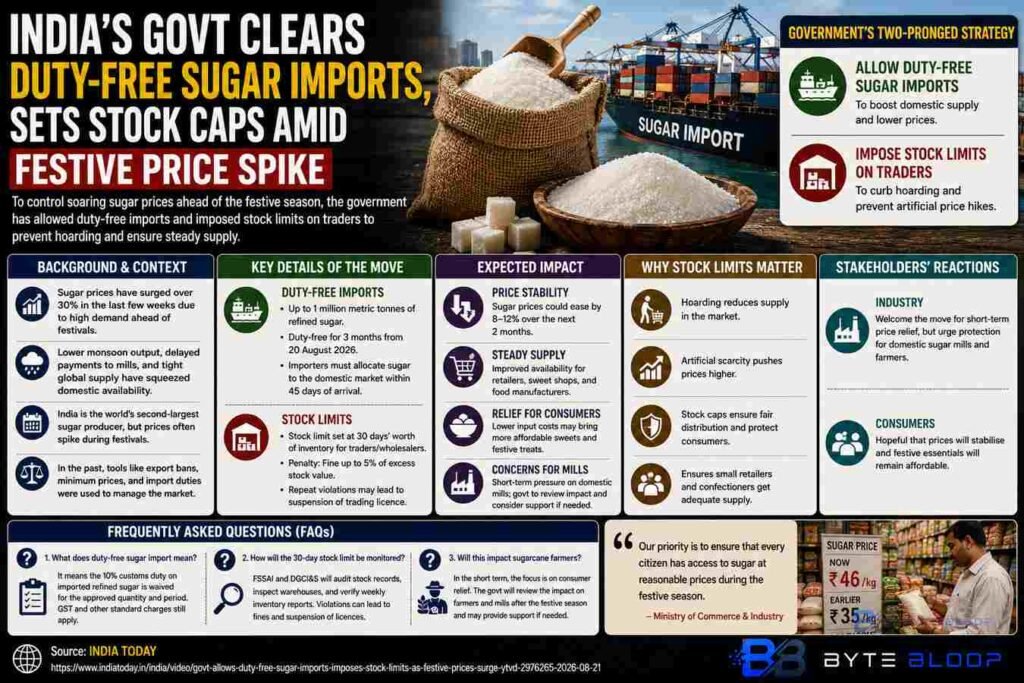
As India gears up for the upcoming festive season, a sudden surge in sugar prices has sparked concern among consumers, retailers, and policymakers alike. In response, the Union Ministry of Commerce and Industry announced a two‑pronged strategy: allowing duty‑free sugar imports and imposing strict stock limits on domestic traders. The move aims to curb price volatility, ensure adequate supply, and prevent hoarding that could further exacerbate the crisis.
These emergency measures come at a time when sugar, a staple in Indian households and a key ingredient for traditional sweets, is experiencing unprecedented demand. With the price of refined sugar climbing over 30 % in just a few weeks, the government’s swift intervention underscores the importance of balancing market forces with consumer protection.
Background & Historical Context
India is the world’s second‑largest producer of sugar, yet its market has historically been prone to seasonal fluctuations. During major festivals such as Diwali, Raksha Bandhan, and Eid, the consumption of sugar‑laden sweets spikes, often leading to temporary shortages and price hikes. In the past decade, the government has employed tools such as export bans, minimum price fixes, and import duties to manage supply‑demand mismatches.
However, the current scenario differs from previous episodes. A combination of lower-than‑expected monsoon yields, delayed payments to sugar mills, and a tighter global sugar market has tightened domestic availability. Moreover, the lingering effects of the COVID‑19 pandemic on logistics and labor have added layers of complexity, prompting the ministry to adopt a more aggressive stance.
Key Details & Impact Analysis
The Ministry’s circular, released on 20 August 2026, authorises duty‑free imports of up to 1 million metric tonnes of refined sugar for a period of three months. Importers will be required to submit a detailed import plan, and the imported sugar must be allocated to the domestic market within 45 days of arrival. By removing the 10 % import duty that typically applies, the government hopes to lower the landed cost of sugar, making it more affordable for both manufacturers and end‑consumers.
Simultaneously, the government has imposed a stock limit of 30 days’ worth of inventory for all registered sugar traders and wholesalers. Any entity exceeding this cap will face penalties, including fines up to 5 % of the excess stock’s market value and potential suspension of trading licences. The stock limit is designed to deter hoarding, a practice that often fuels artificial price inflation during high‑demand periods.
Analysts predict that the combined effect of duty‑free imports and stock caps could temper price growth by 8‑12 % over the next two months. Retailers are expected to benefit from a steadier supply chain, while small‑scale confectioners anticipate lower input costs, which could translate into more competitively priced sweets for consumers.
Nevertheless, industry stakeholders have raised concerns about the short‑term impact on domestic sugar mills, which are already grappling with cash‑flow constraints. Critics argue that an influx of cheap imports may pressure local producers, potentially leading to job losses in rural areas where sugarcane farming is a primary livelihood. The ministry has responded by assuring that the import window is limited and that any long‑term policy adjustments will be made after a comprehensive impact assessment.
Frequently Asked Questions (FAQs)
What does “duty‑free” mean for sugar imports?
Duty‑free means that the usual customs duty (currently 10 %) on imported refined sugar is waived for the approved quantity and period. Importers will still pay standard GST and handling charges, but the removal of the customs duty reduces the overall cost, helping to lower market prices.
How will the 30‑day stock limit be monitored?
The Food Safety and Standards Authority of India (FSSAI) and the Directorate General of Commercial Intelligence and Statistics (DGCI&S) will jointly audit stock records of registered traders. Traders must submit weekly inventory statements, and random inspections will be conducted to verify compliance. Violations will attract monetary penalties and possible suspension of licences.
Will the duty‑free imports affect Indian sugar farmers?
In the short term, the policy is intended to stabilise prices for consumers rather than overhaul the entire sugar ecosystem. The government has pledged to review the impact on farmers after the festive period and may introduce targeted support measures, such as cash subsidies or minimum price guarantees, if domestic producers face undue pressure.
Conclusion
The government’s decisive action to allow duty‑free sugar imports while capping stock levels reflects a balanced approach to a complex market challenge. By easing import costs and curbing hoarding, authorities aim to protect consumers from soaring prices during a critical festive window. At the same time, they remain vigilant about the potential repercussions for domestic producers, promising a post‑festival review to fine‑tune policy. As India navigates this delicate equilibrium, the upcoming weeks will reveal whether these measures can successfully temper price spikes without compromising the livelihoods of those who cultivate the nation’s sugarcane.
Source: India Today