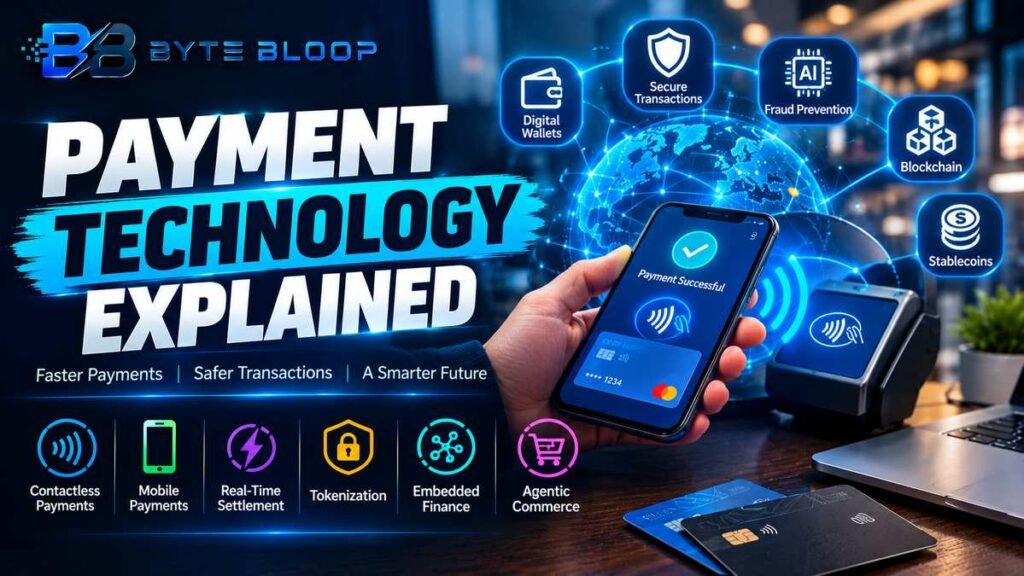
Payment Technology Explained
Introduction
Payment Technology Explained is a topic worth understanding well. Payment technology has moved far beyond the clatter of cash registers. Today’s transactions are executed in milliseconds across a web of digital wallets, contactless cards, and real‑time payment networks that span continents. The core of this ecosystem is a set of interoperable protocols that translate a customer’s intent into a secure, settled transfer of value, all while safeguarding against fraud and ensuring compliance.
Rapid advances in tokenization, blockchain, and AI are reshaping how merchants, banks, and consumers interact, creating frictionless experiences that were unimaginable a decade ago. Yet the proliferation of new tools also introduces complexity: businesses must navigate regulatory standards, integration costs, and evolving consumer expectations. Understanding the architecture, key players, and emerging trends is essential for anyone looking to stay competitive in the digital commerce landscape.
This guide breaks down the main components of payment technology, highlights the most influential innovations of 2026, and offers practical examples of how these systems are applied today. By the end, you’ll see how payment tech not only facilitates transactions but also drives growth, trust, and new business models across industries.
Core Components of Modern Payment Systems
At its heart, a payment system comprises three layers: the acquirer that accepts merchants, the issuer that provides cards and accounts, and the payment network that routes transaction data. In 2026, these layers are increasingly virtualized through cloud‑based platforms that enable instant connectivity and real‑time risk assessment. Digital wallets, such as Apple Pay or Google Wallet, act as intermediaries that store tokenized card data, allowing consumers to tap or scan for payment without revealing sensitive information.
Contactless and Mobile Payments
Contactless technology, now ubiquitous in retail and transit, offers speed and convenience. According to the 2026 Ultimate Guide to Payment Technologies, tap‑to‑pay adoption in the U.S. has surpassed 70% of point‑of‑sale terminals. The technology relies on near‑field communication (NFC) and tokenization to protect cardholder data. Mobile wallets extend this convenience to smartphones, enabling in‑app purchases, QR‑code scans, and even contactless bus fare payments. The trend toward mobile‑first experiences is driven by the growing preference for on‑device security and the rise of wearable payment solutions.
This matters directly for anyone exploring payment technology explained.
Real‑Time Payments and Fast Settlement
Fast payment systems settle transactions within seconds, a leap from the days of batch processing. The present and future of fast payment systems, as highlighted in a recent video analysis, demonstrate how new APIs and instant liquidity pools reduce settlement risk for merchants. Real‑time payment networks, such as the U.S. FedNow Service and the European TARGET2‑SME, are now standard for cross‑border commerce, allowing businesses to receive funds almost immediately regardless of time zones.
Getting payment technology explained right can make a real difference.
AI‑Driven Fraud Prevention
Artificial intelligence has become the frontline defense against fraudulent activity. Payment trends in 2026 show that AI models analyze transaction patterns in real time, flagging anomalies before authorization. According to a Mastercard insight report, AI‑powered fraud defense can reduce false declines by up to 30% while maintaining a high detection rate. Machine learning also enables adaptive risk scoring, adjusting thresholds based on merchant history, device fingerprinting, and behavioral biometrics.
That is a core part of understanding payment technology explained.
Tokenization and Stablecoins
Tokenization replaces sensitive card data with a unique identifier, preventing data breaches. The 2026 payment trends report notes that tokenization has become a regulatory requirement in many jurisdictions, especially for e‑commerce. Meanwhile, regulated stablecoins—cryptocurrencies pegged to fiat currencies—are gaining traction as a low‑volatility settlement option. By integrating stablecoins into payment platforms, merchants can offer instant cross‑border transfers without the volatility associated with traditional cryptocurrencies.
Many readers look into payment technology explained for exactly this reason.
Embedded Finance and Agentic Commerce
Embedded finance refers to the integration of financial services—like lending, insurance, or payment processing—directly into non‑financial products. This trend, highlighted in the Finacle 2026 outlook, empowers merchants to offer credit or subscription services at checkout, creating new revenue streams. Agentic commerce, where AI systems autonomously negotiate prices or bundle products, is also emerging, driven by the same AI technologies that power fraud detection.
It is worth revisiting payment technology explained as things develop.
Choosing a Payment Processor in 2026
Merchants face a crowded market of processors, each offering different fee structures, API capabilities, and fraud tools. According to the Complete Guide to Payment Processing in 2026, the most successful processors combine transparent pricing, robust developer documentation, and real‑time analytics dashboards. Integration should also consider future scalability: cloud‑native solutions that support omnichannel experiences and multi‑currency processing are becoming the standard.
Payment Technology Explained remains highly relevant here.
Future Outlook
Looking ahead, payment technology will continue to evolve toward greater speed, security, and personalization. Blockchain settlement layers may replace traditional clearinghouses, while AI will drive hyper‑personalized checkout experiences. As regulatory frameworks adapt, merchants must stay agile, leveraging cloud platforms and open APIs to keep pace with innovation. In short, the payment landscape is moving toward an ecosystem where value transfer is instantaneous, secure, and seamlessly integrated into everyday digital interactions.
This is a key consideration when it comes to payment technology explained.
Key Takeaways
- Contactless and mobile payments dominate retail transactions, offering speed and security through tokenization.
- Real‑time payment networks settle funds within seconds, enabling instant cross‑border commerce.
- AI-powered fraud detection reduces false declines while maintaining high detection rates.
- Tokenization and regulated stablecoins enhance security and enable low‑volatility settlements.
- Embedded finance and agentic commerce open new revenue streams and automate checkout decisions.
Frequently Asked Questions
What is payment technology explained?
Payment technology refers to the digital systems and protocols that enable the secure, instant transfer of funds between consumers, merchants, and financial institutions.
This matters directly for anyone exploring payment technology explained.
What are the key features of modern payment systems?
Core features include contactless and mobile payment methods, real‑time settlement, AI‑driven fraud prevention, tokenization, and support for stablecoins and embedded finance.
Getting payment technology explained right can make a real difference.
What are the best use cases for contactless payments?
Contactless payments excel in high‑volume, low‑value scenarios such as retail point‑of‑sale, public transit fare collection, and quick service restaurants where speed and convenience are paramount.
What are the pros and cons of AI fraud detection?
Pros: rapid anomaly detection, reduced false declines, and adaptive risk scoring. Cons: potential for bias if training data is skewed, and the need for continuous model updates to stay effective.
Conclusion
Based on the available information and industry analysis, payment technology in 2026 provides a foundation for instant, secure, and personalized transactions that drive commerce growth and customer trust. By embracing tokenization, AI fraud tools, and real‑time settlement networks, merchants can reduce risk, improve checkout speed, and unlock new revenue streams through embedded finance and agentic commerce. As regulatory landscapes evolve and consumer expectations shift toward frictionless experiences, staying current with these innovations will be essential for businesses aiming to remain competitive in an increasingly digital economy.
Related Reading
- The Rise of Digital Wallets in 2026
Sources & References
- The 2026 Ultimate Guide to Payment Technologies
- Contactless Payments: Tap-to-Pay 2026 Guide
- Payment trends in 2026: Innovation, Trust, & Growth
- Payments Outlook: Five Trends Powering Payments in 2026
- Complete Guide to Payment Processing in 2026
Related Articles