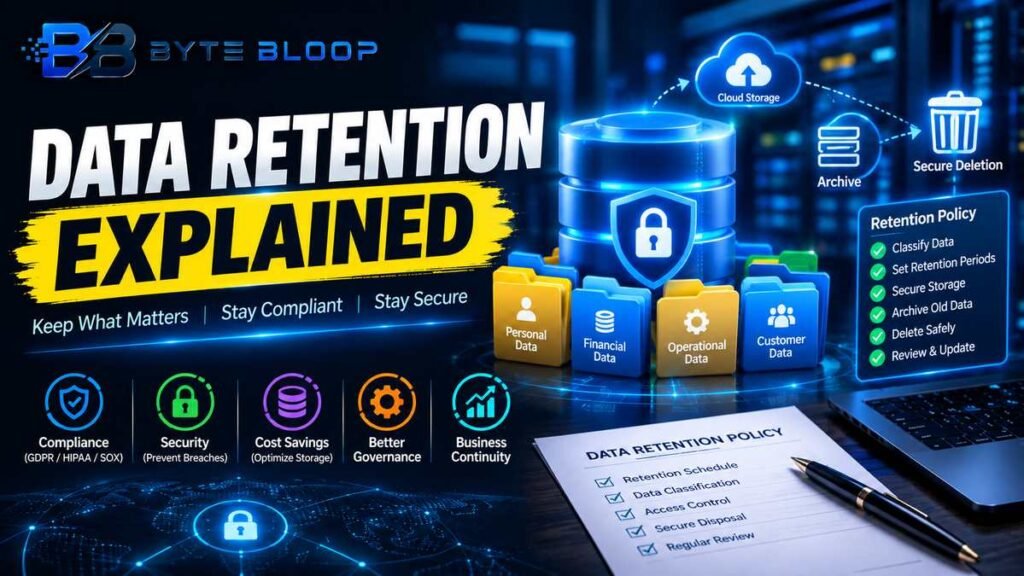
Data Retention: Explained
Introduction
Data Retention Explained is a topic worth understanding well. Data retention is the practice of storing data for a specific period before it is archived or deleted. It is a cornerstone of information governance, ensuring that organizations keep necessary records for legal, regulatory, and operational reasons while avoiding the risks of storing data indefinitely. In today’s digital landscape, where data breaches and compliance fines can cost millions, a clear data retention strategy can be the difference between a smooth audit and a costly investigation.
Companies must balance the need to preserve data for future reference or litigation with the imperative to protect sensitive information from unauthorized access or accidental exposure. By defining what data is kept, where it lives, and how it is disposed of, businesses create a framework that supports both compliance and security. This article walks through the fundamentals of data retention, offers practical examples, outlines best practices, and answers common questions to help you build an effective policy.
What Is a Data Retention Policy?
A data retention policy is a formal set of rules that specifies how long different categories of data should be kept, the storage format, and the disposal method. According to Data Retention Policy: Definition, Examples & Best Practices, the policy must cover the entire data lifecycle—from creation to deletion—ensuring that data is retained only as long as it is needed. The policy also identifies who has the authority to approve retention periods and how exceptions are handled.
Why Is Data Retention Important?
Regulatory bodies such as GDPR, HIPAA, and SOX require that certain records be kept for specified durations. Failure to comply can result in hefty fines and reputational damage. Moreover, data that is no longer needed can become a liability: outdated customer records, obsolete financial data, or unencrypted backups can all be targets for cybercriminals. Proper retention limits the attack surface and reduces storage costs.
This matters directly for anyone exploring data retention explained.
Key Components of an Effective Policy
- Classification of Data: Identify data types—personal, financial, operational—and assign retention schedules.
- Storage Location: Decide whether data stays on-premises, in the cloud, or in hybrid environments.
- Retention Schedule: Specify exact timeframes (e.g., 7 years for tax records, 3 months for marketing emails).
- Archiving Procedures: Move inactive data to cost‑effective storage while maintaining accessibility.
- Secure Disposal: Use cryptographic erasure, physical destruction, or secure wiping to eliminate data.
- Review & Update Cycle: Reevaluate policies annually or when regulations change.
Practical Examples
Consider a retail company that collects customer purchase histories. Under GDPR, personal data can be retained only as long as necessary for the purpose of the transaction. Once the purchase is complete and no longer needed for customer service or fraud prevention, the data should be anonymized or deleted. A financial firm, on the other hand, must keep transaction logs for at least 7 years to satisfy SOX, but can archive older logs to cheaper storage tiers after the retention period expires.
Getting data retention explained right can make a real difference.
Best Practices from 2026
- Automate retention rules using data classification tools.
- Integrate encryption and access controls throughout the data lifecycle.
- Document retention schedules in a central policy repository.
- Use audit trails to track data access and deletion.
- Educate staff on the policy and the importance of compliance.
According to 10 Data Retention Policy Best Practices for Analytics in 2026, these steps help organizations reduce risk and improve operational efficiency.
That is a core part of understanding data retention explained.
Common Challenges
One major hurdle is the “data sprawl” that occurs when employees store files in personal cloud accounts or on shared drives without oversight. Another challenge is keeping pace with evolving regulations; what is acceptable today may change tomorrow. Finally, ensuring that data deletion is truly irreversible requires robust technical controls and verification processes.
Many readers look into data retention explained for exactly this reason.
How to Start Building Your Policy
Begin by mapping out the data you collect and the legal obligations that apply. Then, categorize the data and assign retention periods based on regulatory guidance and business needs. Use a policy management tool to automate enforcement and generate reports for audits. Finally, conduct regular training sessions to keep everyone aligned.
It is worth revisiting data retention explained as things develop.
Key Takeaways
- Define clear retention periods for each data type
- Automate enforcement with classification tools
- Encrypt and control access throughout the lifecycle
- Regularly review policies to stay compliant
- Use secure deletion methods to eliminate risk
Frequently Asked Questions
What is data retention explained?
Data retention refers to the practice of storing data for a defined period before it is archived or permanently deleted, ensuring compliance with legal and regulatory requirements.
Data Retention Explained remains highly relevant here.
What are the key features of a data retention policy?
A robust policy includes data classification, retention schedules, storage location, archiving procedures, secure disposal methods, and an annual review cycle.
This is a key consideration when it comes to data retention explained.
What are the best use cases for automated retention tools?
Automated tools are ideal for large enterprises that handle diverse data types, need to enforce consistent rules, and require audit-ready reports for regulatory compliance.
This matters directly for anyone exploring data retention explained.
What are the pros and cons of strict data retention?
Pros include reduced breach risk, lower storage costs, and regulatory compliance. Cons can be the potential loss of valuable historical data and the administrative overhead of managing policies.
Conclusion
Based on the available information and industry analysis, data retention is a critical component of modern information governance, balancing compliance, security, and cost efficiency. By implementing clear policies, automating enforcement, and regularly reviewing retention schedules, organizations can mitigate legal risks and protect sensitive information throughout its lifecycle.
Related Reading
- How to Choose the Right Data Backup Solution
Sources & References
- Data Retention Policy: Definition, Examples & Best Practices
- What is Data Retention? 2026 Guide
- Data Retention Policy: Definition, Examples & 2026 Checklist
- Data Privacy 101: The Essential Guide to Modern …
- Data Retention Policy: Complete Guide with Templates …
- 10 Data Retention Policy Best Practices for Analytics in 2026
Related Articles