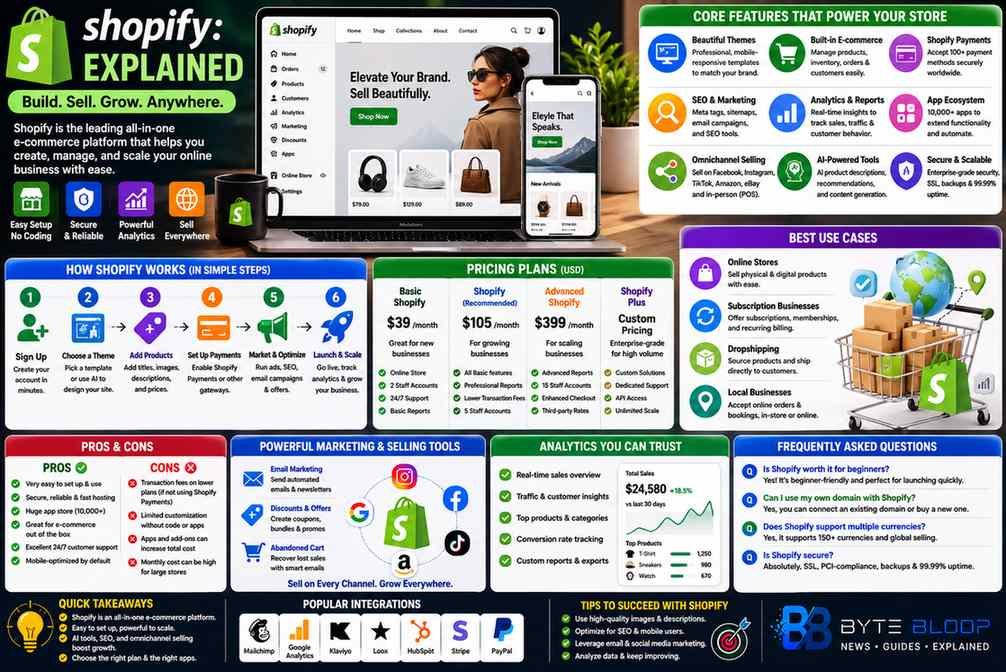
Shopify: Explained
Introduction
Shopify has become synonymous with e‑commerce success, offering a cloud‑based platform that lets anyone launch an online storefront without writing a single line of code. At its core, Shopify is a subscription‑based SaaS that handles everything from web hosting and payment processing to inventory management and marketing automation. The platform’s appeal lies in its simplicity: a drag‑and‑drop theme editor, an extensive app ecosystem, and built‑in analytics provide a turnkey solution for entrepreneurs, small businesses, and large brands alike. In 2026, Shopify’s annual revenue surpassed $5 billion, underscoring its dominance in a market that now values rapid deployment and omnichannel integration. Whether you’re a hobbyist selling handmade candles or a multinational retailer expanding into new markets, Shopify offers a scalable foundation that grows with your ambitions. Understanding its architecture, pricing tiers, and key features is essential for anyone looking to capitalize on the booming e‑commerce landscape. This guide breaks down the platform’s core components, walks through the setup process, and highlights best practices for maximizing sales and customer loyalty.
How Shopify Works
Shopify’s architecture is built around three pillars: the storefront, the backend, and the app ecosystem. The storefront is the public face of your store, rendered through customizable themes that can be edited with Liquid, Shopify’s templating language. Behind the scenes, the backend manages product catalogs, orders, and customer data, all stored in a secure, cloud‑hosted database. The app ecosystem extends functionality—apps can add shipping calculators, email marketing, AI chatbots, or advanced analytics. Together, these layers create a cohesive experience that handles everything from product discovery to post‑purchase support.
Setting Up Your Store
Launching a Shopify store involves three simple steps: sign up, choose a theme, and add products. The sign‑up process requires an email, password, and store name, after which you’ll be guided through a quick questionnaire that recommends a pricing plan based on expected sales volume. Themes can be selected from Shopify’s free library or purchased from third‑party designers; the platform’s theme editor lets you tweak colors, fonts, and layout without coding. Adding products is equally straightforward—enter a title, description, price, and upload images. Bulk import tools and CSV templates streamline the process for large catalogs.
Payment and Checkout
Shopify Payments, the platform’s native gateway, supports over 100 payment methods worldwide, including credit cards, Apple Pay, and local options like iDEAL and PayPal. Merchants can also integrate third‑party gateways for additional flexibility. The checkout experience is fully hosted by Shopify, ensuring PCI compliance and fast load times. Customization options allow you to add upsell offers, discount codes, and shipping calculators directly into the cart, boosting conversion rates.
Marketing and SEO
Shopify’s built‑in SEO tools automatically generate meta tags, sitemaps, and clean URLs. The platform also offers email marketing integrations, abandoned cart recovery, and social media selling through Facebook, Instagram, and TikTok. Advanced merchants can leverage Shopify’s API to create custom marketing funnels or connect with CRM systems. AI‑powered features, such as product recommendation engines and automated copy generation, help personalize the shopping experience at scale.
Analytics and Reporting
Real‑time dashboards provide insights into sales, traffic, and customer behavior. Shopify’s native reports cover key metrics like conversion rate, average order value, and repeat purchase rate. For deeper analysis, merchants can export data to Google Data Studio or integrate with BI tools via APIs. These insights inform inventory decisions, marketing spend, and product assortment adjustments.
Pricing Tiers and Cost Considerations
Shopify offers four main plans: Basic, Shopify, Advanced, and Plus. The Basic plan starts at $39/month, suitable for new entrepreneurs, while Advanced at $399/month caters to high‑volume merchants. Plus, priced on a custom basis, provides enterprise‑grade features such as advanced checkout customization and dedicated support. Transaction fees apply only on lower tiers unless Shopify Payments is used. Merchants should factor in app costs, domain registration, and optional design services when budgeting.
Pros and Cons
Pros: Easy setup, robust app ecosystem, secure hosting, scalable architecture, comprehensive support, and strong mobile optimization. Cons: Limited design flexibility on free themes, transaction fees on lower plans, and reliance on third‑party apps for advanced features can increase costs.
Best Use Cases
Shopify excels for small to medium‑sized retailers, subscription box services, niche product creators, and brands looking to sell across multiple channels. Its omnichannel capabilities allow seamless integration with marketplaces, social platforms, and brick‑and‑mortar POS systems, making it ideal for businesses that want to reach customers wherever they shop.
Future Outlook
In 2026, Shopify continues to innovate with AI‑driven design assistants, expanded global payment options, and deeper integration with emerging marketplaces. The platform’s focus on data privacy and sustainability aligns with evolving consumer expectations, positioning Shopify as a forward‑looking choice for the next wave of e‑commerce growth.
Key Takeaways
- Shopify is a cloud‑hosted SaaS that handles hosting, payments, and inventory.
- A drag‑and‑drop theme editor and extensive app store simplify customization.
- Built‑in SEO, analytics, and omnichannel tools drive sales and customer retention.
- Pricing ranges from $39/month for beginners to custom Plus plans for enterprises.
- AI features and global payment options keep Shopify competitive in 2026.
Frequently Asked Questions
What is Shopify and how does it work?
Shopify is a subscription‑based SaaS platform that lets merchants create, manage, and grow online stores. It handles hosting, payments, inventory, and offers an app ecosystem for extended functionality.
What are the key features of Shopify?
Key features include a customizable theme editor, built‑in SEO tools, Shopify Payments, omnichannel selling, real‑time analytics, and a vast app marketplace.
What are the best use cases for Shopify?
Shopify is ideal for small to medium‑sized retailers, subscription services, niche product creators, and brands seeking to sell across e‑commerce, social, and physical channels.
What are the pros and cons of using Shopify?
Pros: easy setup, robust app ecosystem, secure hosting, and strong mobile optimization. Cons: limited design flexibility on free themes, transaction fees on lower plans, and potential cost of third‑party apps.
Conclusion
Based on the available information and industry analysis, Shopify provides a scalable, secure, and feature‑rich platform that empowers merchants of all sizes to launch and grow online businesses with minimal technical overhead. Its continuous investment in AI, global payments, and omnichannel integration positions it as a future‑ready solution for the evolving e‑commerce landscape.
Related Reading
- Top 10 Shopify Apps for 2026
- How to Optimize Your Shopify Store for Mobile
