Single-Player Games: Explained
Introduction
Single-player games have long been the backbone of immersive storytelling in the video game industry. They let players dive deep into narratives crafted for one, offering a personal journey that multiplayer titles rarely match. From the gritty realism of Kingdom Come: Deliverance 2 to the mythic adventures of The Witcher 3: Wild Hunt, solo titles showcase the full potential of game design—worldbuilding, character arcs, and emotional resonance. In 2026, the landscape continues to evolve with a mix of classic reboots and bold new IPs, ensuring fresh experiences for every type of gamer. Understanding the core elements that define single-player games—story, mechanics, and player agency—helps you choose the right titles and get the most out of your solo sessions. This guide breaks down the essential features of single-player games, highlights the best releases for 2026, and offers practical advice for mastering solo play. Whether you’re a casual explorer or a hardcore enthusiast, you’ll find clear insights into why these games remain a staple of the gaming ecosystem. Single-player games explained will equip you with the knowledge to navigate the current market and discover hidden gems that resonate on a personal level.
What Makes a Game Truly Single-Player?
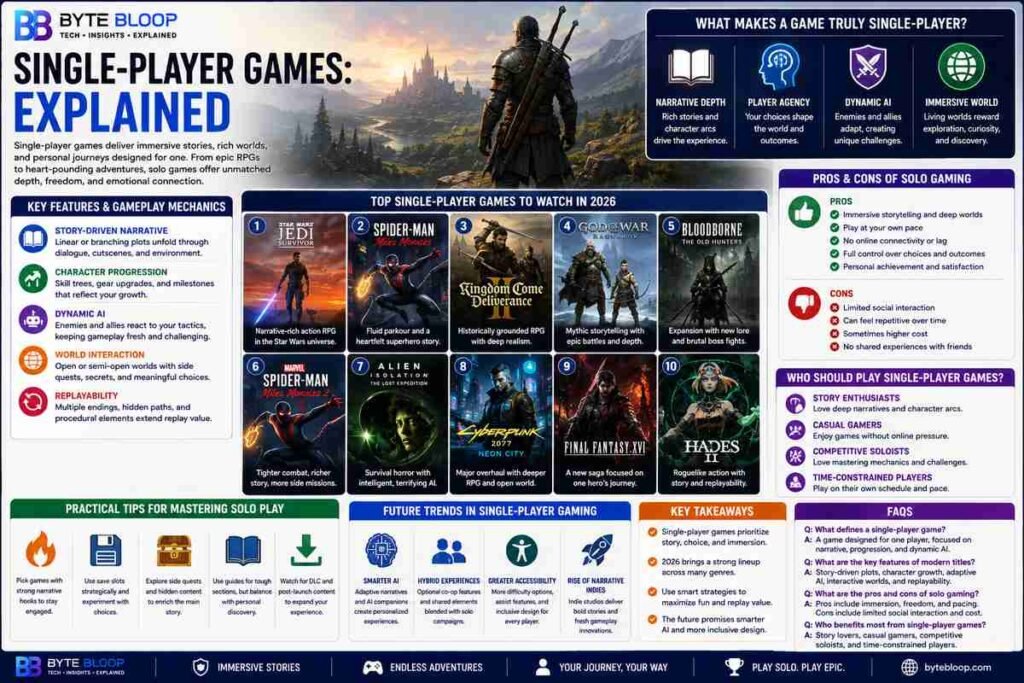
At its core, a single-player game is designed for one person, but the definition extends beyond the absence of online co‑op. The experience hinges on narrative depth, character development, and a world that reacts to your choices. Developers craft branching storylines, dynamic AI, and immersive environments that reward exploration and experimentation. These elements create a sense of ownership and emotional investment that multiplayer games often dilute with shared goals.
Key Features and Gameplay Mechanics
Modern single-player titles typically blend several core mechanics:
- Story‑Driven Narrative: Linear or branching plots that unfold through dialogue, cutscenes, and environmental storytelling.
- Character Progression: Skill trees, gear upgrades, and narrative milestones that reflect your growth.
- Dynamic AI: Enemies and allies that adapt to your tactics, providing a challenging and varied experience.
- World Interaction: Open or semi‑open worlds that reward curiosity, with side quests and hidden secrets.
- Replayability: Multiple endings, hidden paths, or procedurally generated content that extend replay value.
Top Single-Player Games to Watch in 2026
Industry analysts and community forums have identified a handful of standout titles for 2026. Below are some of the most anticipated releases across platforms:
- Star Wars Jedi: Survivor – A narrative‑rich action RPG that builds on the franchise’s cinematic legacy.
- Spider‑Man: Miles Morales – A fluid parkour experience with a heartfelt story set in an evolving cityscape.
- Kingdom Come: Deliverance 2 – A historically grounded RPG that deepens its predecessor’s realistic combat and open world.
- God of War: Ragnarok – A sequel that expands mythic storytelling with deeper character arcs.
- Bloodborne: The Old Hunters – An expansion that introduces new lore and challenging boss encounters.
- Marvel’s Spider‑Man: Miles Morales 2 – A sequel that promises tighter combat and richer side missions.
- Alien Isolation: The Lost Expedition – A survival horror that leverages AI to create tense encounters.
- Cyberpunk 2077: Neon City – A major overhaul that refines open‑world exploration and narrative branching.
- Final Fantasy XVI – A new entry in the long‑running series that focuses on a single protagonist’s journey.
- Hades II – A roguelike sequel that blends narrative depth with procedural combat.
These titles represent a spectrum of genres—from action RPGs to horror and open‑world adventures—illustrating the versatility of single-player design. Each game offers a unique blend of story, mechanics, and replayability that caters to different player preferences.
Pros and Cons of Solo Gaming
Like any entertainment medium, single-player games come with distinct advantages and potential drawbacks. Understanding these can help you decide when a solo title is the right choice for you.
- Pros: Immersive storytelling, personal agency, no need for online connectivity, and the ability to play at your own pace.
- Cons: Limited social interaction, potential for repetitive gameplay, and sometimes higher development costs that translate to higher prices.
Who Should Play Single-Player Games?
Single-player games appeal to a broad audience, but certain groups find them particularly rewarding:
- Story Enthusiasts: Players who crave narrative depth and character development.
- Casual Gamers: Those who want to enjoy a game without the pressure of online matchmaking.
- Competitive Soloists: Gamers who enjoy mastering game mechanics and achieving high scores.
- Time‑Constrained Players: Individuals who can play at their own pace and schedule.
Practical Tips for Mastering Single-Player Games
To get the most out of your solo gaming experience, consider these strategies:
- Prioritize games with strong narrative hooks to maintain engagement.
- Use save systems strategically—many games allow multiple save slots to experiment with different choices.
- Explore side quests and hidden content; they often enrich the main story.
- Take advantage of community guides for challenging sections, but balance this with personal discovery.
- Keep an eye on DLC and post‑launch content; many titles expand their worlds long after release.
Future Trends in Single-Player Gaming
Looking ahead, the industry is poised for several exciting developments:
- Greater integration of AI to create more adaptive and personalized narratives.
- Hybrid experiences that blend single-player storytelling with optional cooperative modes.
- Increased focus on accessibility features, making solo games more inclusive.
- Expansion of narrative-driven indie titles, thanks to digital distribution platforms.
These trends suggest that single-player games will continue to evolve, offering richer stories and more immersive worlds for players who prefer to play alone.
Key Takeaways
- Single-player games prioritize narrative depth and player agency.
- Top 2026 titles span action RPGs, horror, and open-world adventures.
- Pros include immersive storytelling and flexible pacing; cons involve limited social interaction.
- Practical tips: use save slots, explore side quests, and balance guides with discovery.
- Future trends: adaptive AI, hybrid modes, and greater accessibility.
Frequently Asked Questions
What defines a single-player game?
A single-player game is designed for one player, focusing on narrative, character progression, and dynamic AI that responds to the player’s actions.
What are the key features of modern single-player titles?
Core features include story-driven narratives, character progression systems, adaptive AI, interactive worlds, and replayability through branching paths or procedural content.
Who benefits most from playing single-player games?
Story enthusiasts, casual gamers, competitive soloists, and players with limited time all find value in the personal, paced experience of single-player games.
What are the pros and cons of solo gaming?
Pros: immersive storytelling, personal agency, no online lag. Cons: limited social interaction, potential repetitiveness, and sometimes higher cost.
Conclusion
Based on the available information, this topic provides essential insights for readers looking to understand the core concepts and practical applications.