South Indian Chief Ministers Tackle Cauvery, NEET, and Delimitation with Amit Shah
Introduction
On August 20, 2026, five South Indian chief ministers gathered in New Delhi for a crucial dialogue with Union Home Minister Amit Shah. The meeting, convened under the banner of the South Council of Ministers, focused on three flashpoints that dominate the region’s political discourse: the protracted Cauvery water dispute, the contentious National Eligibility cum Entrance Test (NEET) for medical admissions, and the impending delimitation of parliamentary constituencies slated for 2026‑2027.
Beyond these headline issues, the leaders exchanged views on cooperative federalism, infrastructure financing, and the role of the central government in addressing South India’s developmental aspirations. The outcomes of the discussion are expected to influence policy directions in the coming months, especially as state elections loom across the region.
Background & Historical Context
The Cauvery water dispute, a decades‑long tussle between Karnataka and Tamil Nadu, resurfaced after the Supreme Court’s latest interim order, which altered water release schedules during the monsoon deficit. Both states have mobilised public sentiment, with Karnataka’s CM urging a more flexible allocation formula, while Tamil Nadu’s leader warned of agricultural distress if supplies dwindle.
NEET, introduced in 2016 to create a uniform medical entrance exam, remains a polarising issue. While the central government defends it as a merit‑based gateway, several southern states argue that it marginalises students from rural backgrounds and undermines state‑run medical colleges. The upcoming amendment to NEET’s eligibility criteria has sparked protests, prompting the central government to consider concessions.
Delimitation, the redrawing of electoral boundaries based on the 2021 Census, is another ticking time‑bomb. South Indian states fear a loss of parliamentary seats to the north, which could dilute their political clout in the Lok Sabha. The central government, meanwhile, insists that the process is essential for equitable representation.
Key Details & Impact Analysis
During the meeting, Amit Shah reiterated the central government’s commitment to a “balanced and science‑based” approach to Cauvery. He announced a fast‑track technical committee comprising engineers from the Central Water Commission, tasked with reviewing the Supreme Court order within 30 days. If the committee recommends adjustments, the Union Ministry of Water Resources will facilitate a revised water‑sharing formula, potentially easing tensions but also raising questions about state autonomy.
On NEET, Shah signalled a possible relaxation of the 50‑percent domicile reservation rule, allowing states to reserve a larger share of seats for local candidates. This concession could appease Tamil Nadu and Kerala, where student bodies have staged sit‑ins demanding a “South‑first” policy. However, critics warn that such a move might compromise the exam’s national standardisation, sparking a debate that could echo in the next parliamentary session.
Regarding delimitation, the Home Minister confirmed that the Election Commission will publish the final draft maps by December 2026, with an emphasis on maintaining the current number of seats for each state as a “transitional safeguard.” While this reassurance was welcomed by Andhra Pradesh’s CM, Karnataka’s leader remained sceptical, citing demographic shifts that could still disadvantage the South in the long run.
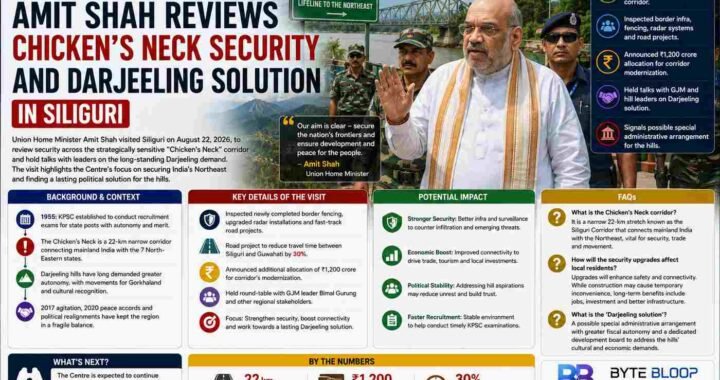
The meeting also touched on infrastructure funding. Shah pledged an additional ₹12,000 crore for the National River Linking Project, which includes a proposed link between the Cauvery and the Krishna basins. If approved, the project could generate 1,500 MW of hydro‑electric power and irrigate over 2 million acres, offering a strategic counterbalance to water‑sharing disputes.
Frequently Asked Questions (FAQs)
What is the expected timeline for the new Cauvery water‑sharing formula?
The technical committee will submit its report within 30 days of the meeting, after which the Ministry of Water Resources aims to finalize a revised formula by the end of the monsoon season (September‑October 2026).
How might the NEET changes affect admission chances for South Indian students?
If the domicile reservation is expanded, state‑run medical colleges could allocate up to 75 percent of seats to local candidates, improving access for students from Tamil Nadu, Kerala and Karnataka while still preserving a national merit pool.
Will delimitation reduce the number of Lok Sabha seats for South Indian states?
The Election Commission has pledged to keep the current seat allocation as a temporary measure. However, final adjustments based on population trends could still lead to a marginal reduction for some states after the 2026‑27 electoral cycle.
Conclusion
The Delhi summit underscored the delicate balance between central authority and regional aspirations in South India. By addressing water security, medical education equity, and electoral representation, Amit Shah and the southern chief ministers set the stage for policy shifts that could reshape the political and socio‑economic landscape of the subcontinent’s most vibrant region. As implementation timelines unfold, stakeholders—from farmers and students to political parties—will watch closely to gauge whether the promises made in Delhi translate into tangible benefits on the ground.
Source: India Today