AI Model APIs: Explained
Introduction
Artificial intelligence has moved from a niche research area into the everyday toolkit of developers, product managers, and data scientists. Central to this shift are AI model APIs—standardized, HTTP‑based interfaces that let anyone tap into sophisticated machine‑learning models without building them from scratch. These APIs abstract away the complexities of training, scaling, and maintaining models, offering a plug‑and‑play solution that can be integrated into web apps, mobile services, and enterprise workflows.
At their core, AI model APIs expose a set of endpoints that accept input data, process it through a pre‑trained model, and return the result in a predictable format. Modern APIs go beyond simple “text‑in, text‑out” interactions; they now support role‑based prompts, multimodal inputs, and streaming responses, enabling richer conversational agents and real‑time analytics. Understanding the architecture, pricing, and best practices for these APIs is essential for building reliable, cost‑effective AI‑powered products.
In this guide we break down the key components of AI model APIs, compare leading providers, and walk through practical integration steps. Whether you’re building a chatbot, automating customer support, or adding image recognition to a logistics platform, this article will help you choose the right API, avoid common pitfalls, and get the most value from your AI investments.
What Is an AI Model API?
An AI model API is a web service that exposes the inference capabilities of a machine‑learning model. Developers send HTTP requests—usually via REST or GraphQL—to the endpoint, and the server returns the model’s output. The API handles model loading, GPU allocation, and scaling, freeing developers from infrastructure concerns.
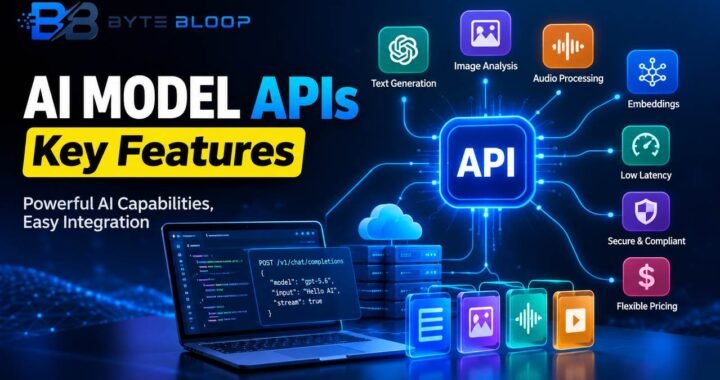
Key Features of Modern AI APIs
- Role‑Based Prompting: Allows specifying user, system, or assistant roles to shape responses.
- Context Windows: Supports multi‑turn conversations with adjustable token limits.
- Streaming Responses: Enables real‑time data flow for chat or live analytics.
- Rate Limiting & Quotas: Protects services from overload while offering predictable pricing tiers.
- Open‑Source Alternatives: Platforms like Hugging Face and SiliconFlow provide free or low‑cost models for developers who need full control.
Popular AI API Providers in 2026
Several vendors dominate the market, each with distinct strengths:
- OpenAI: Industry standard for large language models, offering robust role‑based prompts and fine‑tuning.
- Firework AI: Combines open‑source models with managed hosting, focusing on transparency and cost control.
- DeepSeek AI: Known for high‑throughput inference and competitive pricing for large context windows.
- SiliconFlow: Provides a unified platform for training, deploying, and scaling models, ideal for enterprise workloads.
- Hugging Face Inference API: Open‑source hub with a vast model repository and easy-to‑use REST endpoints.
Choosing the Right API for Your Project
When evaluating an API, consider:
- Use Case Fit: Text generation, summarization, translation, image classification, or multimodal tasks.
- Context Window Size: Larger windows enable longer conversations but may increase cost.
- Latency Requirements: Real‑time applications need low‑round‑trip times.
- Pricing Model: Pay‑as‑you‑go versus subscription, and whether token limits or request limits apply.
- Compliance & Data Privacy: On‑prem or private‑cloud options for sensitive data.
Integrating an AI Model API: A Practical Example
Below is a concise Node.js snippet that demonstrates how to call a language model API with role‑based prompting and streaming:
const axios = require('axios');
const endpoint = 'https://api.openai.com/v1/chat/completions';
const apiKey = process.env.OPENAI_API_KEY;

async function chat(prompt) {
  const response = await axios.post(endpoint, {
    model: 'gpt-4o',
    messages: [
      {role: 'system', content: 'You are a helpful assistant.'},
      {role: 'user', content: prompt}
    ],
    stream: true
  }, {
    headers: {Authorization: `Bearer ${apiKey}`},
    responseType: 'stream'
  });
  response.data.on('data', chunk => process.stdout.write(chunk.toString()));
}

chat('Explain AI model APIs in simple terms.');
This example highlights how to set system prompts, manage streaming output, and handle authentication securely.
Pros and Cons of Using AI Model APIs
Pros:
- Fast time‑to‑market: No need to train models.
- Scalable infrastructure: Providers manage GPU clusters.
- Regular updates: Models improve without developer intervention.
Cons:
- Recurring costs: Pay for each request or token.
- Vendor lock‑in: Switching providers can be complex.
- Data privacy concerns: Sensitive data may be transmitted to third‑party servers.
Key Takeaways
- AI model APIs abstract complex ML infrastructure, enabling rapid product development.
- Modern APIs support role‑based prompts and streaming for richer interactions.
- Choosing the right provider hinges on use case, context window, latency, and pricing models.
- Open‑source alternatives offer cost control and data privacy for sensitive workloads.
- Integration typically involves simple REST calls with authentication and optional streaming.
Frequently Asked Questions
What is an AI model API?
An AI model API is a web service that exposes a pre‑trained machine‑learning model through HTTP endpoints, allowing developers to send input data and receive predictions without managing the underlying infrastructure.
What are the key features of modern AI APIs?
Modern AI APIs provide role‑based prompting, adjustable context windows, streaming responses, rate limiting, and support for multimodal inputs, enabling sophisticated conversational and analytical applications.
What are the best use cases for AI model APIs?
They excel in chatbots, automated customer support, content generation, real‑time analytics, image and speech recognition, and any scenario that requires scalable, on‑demand inference.
What are the pros and cons of using AI model APIs?
Pros include rapid deployment, managed scaling, and continuous model updates. Cons involve ongoing costs, potential vendor lock‑in, and data privacy considerations when sending sensitive information to third‑party servers.
Conclusion
Based on the available information and industry analysis, AI model APIs provide a powerful, scalable bridge between complex machine‑learning models and everyday applications, enabling developers to deliver intelligent features quickly while managing cost and compliance concerns.
Related Reading
- Choosing the Right AI API for Your Product