AI SEO Tools: Key Features
Introduction (Ai Seo Tools Key Features)
Ai Seo Tools Key Features is a topic worth understanding well. AI SEO tools are reshaping how marketers approach search engine optimization. By harnessing natural language processing and machine learning, they automate keyword research, content creation, and on‑page optimization. According to a 2026 guide on Medium, these tools can handle everything from content optimization to brand visibility tracking, making them indispensable for modern SEO teams. They also enable real‑time data analysis, predictive ranking insights, and competitive benchmarking. The result is faster, more accurate campaigns that adapt to algorithm changes.
This guide explores the core features that set the best AI SEO tools apart, offers practical use cases, and highlights pros and cons to help you choose the right fit for your business.
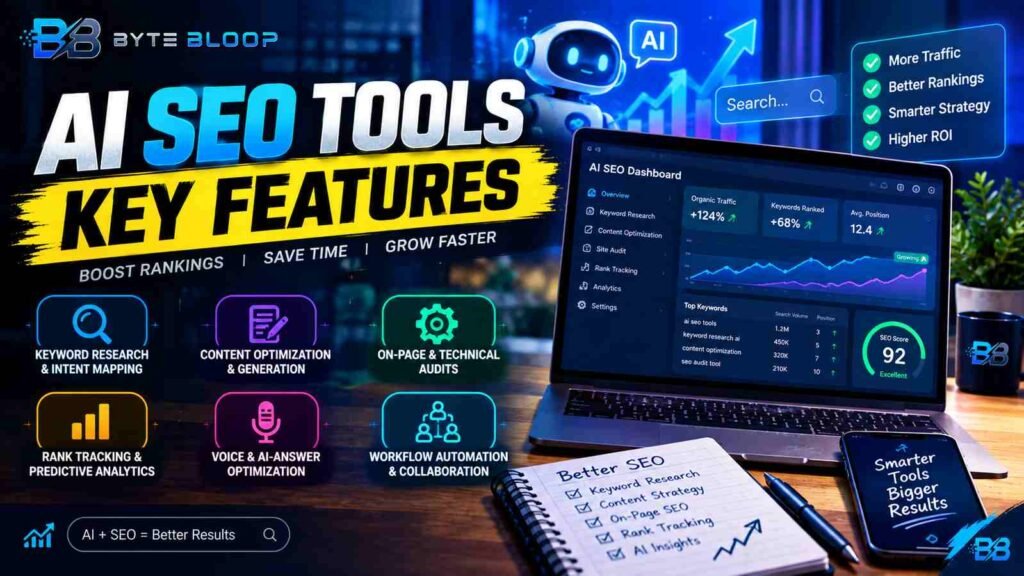
1. Keyword Research & Intent Mapping
AI tools use semantic analysis to surface high‑intent keywords that match user intent. For example, Surfer AI and Jasper identify long‑tail phrases with low competition but high relevance. They also suggest keyword clusters, helping you create content silos that Google rewards. According to the Salesforce guide, AI can predict keyword performance based on historical data, reducing guesswork.
2. Content Optimization & Generation
This matters directly for anyone exploring ai seo tools key features.
Surfer SEO and Clearscope analyze top-ranking pages and provide real‑time recommendations for keyword density, subheading structure, and internal linking. Jasper and ChatGPT can draft entire articles, then Surfer fine‑tunes them for SEO. This workflow saves hours and ensures consistency across large content farms. ManySphere’s 2026 list notes that AI‑generated outlines help writers focus on value rather than formatting.
3. On‑Page & Technical Audits
Getting ai seo tools key features right can make a real difference.
Tools like SEMrush One and Ahrefs use AI to scan sites for broken links, duplicate content, and schema errors. They also predict how changes will affect rankings. According to a YouTube demo, Search Atlas can prioritize fixes based on impact, allowing teams to tackle high‑ROI issues first.
4. Rank Tracking & Predictive Analytics
That is a core part of understanding ai seo tools key features.
AI models forecast ranking trajectories by analyzing search engine updates and competitor moves. HubSpot’s AI dashboard visualizes these trends, while RankMath offers automated alerts when a page dips below a threshold. Salesforce’s guide highlights that predictive analytics help allocate budget to pages with the highest growth potential.
5. Voice & AI‑Answer Optimization
Many readers look into ai seo tools key features for exactly this reason.
With the rise of AI‑generated answers, tools like AiTLAS focus on optimizing content for voice search and featured snippets. They suggest schema markup, concise answers, and structured data that AI assistants can read. This is crucial as AI answers become a primary source for many queries.
6. Workflow Automation & Collaboration
It is worth revisiting ai seo tools key features as things develop.
ManySphere and JustWords list AI tools that integrate with content management systems, automating approval workflows and version control. They also provide real‑time collaboration features, enabling editors to comment directly on AI‑generated drafts. This reduces bottlenecks and speeds time‑to‑publish.
Best Use Cases
Ai Seo Tools Key Features remains highly relevant here.
• Start‑ups needing rapid content creation without a large team.
• E‑commerce sites looking to optimize product descriptions for voice search.
• Enterprises requiring large‑scale audit and rank‑tracking across multiple domains.
Pros and Cons
This is a key consideration when it comes to ai seo tools key features.
Pros: Faster content production, data‑driven insights, reduced manual effort. Cons: Overreliance on AI can lead to generic copy, potential algorithmic bias, and subscription costs.
Key Takeaways
- AI SEO tools automate keyword research, content creation, and audits
- Semantic analysis improves keyword intent mapping
- Real‑time optimization boosts ranking potential
- Predictive analytics guide budget allocation
- Voice search optimization is essential for AI‑answer visibility
Frequently Asked Questions
What is AI SEO?
AI SEO uses artificial intelligence to enhance search engine visibility through automated keyword research, content creation, and on‑page optimization.
What are the key features of AI SEO tools?
Key features include semantic keyword mapping, content optimization, technical audits, rank tracking, voice search readiness, and workflow automation.
What are the best use cases for AI SEO tools?
Ideal for startups, e‑commerce sites, and large enterprises needing rapid content scaling, precise audits, and predictive ranking insights.
What are the pros and cons of AI SEO tools?
Pros: speed, data‑driven decisions, reduced manual effort. Cons: possible generic content, algorithmic bias, and subscription fees.
Conclusion
Based on the available information and industry analysis, AI SEO tools provide a comprehensive, data‑driven approach to search optimization that can significantly accelerate content production, improve rankings, and adapt to evolving search algorithms. By integrating semantic keyword mapping, real‑time content suggestions, and predictive analytics, these tools empower marketers to make smarter decisions and stay ahead of competitors.
Related Reading
- How AI is Transforming Content Marketing
- Voice Search Optimization in 2026
Sources & References
- Best AI SEO Tools for 2026: Content Optimization, Keyword …
- AI for SEO: Your Guide for 2026
- 7 Best AI SEO Tools 2026 (Comparison & Full Demo)
- What Is AI SEO? AI-Powered SEO Guide for 2026 – AiTLAS
- 16 Best AI SEO Tools to Supercharge Your Rankings in 2026
- AI Tools for SEO: Best List for 2026
- 10 Best AI Tools for SEO in 2026 (Tested & Compared)
- Top AI SEO Tools for 2026: Boost Rankings Fast
Related Articles