Fintech Technology: Explained
Introduction
Fintech Technology Explained is a topic worth understanding well. Fintech technology has moved beyond simple mobile banking apps to become a cornerstone of modern financial services. By blending algorithms, cloud infrastructure, and user‑centric design, fintech firms are delivering faster, cheaper, and more inclusive solutions for consumers and enterprises alike. The sector’s rapid growth is fueled by the rise of digital‑first banking, real‑time payments, and AI‑driven risk assessment, all of which are redefining how we manage money.
In 2026, the global fintech market is projected to hit USD 26.53 billion, a figure that underscores the scale and momentum behind these innovations (FinTech Market Overview with Size, Share, Value). Understanding the core technologies and trends that drive this expansion is essential for anyone looking to navigate or invest in the financial technology landscape.
At its heart, fintech technology is about leveraging software to streamline financial processes that were once manual, siloed, or restricted to a privileged few. From blockchain‑based ledgers that enable instant cross‑border settlements to AI agents that personalize credit offers, the tools are diverse but share a common goal: democratizing access to financial services while improving efficiency and security. This article breaks down the key components, emerging trends, and practical applications of fintech tech, giving you a clear roadmap of what’s shaping the industry today.
Core Technologies Driving Fintech
Artificial Intelligence and Machine Learning are perhaps the most transformative forces. AI can analyze vast datasets to detect fraud, assess credit risk, and tailor product recommendations. According to a YouTube interview on “How AI Will Transform Fintech In 2026,” AI agents are poised to reinvent credit card offerings by automating underwriting and real‑time decisioning.
This matters directly for anyone exploring fintech technology explained.
Blockchain and Distributed Ledger Technology offer tamper‑proof record keeping and near‑instant settlement. The technology underpins cryptocurrencies, but its utility extends to supply‑chain finance, trade finance, and even regulatory compliance through smart contracts.
Getting fintech technology explained right can make a real difference.
Cloud Computing and API‑First Architecture enable rapid deployment and scalability. Fintech startups often build on cloud platforms and expose services via APIs, allowing third‑party developers to integrate payment, identity, and analytics features into their own apps.
That is a core part of understanding fintech technology explained.
Biometrics and Secure Authentication have become standard for mobile banking, using fingerprint, facial recognition, or voice patterns to verify identity and protect against fraud.
Many readers look into fintech technology explained for exactly this reason.
Emerging Trends in 2026
Industry analysts highlight several trends that are reshaping the fintech ecosystem this year. A Plaid report lists the top 10 trends, including Buy‑Now‑Pay‑Later (BNPL), contactless technology, and the rise of fintech super apps that bundle banking, insurance, and investment services into a single platform. The Maddevs blog notes that digital‑only banks or neobanks continue to disrupt traditional banking by offering lower fees and superior user experience.
It is worth revisiting fintech technology explained as things develop.
Compliance and regulatory technology (RegTech) is also gaining traction, as firms seek to automate KYC (Know Your Customer) and AML (Anti‑Money Laundering) processes. According to Eluminoustechnologies, fintech software development increasingly integrates compliance modules to meet evolving global standards.
Fintech Technology Explained remains highly relevant here.
Practical Use Cases
1. Real‑Time Payments – Fintech platforms enable instant transfers across borders, reducing settlement times from days to seconds.
This is a key consideration when it comes to fintech technology explained.
2. Personal Finance Management – AI‑driven budgeting apps analyze spending patterns and suggest savings strategies.
This matters directly for anyone exploring fintech technology explained.
3. Credit Scoring for the Unbanked – Alternative data sources, such as mobile usage and utility payments, feed into machine‑learning models to extend credit to underserved populations.
Getting fintech technology explained right can make a real difference.
4. Insurance Telematics – Connected devices collect data that insurers use to personalize premiums and improve risk assessment.
Challenges and Considerations
While fintech offers significant benefits, it also presents challenges. Data privacy remains a top concern; firms must navigate GDPR, CCPA, and other regulations. Security threats such as phishing and ransomware require robust cyber‑defense strategies. Additionally, interoperability between legacy banking systems and new fintech solutions can be costly and complex.
Compliance costs can also be high, especially for companies aiming to operate globally. As highlighted in the EliteAsia guide on building a global fintech, mastering localization, tax laws, and cross‑border regulations is critical for scaling.
How to Build a Fintech Solution in 2026
The Takdevs guide outlines a step‑by‑step approach: define the problem, choose the right tech stack (often a mix of JavaScript, Python, and cloud services), ensure regulatory compliance, and select a development partner with fintech expertise. According to the guide, cost considerations include licensing fees, infrastructure, and ongoing maintenance.
For startups, partnering with a fintech incubator or accelerator can provide access to mentorship, capital, and industry connections, accelerating time to market.
Key Takeaways
- Fintech blends AI, blockchain, and cloud to democratize finance
- 2026 trends include BNPL, super apps, and digital-only banks
- Real‑time payments and AI budgeting are leading use cases
- Data privacy and regulatory compliance remain top challenges
- Building a fintech solution requires a clear tech stack and compliance strategy
Frequently Asked Questions
What is fintech technology explained?
Fintech technology refers to the use of digital tools—such as AI, blockchain, cloud computing, and APIs—to improve, automate, and streamline financial services.
What are the key features of fintech technology?
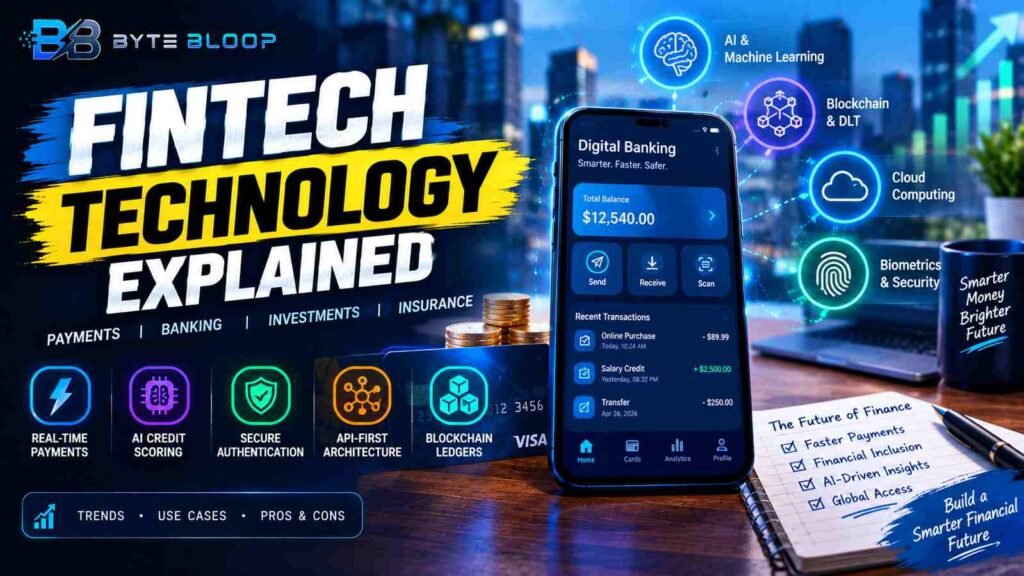
Key features include real‑time payments, AI‑driven credit scoring, secure biometric authentication, API‑first architecture, and blockchain‑based ledgers.
What are the best use cases for fintech technology?
Top use cases are instant cross‑border payments, personal finance management apps, credit access for the unbanked, and insurance telematics.
What are the pros and cons of fintech technology?
Pros: faster transactions, lower costs, broader access, and data‑driven insights. Cons: data privacy risks, regulatory hurdles, cybersecurity threats, and integration challenges with legacy systems.
Conclusion
Based on the available information and industry analysis, fintech technology is reshaping the financial services landscape by delivering faster, cheaper, and more inclusive solutions. Its integration of AI, blockchain, and cloud infrastructure not only enhances user experience but also drives operational efficiency across banks, insurers, and payment processors. However, the sector must navigate complex regulatory frameworks and evolving cybersecurity threats to sustain long‑term growth.
Related Reading
- The Rise of Digital-Only Banks: What You Need to Know
Sources & References
- Understanding Fintech: Enhancing Financial Services and …
- 10 fintech trends defining the industry’s future in 2026
- FinTech Market Overview with Size, Share, Value
- How AI Will Transform Fintech In 2026
- FinTech Trends and Opportunities in 2026
- Fintech Solution Development in 2026: The Complete Guide to Building It Right
- Your Guide to Fintech Software Development in 2026
Related Articles