Indian Athletes: Explained
Introduction
India’s sporting landscape has evolved from a modest collection of regional contests to a global powerhouse, thanks to a growing network of academies, government support, and a surge in grassroots participation. Over the past decade, Indian athletes have broken continental records, claimed Olympic medals, and inspired a new generation of dreamers. The country’s diverse geography—spanning the Himalayan highlands, coastal plains, and bustling metros—provides a unique training environment that nurtures talent across disciplines. Yet, the path to elite performance remains uneven, with disparities in funding, coaching, and infrastructure still evident. Understanding the ecosystem that shapes Indian athletes offers insight into how talent is identified, nurtured, and propelled onto the world stage. This guide delves into the key institutions, training models, and success stories that define the modern Indian athlete, while highlighting the challenges that persist and the opportunities on the horizon.
Foundational Bodies and Talent Identification
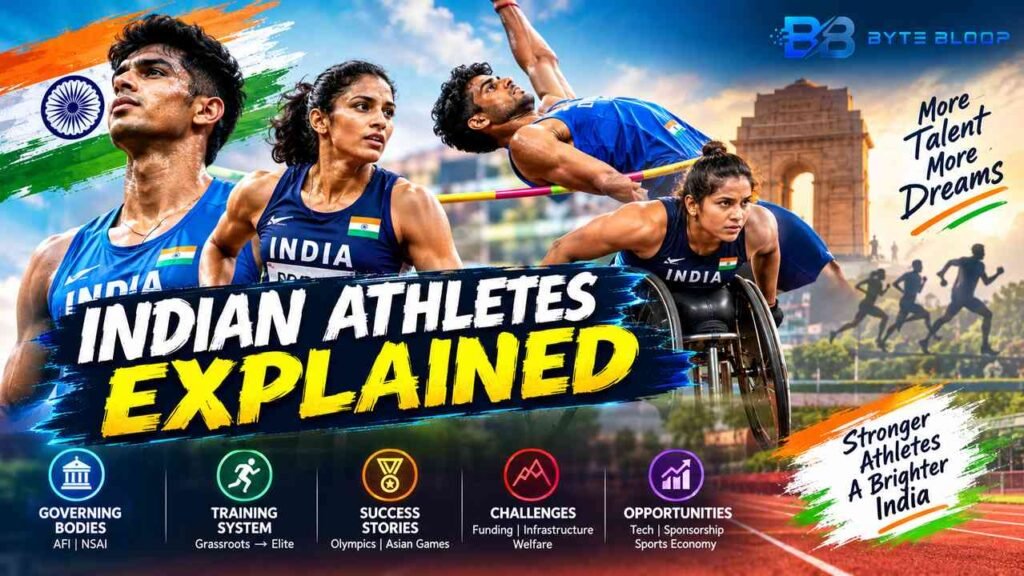
The Athletics Federation of India (AFI) serves as the primary governing body for track and field, coordinating national championships and setting qualification standards for international events. According to AFI’s latest news, the 37th South Zone Junior Athletics Championships 2026 will be hosted in Pondicherry, illustrating the federation’s commitment to regional development. Parallel to the AFI, the National Sports Academy of India (NSAI) offers high‑performance programs, with the NSNIS Patiala campus providing world‑class facilities for athletes across sports. These institutions collaborate to scout talent through school and club competitions, feeding promising athletes into specialized training pipelines.
Training Paradigms: From Grassroots to Elite
India’s training ecosystem blends traditional coaching with data‑driven performance analysis. At the grassroots level, community clubs and school teams introduce children to basic skills, often under the guidance of former athletes turned coaches. As athletes progress, they gain access to national academies where nutritionists, sports psychologists, and biomechanists work alongside coaches to fine‑tune technique and conditioning. The National Sports Academy’s integrated approach has produced athletes like Sreeshankar M, who showcased a strong performance at the 8th Indian Open Para Athletics International Championship 2026, as highlighted by the Sports Authority of India’s video coverage. Such success stories underscore the effectiveness of holistic support systems in elevating performance.
Competitive Milestones and International Exposure
Indian athletes have increasingly made their mark on the global stage. The 2026 Asian Games in Aichi‑Nagoya introduced new qualifying standards, pushing athletes to achieve faster times and higher marks. According to the International Olympic Committee’s release, Indian athletes now face stricter cut‑offs, encouraging a shift toward more rigorous training regimens. Meanwhile, the 2026 Indian Olympic Dream series, featured on IOD Sports, showcases athletes preparing for the upcoming Olympic cycle, offering viewers a behind‑the‑scenes look at the dedication required to compete at the highest level.
Challenges Facing Indian Athletes
Despite progress, several hurdles remain. Funding gaps persist, especially for women and para‑athletes, limiting access to world‑class equipment and international competition exposure. Infrastructure disparities mean that many athletes still train in sub‑optimal facilities, hindering performance gains. Additionally, the lack of a unified athlete welfare system leaves many athletes navigating complex bureaucratic pathways to secure sponsorships and medical care. Addressing these issues requires coordinated policy interventions and increased private sector investment.
Opportunities for Growth
India’s growing sports economy presents new avenues for athlete development. The rise of corporate sponsorships, coupled with the government’s “Sports for All” initiative, is expanding funding streams. Technological advancements—such as wearable performance trackers and AI‑driven coaching analytics—are becoming increasingly accessible, allowing athletes to monitor progress in real time. Furthermore, the 2026 Indian sports calendar, as documented on Wikipedia, highlights a surge in national championships and international meets, offering athletes more opportunities to gain competitive experience.
Practical Tips for Aspiring Athletes
- Engage with local clubs early to build foundational skills.
- Seek mentorship from former national athletes to gain insights into elite training.
- Utilize digital platforms to track performance metrics and identify improvement areas.
- Explore scholarship programs offered by NSAI and other academies to access advanced training.
Key Takeaways
- India’s sports ecosystem now includes national academies, regional championships, and data‑driven training models.
- Funding and infrastructure gaps still limit athlete potential, especially for women and para‑sports.
Frequently Asked Questions
What is the role of the Athletics Federation of India?
The AFI governs track and field in India, organizing national championships and setting qualification standards for international competitions.
What are the key features of the National Sports Academy of India?
NSAI provides high‑performance training, including coaching, nutrition, sports science, and psychological support across multiple sports.
What are the best use cases for data‑driven training in Indian athletics?
Athletes use wearable tech and performance analytics to monitor speed, technique, and recovery, allowing coaches to tailor training plans.
What are the pros and cons of relying on corporate sponsorships for athletes?
Pros include increased funding and exposure; cons involve potential pressure to perform and dependence on market fluctuations.
Conclusion
Based on the available information and industry analysis, Indian athletes are increasingly benefiting from structured training pathways, enhanced infrastructure, and growing financial support, yet they still face significant challenges in funding, infrastructure, and athlete welfare. Continued investment in grassroots programs, high‑performance centers, and inclusive policies will be essential for sustaining India’s competitive edge on the global stage.
Related Reading
- India’s Road to the 2028 Olympics
Sources & References
- Athletics Federation of India – Official Website of Indian …
- 2026 Definitive Guide: National Sports Academy of India
- Originals | Indian Olympic Dream – IOD Sports
- r/indiansports
- Athletics India | Latest Track & Field Results & Championships …
- 2026 in Indian sports
- Asian Games 2026 athletics qualifying standards for India
- TOPS Core athlete Sreeshankar M is putting in the hard yards …