Remote Learning: Explained
Introduction
Remote learning, often called distance learning, is an educational model where students and teachers are physically separated during instruction. It relies on digital platforms—video conferencing, learning management systems, and collaborative tools—to deliver curriculum, assignments, and feedback. The rise of high‑speed internet and mobile devices has made remote learning a viable alternative to traditional classrooms, especially during emergencies such as the COVID‑19 pandemic. However, it is not simply a temporary fix; it offers a flexible, scalable way to reach diverse learners worldwide. The core challenge lies in maintaining engagement, ensuring equity, and preserving the social aspects of learning that in‑person settings naturally provide. By understanding the mechanics, benefits, and pitfalls of remote learning, educators and students can make informed choices about when and how to adopt this model. This guide breaks down the key components, practical tools, and real‑world examples that shape today’s remote learning landscape.
How Remote Learning Works
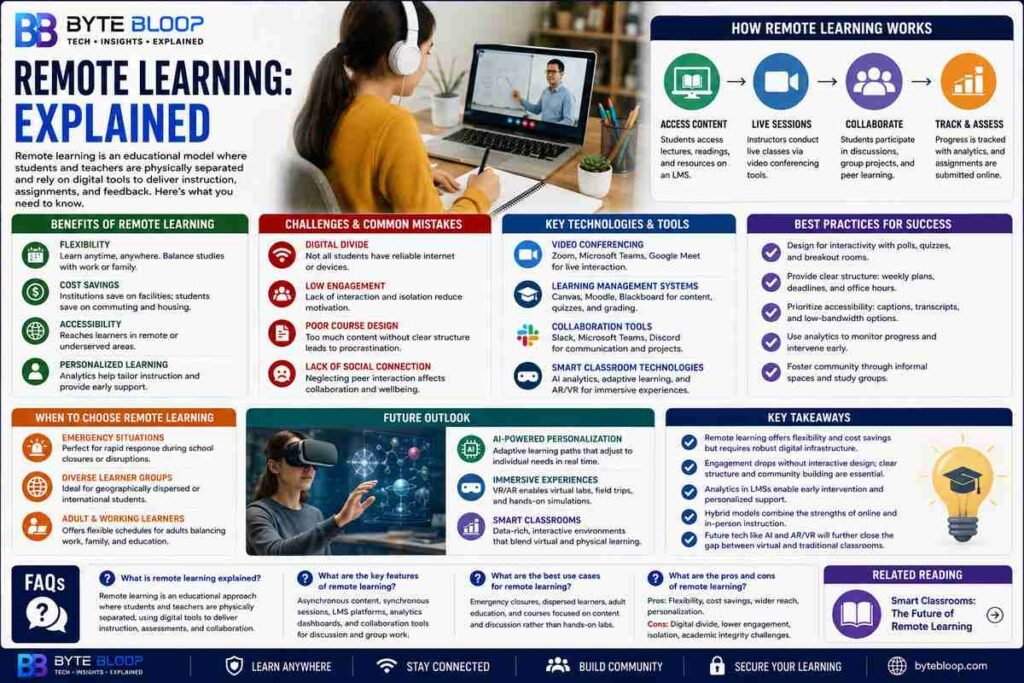
At its heart, remote learning is a technology‑mediated interaction. Students access course materials—lecture videos, reading lists, discussion boards—through a learning management system (LMS). Live sessions use video‑conferencing tools that support screen sharing, breakout rooms, and real‑time polling. Instructors can track progress via analytics dashboards, while students submit work through digital portals. The flexibility of asynchronous content allows learners to study on their own schedule, whereas synchronous classes mimic the structure of a traditional classroom.
Benefits of Remote Learning
Remote learning offers several advantages that have been highlighted by research. Flexibility is a prime benefit; students can balance studies with work or family commitments, as noted by the School of Education’s 10 benefits list. Cost savings are also significant: institutions reduce facility expenses, and students save on commuting and housing. Accessibility improves when content is designed for multiple devices, enabling learners in remote or underserved areas to participate. Moreover, data analytics embedded in LMS platforms allow educators to personalize instruction, identifying struggling students early and tailoring support.
Challenges and Common Mistakes
Despite its promise, remote learning faces hurdles. Digital divide issues—lack of reliable internet or devices—can exclude vulnerable learners. Engagement drops when students feel isolated or when course design lacks interactive elements. A frequent mistake is overloading students with asynchronous content without clear deadlines or guidance, leading to procrastination. Another pitfall is neglecting the social learning component; collaboration tools must be integrated thoughtfully to foster peer interaction.
Key Technologies and Tools
Choosing the right tech stack is crucial. Video platforms like Zoom, Microsoft Teams, and Google Meet provide real‑time interaction, while LMSs such as Canvas, Moodle, and Blackboard host content and assessments. Collaboration tools—Slack, Microsoft Teams channels, or Discord—support group projects. For institutions, a smart classroom ecosystem, as described in the 2026 guide, combines AI‑driven analytics, adaptive learning pathways, and immersive AR/VR experiences to bridge the gap between virtual and physical classrooms.
Best Practices for Effective Remote Learning
1. Design for Interactivity: Incorporate quizzes, polls, and breakout discussions to keep students engaged.
2. Provide Clear Structure: Publish a weekly calendar with deadlines, office hours, and learning objectives.
3. Prioritize Accessibility: Offer captions, transcripts, and low‑bandwidth options for video content.
4. Use Analytics Wisely: Monitor engagement metrics and intervene early when students fall behind.
5. Foster Community: Create informal virtual spaces—virtual coffee rooms or study groups—to nurture peer relationships.
When to Choose Remote Learning
Remote learning shines in situations requiring rapid scaling, such as emergency closures or when reaching a geographically dispersed student body. It also suits adult learners who juggle jobs or family responsibilities. For high‑school and college courses that rely heavily on content delivery and discussion, a hybrid model—combining online and occasional in‑person sessions—often balances flexibility with social interaction.
Future Outlook
As AI continues to mature, adaptive learning platforms will offer personalized pathways, adjusting difficulty and pacing in real time. Virtual and augmented reality will enable immersive labs and field trips, mitigating the loss of hands‑on experience. The trend toward “smart classrooms” suggests that future remote learning environments will be data‑rich, responsive, and highly interactive, blurring the line between virtual and physical education.
Key Takeaways
- Remote learning offers flexibility and cost savings but requires robust digital infrastructure.
- Engagement drops without interactive design; clear structure and community building are essential.
- Analytics in LMSs enable early intervention and personalized support.
- Hybrid models combine the strengths of online and in‑person instruction.
- Future tech like AI and AR/VR will further close the gap between virtual and traditional classrooms.
Frequently Asked Questions
What is remote learning explained?
Remote learning is an educational approach where students and teachers are physically separated, using digital tools to deliver instruction, assessments, and collaboration.
What are the key features of remote learning?
Key features include asynchronous content delivery, synchronous video sessions, learning management systems, analytics dashboards, and collaboration tools that support discussion and group work.
What are the best use cases for remote learning?
Ideal scenarios include emergency school closures, geographically dispersed student populations, adult learners needing flexible schedules, and courses that rely heavily on content and discussion rather than hands‑on labs.
What are the pros and cons of remote learning?
Pros: flexibility, cost savings, wider reach, data‑driven personalization. Cons: digital divide, lower engagement, social isolation, and challenges in ensuring academic integrity.
Conclusion
Based on the available information and industry analysis, remote learning provides a flexible, scalable, and data‑rich educational model that can extend learning beyond the physical classroom. Its effectiveness hinges on thoughtful design, equitable access, and the strategic use of technology to foster engagement and community. As AI and immersive tools mature, remote learning is poised to become an integral, high‑quality component of modern education systems.
Related Reading
- Smart Classrooms: The Future of Remote Learning